


What is Grey Water?
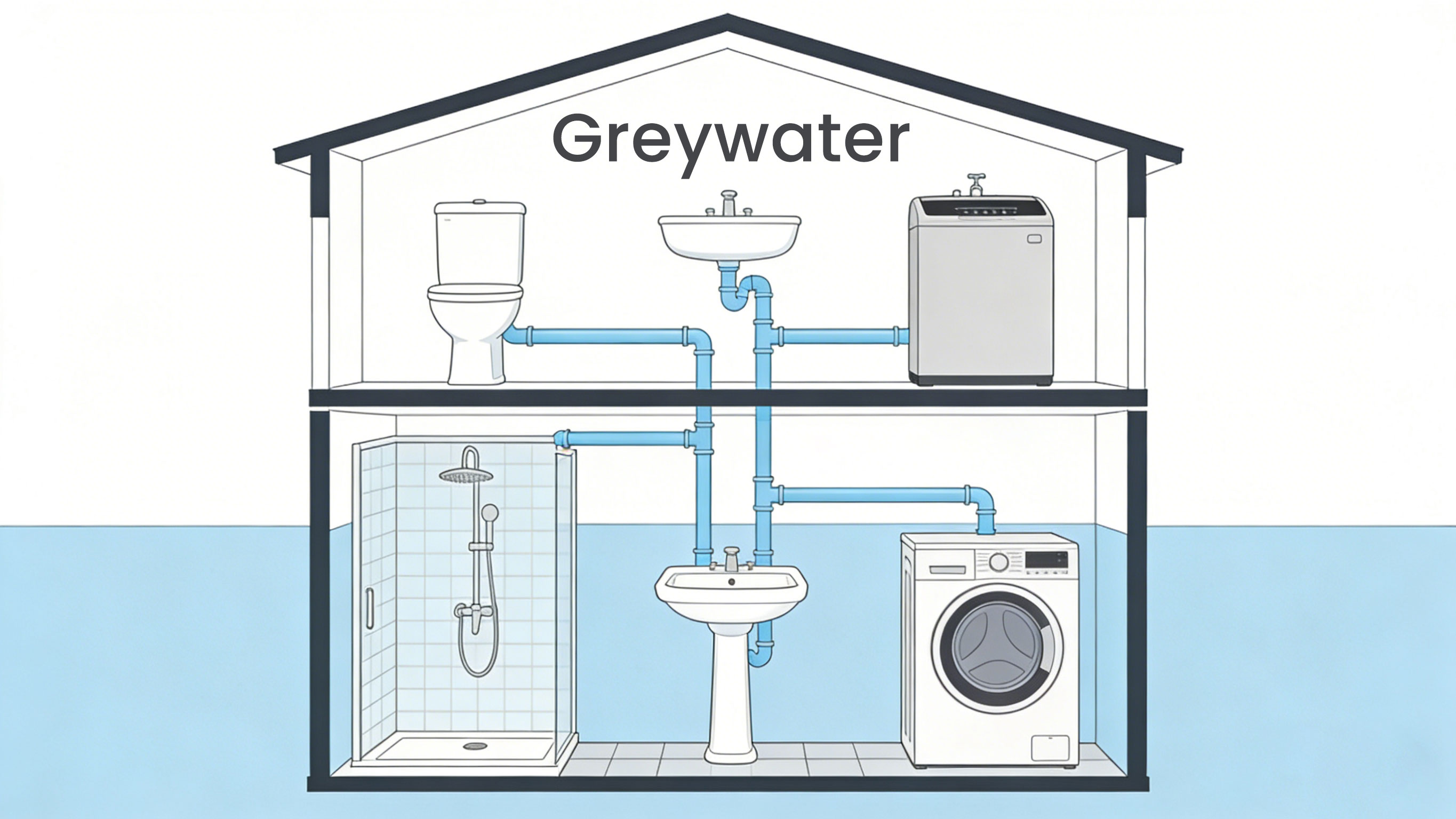
In wastewater classification, greywater refers to non-toilet contaminated wastewater generated in residential or commercial buildings. It primarily originates from showers, hand basins, bathtubs, and washing machines. Greywater contains soap, shampoo, toothpaste, trace amounts of grease, skin cells, and hair.


Compared to "blackwater" (toilet sewage), which contains high concentrations of pathogens and organic matter, greywater has lower pollutant concentrations, decomposes faster, and contains less nitrogen and phosphorus. This makes it an ideal resource for on-site treatment and reuse.
In typical households
In commercial buildings
Each household generates
Collected annually
Resource Potential
In typical households, greywater accounts for 50%-80% of indoor discharge; in commercial buildings, this ratio can reach 60%-75%. For a 100-unit residential building, where each household generates approximately 120L of greywater daily, roughly 4,380 tons can be collected annually. Once treated, this can replace an equivalent amount of tap water for toilet flushing and irrigation, saving tens of thousands of dollars in water costs. Characterized by "low pollution, easy treatment, and high reuse rates," greywater is an "urban water treasure" waiting to be tapped.
Where is it Reused?
Properly treated and disinfected greywater can replace precious potable water for non-drinking purposes, significantly lowering a building's total water footprint:
Toilet Flushing
The primary reuse path in urban buildings, saving approximately 30% of domestic potable water.
Landscape Irrigation
Trace nutrients in greywater benefit plant growth, making it suitable for parks, residential green belts, and private gardens.
Industrial & Municipal
Used for road cleaning, dust suppression at construction sites, fire protection, and cooling tower makeup water.
Water Features
Deeply treated greywater (via UVC LED sterilization) can be used for artificial fountains and landscape ponds.
The Greywater Treatment Process

The Critical Role of UVC LED
UVC LEDs deliver targeted 270-280nm disinfection, instantly eliminating bacteria and viruses. Unlike chemicals, they leave no harmful by-products (DBPs) and do not alter water properties—making greywater recycling safer for both humans and the environment.
To transform greywater into safe, reusable water, a multi-stage treatment process is essential. Since greywater still contains pathogenic microorganisms (such as E. coli and Staphylococcus aureus), the disinfection stage is the final line of defense to ensure human contact safety.
Raw Water Collection → Coarse Filtration → Biological Treatment → Fine Filtration → UVC Disinfection → Storage/Reuse
01 Raw Water Collection
Separate piping collects greywater, preventing blackwater contamination.
02 Coarse Filtration
03 Biological/Physical Treatment
04 Fine Filtration
05 UVC LED Disinfection (Core Phase)
06 Storage/Reuse
Greywater recycling systems typically require multi-stage treatment, including filtration, biological treatment, membrane separation, and final disinfection. UVC LED disinfection is especially valuable because it:
Inactivates bacteria, viruses, and other microorganisms
Avoids chemical residuals
Supports safer water reuse applications
Integrates well with automated monitoring systems
Product Recommendation
- Utilizes high-density 275nm UVC LED arrays to achieve a 99.999% (5-log) kill rate for E. coli and Legionella at flow rates up to 45L/min.
- Equipped with a built-in UV Intensity Monitor and Flow Sensor, allowing the system to adjust power output based on real-time water flow, extending LED lifespan.
- At only 1/4 the size of traditional mercury lamp systems, it easily integrates into existing MBR (Membrane Bioreactor) or filtration skids.
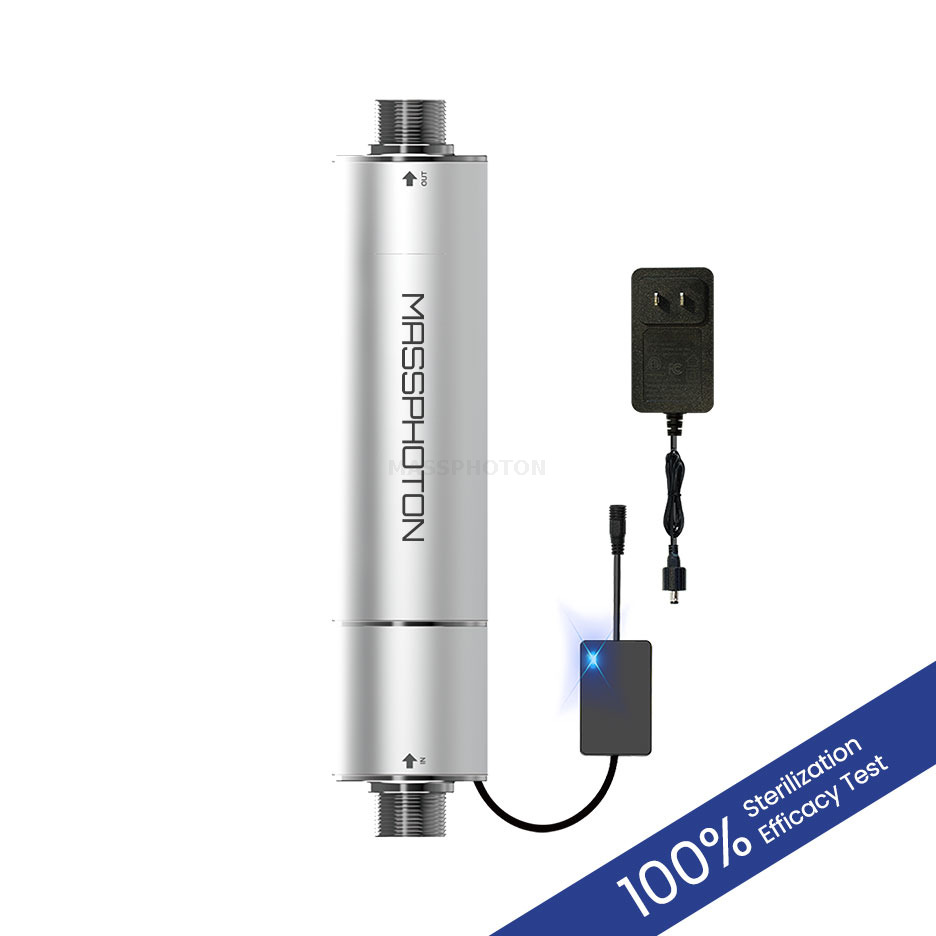

MASSPHOTON UV systems are designed to support:
Regulatory compliance with EPA and state water quality standards
Energy-efficient treatment with lower operating costs
Digital monitoring and SCADA integration
Scalable deployment for aging infrastructure
Long-term resilience for climate-stressed regions

Who Needs Trusted UV Water Systems?
Government buildings and campuses
Energy facilities and utilities
Industrial plants with water reuse targets
Smart city and infrastructure modernization programs
Sites facing water scarcity or demand surges
Keep in touch with us
Join the "Water-Saving Revolution." Contact our engineering team today for a customized UVC LED greywater treatment consultation.
E-mail:info@massphoton.com
FAQ
Q1: Is the treated greywater safe for human skin contact (e.g., during irrigation or flushing)?
A: Absolutely. UVC LED disinfection is a physical process. It adds no chemicals and creates no carcinogenic Disinfection By-products (DBPs) like trihalomethanes (THMs). The water remains chemically identical to its pre-disinfected state but is biologically safe.
Q2: Does UVC LED technology help in achieving Green Building certifications?
Q3: Why is UV Intensity (UVI) monitoring necessary if the LEDs are rated for a specific life?