

99.999% Sterilization Rate (Log 5)
Up to 15,000+ Hours Lifespan
Mercury-Free & Eco-Friendly
Compact Design for Easy Integration

MASSPHOTON UVC LED Water Disinfection Module
Modular UVC LED Systems for Every Water Treatment Need
MASSPHOTON UVC LED water disinfection module harnesses deep UV LED technology for over 99.999% pathogen inactivation, targeting bacteria, viruses, and protozoa. This chemical-free process produces no by-products while preserving the original water taste and essential minerals. As a standalone solution, it utilizes ultraviolet light to eliminate harmful microorganisms, delivering safe and pure water across diverse applications.


Are You Facing These Challenges in Water Disinfection?
Although traditional water disinfection methods are effective, they come with numerous hazards and inconveniences, and can no longer meet the demands of modern environmental protection, safety, and instant-on requirements.
Invisible
Bacteria & viruses in drinking or process water cause health & compliance risks.
Chemical-Free Demand
Space&Power Constraints
6 Key Advantages of UVC LED Water Disinfection Modules
Delivering validated, chemical-free disinfection with a lower Total Cost of Ownership (TCO) through solid-state deep-UV technology.
01 Safety and Regulatory Compliance
Utilizes high-performance UVC LED modules. Eliminates mercury-related environmental and safety hazards, aligning with global mercury phase-out initiatives (Minamata Convention).
02 High Efficiency & Longevity
Achieves >99.999% (5-log) inactivation* of bacteria, viruses, and protozoa (e.g., Cryptosporidium). Lifespan exceeds 15,000 hours.
03 Instant On/Off
Reaches full power immediately—no warm-up time. Water is purified the moment it flows through.
04 Inherently Eco-Friendly
100% mercury-free. Saves up to 70% energy compared to traditional mercury lamps. Meets stringent environmental standards.
05 Compact & Intelligent
Modular, standalone design for easy installation. Optional smart monitor displays real-time operational status and UV dose.
06 Pure Physical Purification
No chlorine or chemicals added. Preserves water's natural taste and composition, with no risk of secondary pollution.
UVC LED vs Mercury UV Lamps
UVC LED emits precise 270-280nm ultraviolet light, directly destroying DNA/RNA of bacteria, viruses, and protozoa – preventing replication without chemicals or residuals.
UVC LED (MASSPHOTON)
The Future of Mercury-Free, Instant-On Water Purification
Inactivation Rate: 99.999% (5-log)
Startup Time: Instant (milliseconds)
Compliance: Mercury-free
Lifespan: 15,000+ hours
Maintenance: Minimal
On/Off Tolerance: Unlimited
Traditional UV Mercury Lamp
Requires Warm-Up and Contains Hazardous Materials
Inactivation Rate: 90-95%
Startup Time: Warm-up minutes
Compliance: Hazardous mercury
Lifespan: 8,000 hours
Maintenance: Frequent replacements
On/Off Tolerance: Limited
Product Specifications
MASSPHOTON Commercial and Industrial Grade UVC LED Water Disinfection
Model
MP-UVC-4LB
MP-UVC-10LB
MP-UVC-45LB
MP-UVC-4LC
MP-UVC-48LC
MP-UVC-70LC
Rated Flow Rate
≤ 4 L/min (1 GPM)
≤ 10 L/min (2.6 GPM)
≤ 45 L/min (12 GPM)
≤ 4 L/min (1 GPM)
48 L/min (2.8TPH)
70 L/min (4.2TPH)
Power Adapter Input
DC 24V
DC 24V
DC 24V
100-240 V~50 / 60 Hz
100~240 V 50/60 Hz
100-240 V~50 / 60 Hz
Total Power
9 W
12 W
26 W
9 W
26 W
49 W
Power Supply Method
Terminal
Terminal
Terminal
Adapter
Adapter
Adapter
UV-C LED Wavelength
270 nm- 280 nm
270 nm- 280 nm
270 nm- 280 nm
270 nm- 280 nm
270 nm- 280 nm
270 nm- 280 nm
UVC-LED Lifetime
≥ 15,000 Hours
≥ 15,000 Hours
≥ 15,000 Hours
≥ 15,000 Hours
≥ 15,000 Hours
≥ 15,000 Hours
Sterilization Efficiency
Up to 99.999%
or 5.0 Log Reduction (*)
Up to 99.999%
or 5.0 Log Reduction (*)
Up to 99.999%
or 5.0 Log Reduction (*)
Up to 99.999%
or 5.0 Log Reduction (*)
Up to 99.999%
or 5.0 Log Reduction (*)
Up to 99.999%
or 5.0 Log Reduction (*)
Connection Size
3/8" Quick Connect
ZG 1/2"
1" MNPT
1 /4″ Quick Connect
1" MNPT
1" MNPT
Inlet/Outlet Material
Food-Grade Plastic
Stainless Steel
Stainless Steel
Food-Grade Plastic
Stainless Steel
Stainless Steel
Food-Grade Plastic
0.4 MPa (60 psi)
0.4 MPa (60 psi)
0.8 MPa
0.4 MPa (60 psi)
0.1 to 0.8 MPa (14 to 116 psi)
0.1 to 0.8 MPa (14 to 116 psi)
Operating Temperature Range
4℃ to 60℃ (39.2℉ to 140℉)
4℃ to 60℃ (39.2℉ to 140℉)
5℃ to 40℃ (41℉ to 104℉)
4℃ to 60℃ (39.2℉ to 140℉)
5℃ to 40℃ (41℉ to 104℉)
5℃ to 40℃ (41℉ to 104℉)
Product Dimensions
Ф25.4 mm * 130 mm (Ф1 in * 5.1 in)
Φ35 mm * 185 mm (Ф1.4 in * 7.3 in)
Φ70mm×253mm (Φ2.76in × 9.96in)
Φ42 mm × 252 mm (Ф1.7 in * 9.9 in)
Ф70 mm * 338.5 mm (Ф2.8 in * 13.3 in)
Ф84 mm * 458 mm (Ф3.3 in * 18 in)
Exterior Material
Aluminum
Aluminum
Aluminum
Stainless Steel
Aluminum
Aluminum
Engineered for Your Specific Needs
At MASSPHOTON, we recognize that every water treatment system has unique requirements. Our engineering team partners with you to develop bespoke UVC LED modules that integrate seamlessly into your equipment, ensuring optimal disinfection performance and cost-efficiency.
Tailored UV power for any flow rate, from residential to industrial applications.
Selection of housing materials based on your specific pressure, temperature, and regulatory needs.
Custom housing and interfaces designed to fit your physical footprint and connection requirements.
Ideal for Various Water Treatment Applications
Whether you are building a residential RO system or looking to upgrade your commercial water treatment setup, our UV water disinfection technology offers an ideal solution.
Home & Point-of-Use
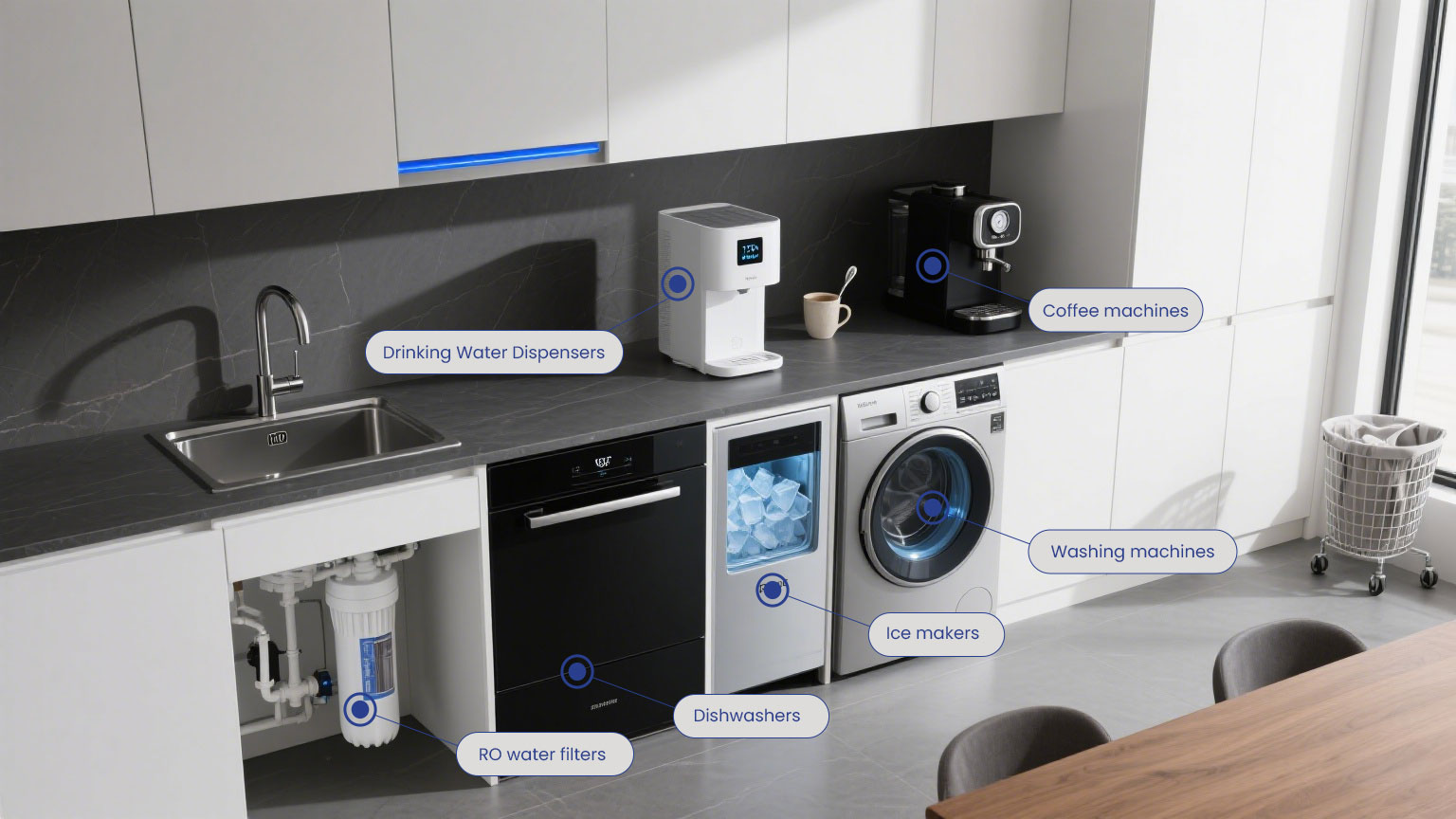
① RO Purifiers & Direct Drinking Water Dispensers – Final stage sterilization to ensure safe drinking water at every cup.
② Ice Makers & Coffee Machines – Prevent microbial growth in water lines, maintaining taste and hygiene.
③ Washing Machines & Dishwashers – Reduce bacteria in laundry and tableware rinsing water.
Commercial
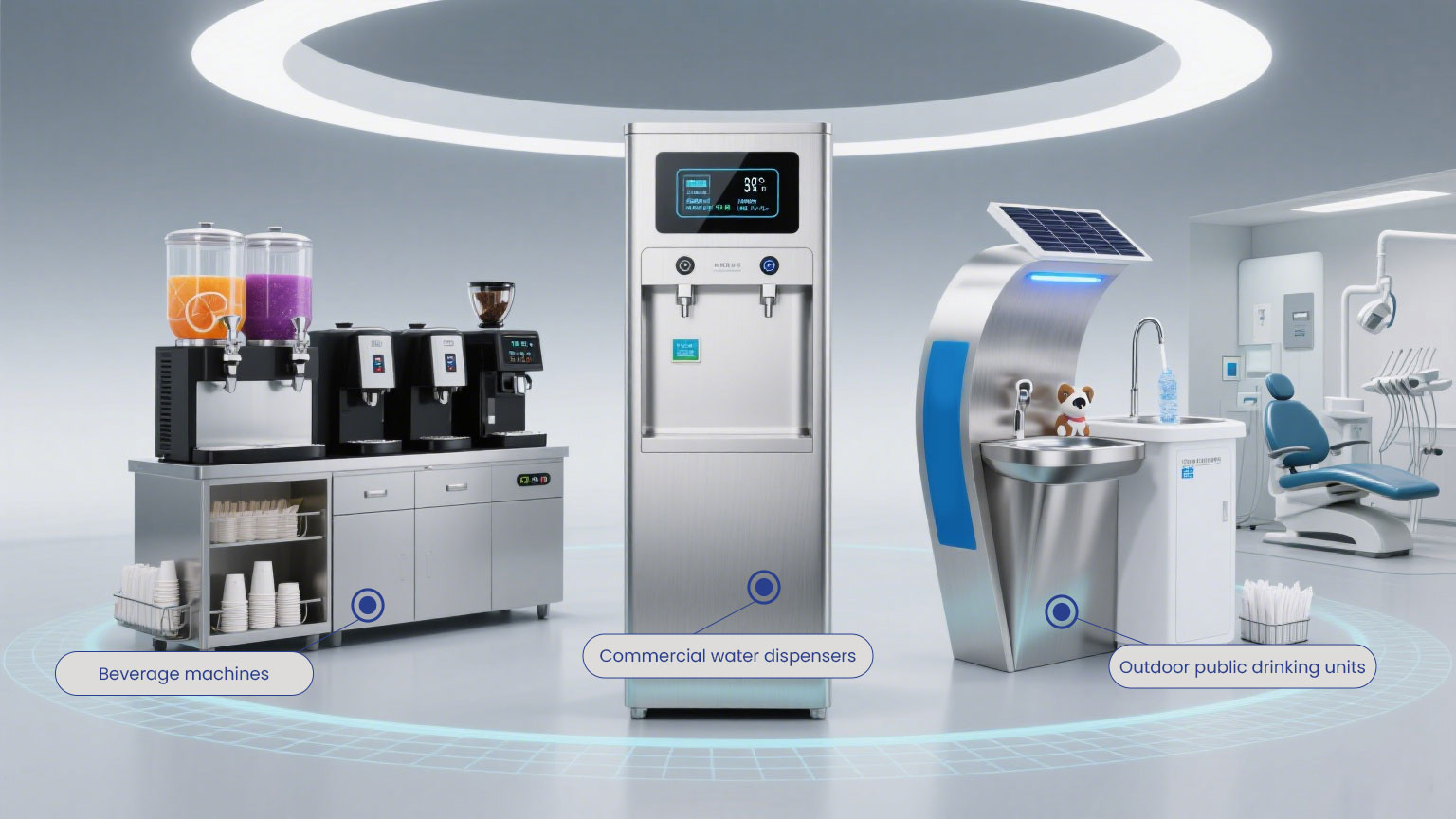
① Commercial Water Dispensers – Continuous supply of hygienic water for offices, schools, and public spaces.
② Restaurant & Hotel Beverage Machines – Ensure clean water for coffee, tea, and other beverages.
③ Outdoor Public Drinking Units – Provide safe hydration in parks, stations, and high-traffic areas.
Medical & Lab
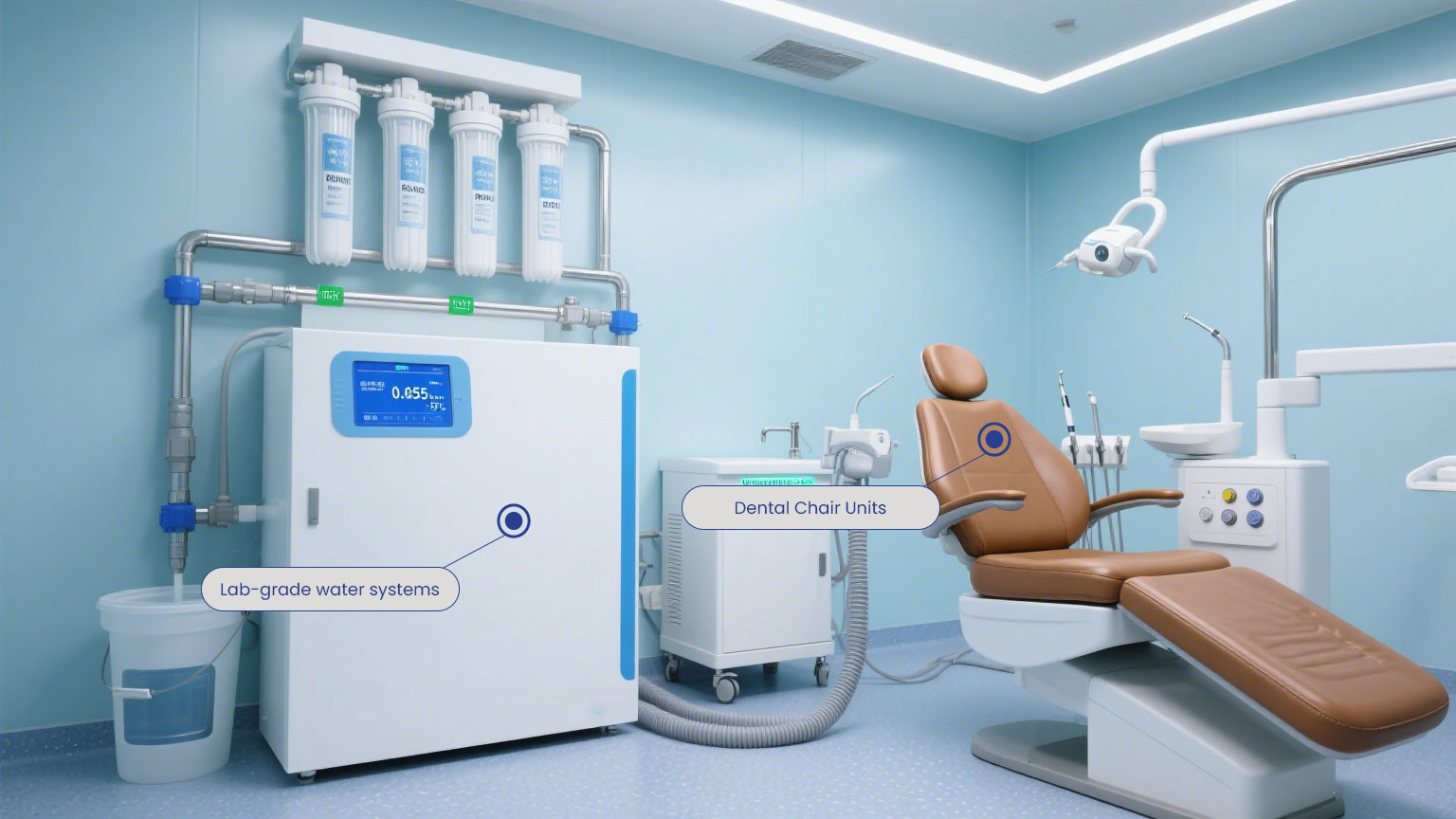
① Clinics & Laboratories – Reliable sterilization for medical-grade water systems.
② Dental Chair Units – Prevent biofilm and bacterial contamination in dental waterlines.
③Endoscope Cleaning — effectively inactivates tough pathogens while being gentle on delicate endoscopes.
Industrial

① Aquaculture & Fish Farming - Safe pathogen control without harming aquatic life.
② Swimming Pools - Reduce chemical usage by 50-80% while maintaining crystal-clear water.
③ Poultry Farming - Disinfect drinking water lines to prevent bacterial spread, reduce antibiotic use, and improve flock health and productivity without residuals.
Your Reliable UVC LED Manufacturer Partner
MASSPHOTON specializes in UVC LED technology with end-to-end solutions. Third-party verified 99.999% inactivation, compliant with SGS/CE standards. Reliable supply chain, rapid prototyping, and custom production—empowering partners to reduce TCO and gain competitive edge.

Certified Safety
Compliant with CE, RoHS, REACH, and leading international water quality association standards.

Rigorous Testing
Each unit undergoes aging tests and performance verification for optimal out-of-box operation.

Expert Support
Our engineering team provides installation guidance and technical consultation.


Keep in touch with us
If you have any questions or requirements , please feel free to contact our customer service team. Our professional team will provide you with detailed product information, answer your questions, and tailor the best solution to meet your needs.
WhatsApp:+852 4619 8806
E-mail:info@massphoton.com
Q1: How effective is the UVC LED module in killing bacteria and viruses?
A:Our modules achieve up to 99.999% sterilization within seconds. They are highly effective against common pathogens including E. coli, Salmonella, Legionella, and various viruses. The effectiveness is verified by both laboratory tests and real-world applications.
Q2: What is the typical lifespan of the UVC LED module?
Q3 Can the module be integrated into our existing RO system or appliance?
Q4: Do you offer custom module designs for OEM or industry-specific applications?
Q5: How do I request a datasheet, quotation, or sample?
Q6: Is it safe for drinking water systems?