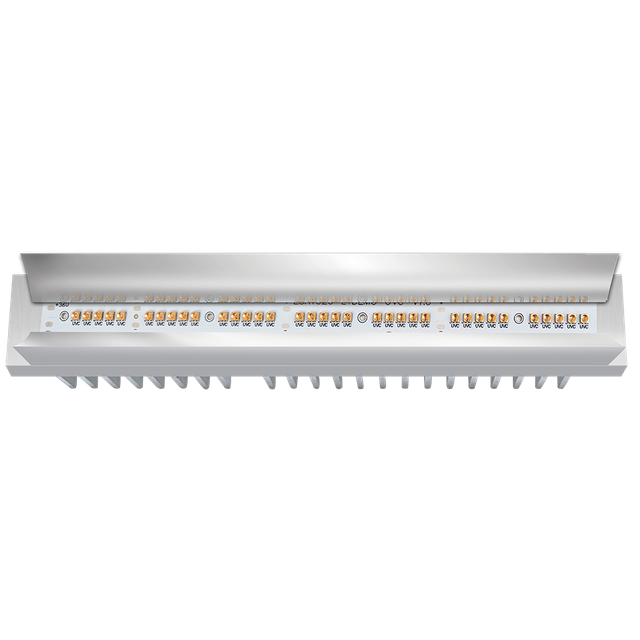
Author: Site Editor Publish Time: 06-01-2026 Origin: Site


In the context of green manufacturing and ESG (Environmental, Social, and Governance) drivers, enterprises face increasingly stringent sustainable development requirements, particularly in reducing the use of hazardous substances and minimizing environmental footprints. The mercury-free transformation in water treatment is a core part of this trend, as traditional ultraviolet (UV) disinfection systems often rely on mercury-containing lamps, which pose risks of mercury pollution, hazardous waste disposal challenges, and non-compliance with global mercury restriction conventions (such as the Minamata Convention). UVC LED (Ultraviolet C-band LED) technology, as an innovative solution, is becoming a key enabler for this transition. It provides efficient and environmentally friendly disinfection, helping enterprises improve ESG performance while optimizing operational efficiency.
Traditional low-pressure/medium-pressure mercury lamps contain 5–200 mg of mercury per lamp. Lamp breakage or improper disposal can lead to mercury leakage, contaminating soil, water, and air. The Minamata Convention on Mercury, ratified by over 140 countries, mandates the gradual phase-out of mercury-added products, including certain lamps (with key deadlines around 2027). In the EU, the RoHS Directive exemptions for mercury lamps are set to expire on February 24, 2027, further accelerating the shift.
Environmental (E): Mercury is a persistent pollutant that bioaccumulates in ecosystems, threatening aquatic life and human health.
Social (S): Employee exposure to mercury poses health risks, while community pollution concerns damage corporate reputation. Consumers and investors increasingly favor toxin-free supply chains.
Governance (G): Mercury lamps require frequent replacement and costly hazardous waste disposal. Their high energy consumption (including preheating) increases carbon emissions, conflicting with dual-carbon goals.
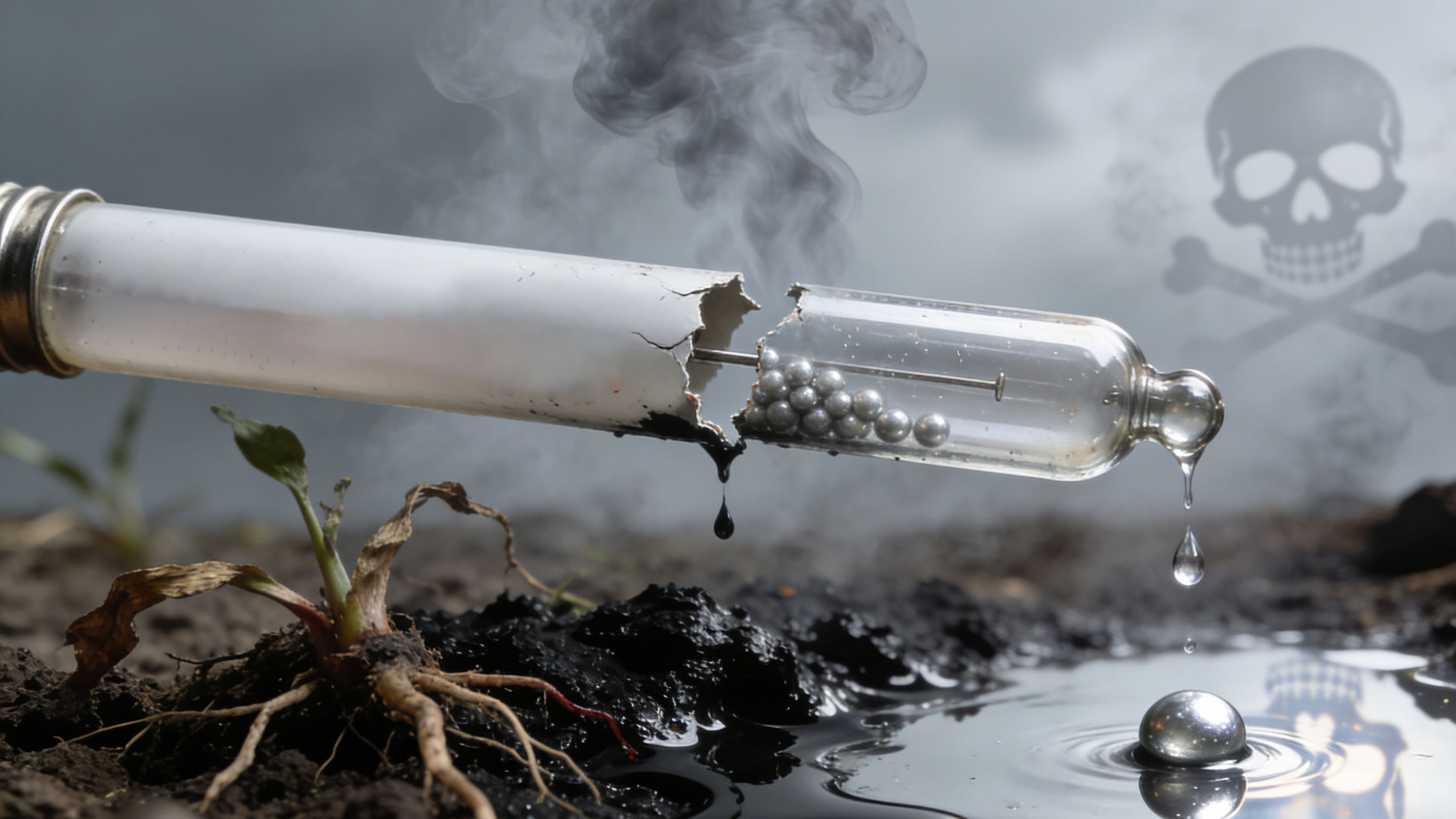
Traditional mercury lamps rely on mercury vapor excitation to produce UV light, carrying ongoing compliance pressures and hidden costs from potential leaks and hazardous waste. UVC LED, based on solid-state semiconductor luminescence, fundamentally eliminates toxic substances, achieving truly pure physical disinfection. This not only removes mercury pollution risks and simplifies operations and end-of-life management but also perfectly aligns with global mercury-ban agendas and corporate ESG environmental goals, enabling lighter and greener manufacturing practices.
UVC LED uses semiconductor materials to generate UV-C light in the 200–280 nm range, effectively killing bacteria, viruses, and microorganisms through physical disinfection. Compared to traditional mercury lamps, UVC LED is mercury-free, ozone-free, leaves no chemical residues, and offers a longer lifespan.
Zero-Mercury Design, Zero Environmental Burden: UVC LED employs solid-state semiconductor emission, eliminating mercury from the source and avoiding pollution from lamp breakage or disposal issues. This directly supports green manufacturing principles, reduces hazardous emissions, and complies with global mercury-free initiatives (e.g., UVSAFE Alliance advocacy).
Energy-Efficient and Cost-Reducing with Dual Carbon Benefits: UVC LED can save 50–70% in energy compared to mercury lamps, with lifespans reaching tens of thousands of hours (often 10,000–50,000+ hours vs. 8,000–15,000 for mercury lamps), reducing frequent replacements and maintenance. This lowers carbon footprints and supports ESG environmental metrics. Its instant on/off feature eliminates mercury lamp preheating, further boosting water treatment efficiency.
Intelligent and Flexible, Embracing Smart Water Futures: UVC LED devices are compact and modular, easily integrated into diverse scenarios—from large municipal wastewater plants to compact in-pipe systems. They pair seamlessly with smart sensors and control systems for on-demand disinfection, precise dosing, and remote monitoring, laying the foundation for intelligent water treatment facilities.
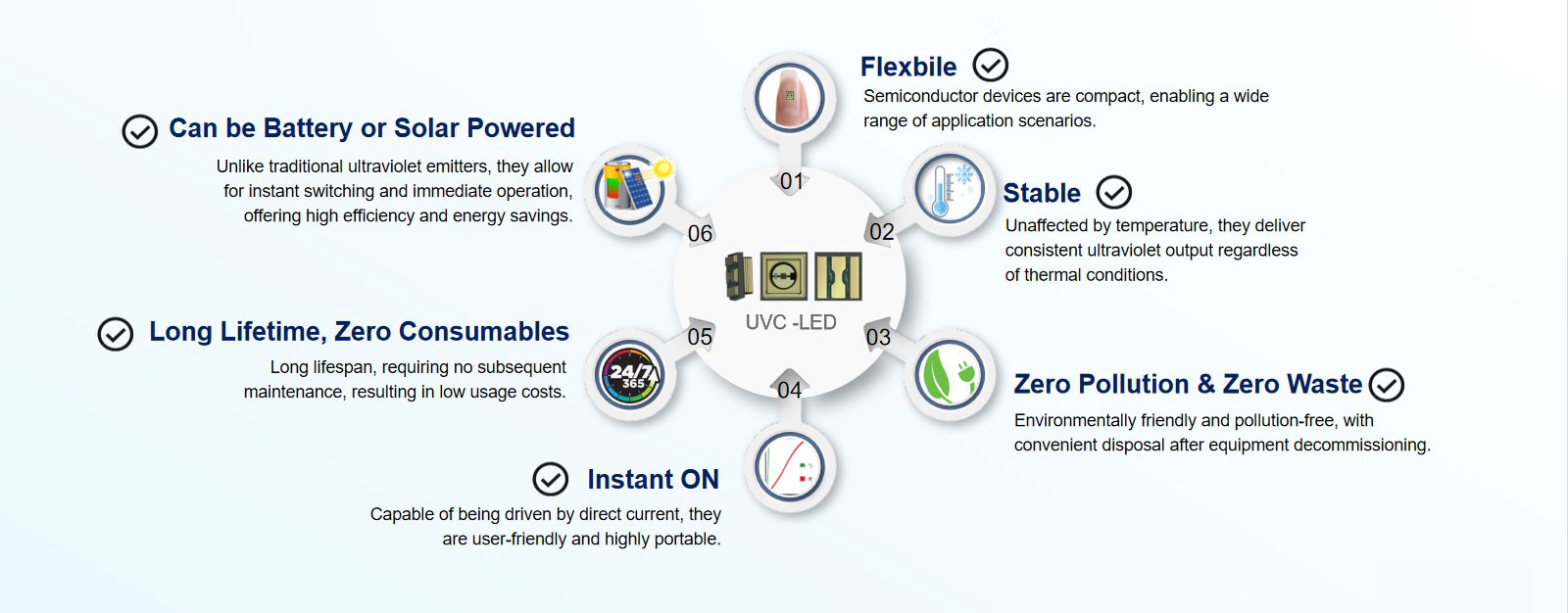
Traditional UV disinfection relies on low-pressure or medium-pressure mercury lamps, which become hazardous waste at end-of-life. UVC LED delivers equivalent disinfection efficacy (e.g., 99.999% inactivation rates) while being completely mercury-free. Enterprises can phase in UVC LED to replace mercury systems gradually, achieving full-process mercury-free operations.
A recommended approach follows a "pilot validation → phased replacement → full-chain upgrade" strategy to balance costs and risks:
Pilot Entry (Low-Risk Start): Deploy UVC LED modules in low-flow or critical nodes (e.g., pure water preparation, recirculating makeup water) running parallel with existing mercury systems to validate disinfection performance, energy use, and maintenance costs.
Phased Replacement (Cost Control): Prioritize high-risk areas (e.g., fragile open-channel systems or personnel-intensive units). Use modular UVC LED integration with existing pipes/reactors to avoid full equipment overhauls, shortening timelines and reducing capital expenditure.
Full-Chain Intelligent Upgrade (Maximizing ESG Value): Integrate smart sensors and IoT platforms for flow-linked "on-demand disinfection." Establish traceable disinfection dosing and operational data systems to provide quantitative support for ESG reporting, enhancing appeal to green finance.
Adopting UVC LED goes far beyond basic regulatory compliance. In an era of mature ESG evaluation systems and capital market orientation, it transforms environmental responsibility into tangible business advantages, shifting from "passive compliance expenditure" to "active value creation."
Environmental (E): Mercury-free design prevents ecosystem pollution, advancing a "zero-mercury society." Energy savings reduce carbon footprints, aligning with green manufacturing's low-carbon transition. It contributes to global agendas, cutting mercury emissions and supporting UN Sustainable Development Goals (e.g., SDG 6: Clean Water and Sanitation), improving environmental reporting performance.
Social (S): Internally, it eliminates occupational mercury exposure risks, creating safer workplaces. Externally, it delivers chemical-free, residue-free physical disinfection for safer, more reliable water quality, protecting public health and ecosystems. Transparent disclosure of mercury-free progress builds strong brand trust and social capital with communities, customers, and stakeholders.
Governance (G): Ensures compliance with international regulations like the EU RoHS Directive and Minamata Convention. Higher ESG scores attract green finance and responsible investors. Industry trends indicate rapid UV-LED market growth due to ESG pressures, with forecasts showing the global UV LED market expanding significantly (e.g., from around USD 1–2 billion in 2025 to USD 2–5 billion by 2030, with strong CAGRs driven by mercury phase-outs and disinfection demand).
With continuous improvements in UVC LED efficiency and declining costs, the era of full replacement of mercury lamps is accelerating. Driven by ESG regulations, corporate voluntary emission reductions, and technological maturity, UV LED is poised for large-scale adoption by around 2030. For enterprises, early adoption of UVC LED water treatment technology is not only essential for mercury-free transformation but also a strategic choice for building green supply chains and enhancing overall competitiveness.
From a broader perspective, UVC LED represents more than a technical upgrade—it embodies a shift in development philosophy: using innovation to turn environmental responsibility into operational strengths, ultimately achieving synergy between business and societal value. In today's world, where green manufacturing and ESG are global consensus, choosing UVC LED means choosing the path to sustainable growth for the next decade.