
Author: Site Editor Publish Time: 17-12-2025 Origin: Site


Biofilm in water pipes and drinking water systems is one of the most persistent challenges in water treatment, HVAC systems, commercial equipment, and industrial circulating systems. Biofilm in drinking water and biofilm in water pipes forms when microorganisms attach to surfaces like pipes, coils, or filters, creating a protective matrix that makes them highly resistant to chemical disinfection, filtration, and even traditional UV mercury lamps.
Today, the industry is rapidly transitioning from mercury-based ultraviolet lamps to UVC LED deep-ultraviolet disinfection technology, ushering in a more precise, efficient, and modern approach to biofilm control that better meets the needs of contemporary water and air management.
What Are Biofilms, and Why Are They So Difficult to Eliminate?
Biofilms form when microorganisms attach to moist surfaces (such as pipes, membrane modules, or heat dissipation fins) and gradually develop into multilayer structures. These microorganisms secrete a protective layer known as extracellular polymeric substances (EPS), encasing themselves in a "shield." This makes biofilms far more resistant than free-floating bacteria to antibiotics, chemical disinfectants, and mechanical cleaning.
Key issues from biofilm in water treatment systems:
Up to 1000x greater resistance than free-floating bacteria
Causes odors, corrosion, reduced efficiency, and contamination
Increases infection risks (e.g., catheter infections in healthcare)
Leads to pipe blockages and equipment failures in water treatment and food processing
Research highlights biofilm in water pipes as a common source of durable pathogens like Pseudomonas aeruginosa, driving the need for effective removing biofilm strategies.
Traditional UV mercury lamps offer some bacterial reduction but struggle with eliminating biofilm in drinking water pipes, especially in tight spaces, intermittent flow, or low-temperature conditions.
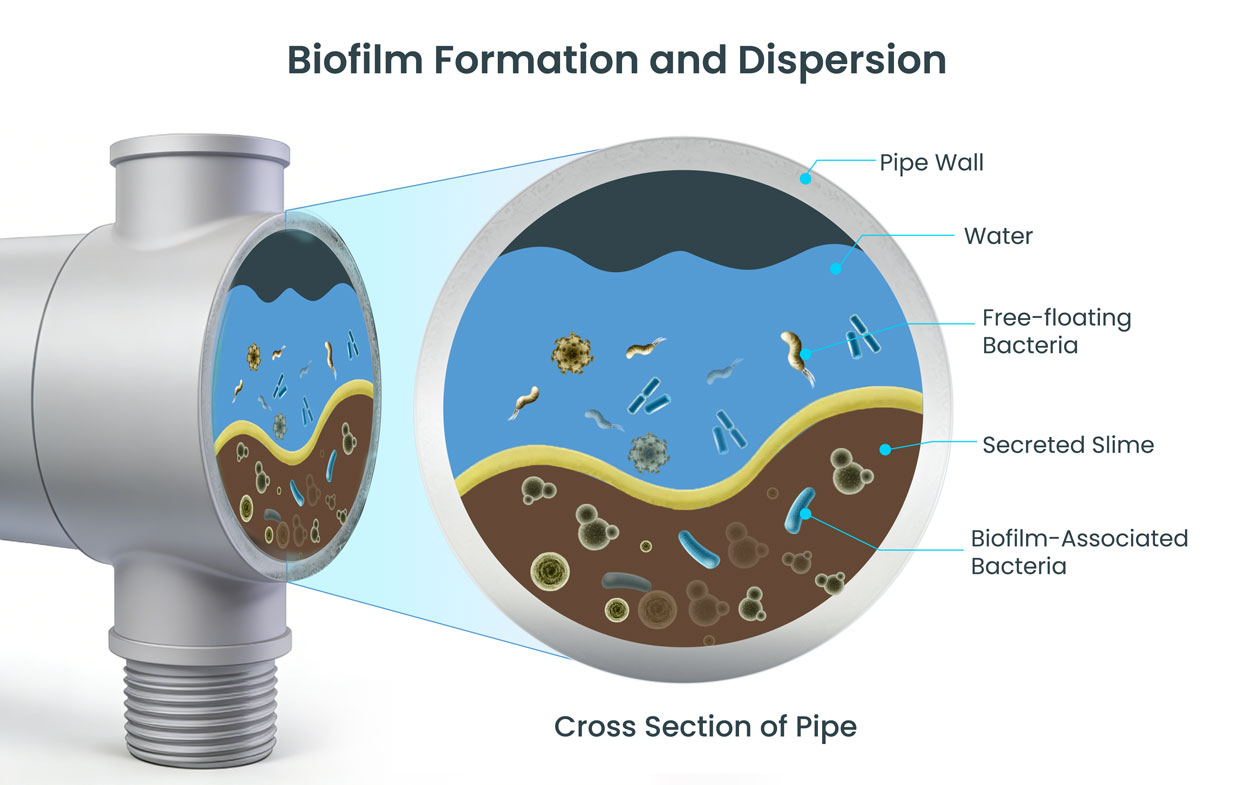
Biofilm Formation and Dispersion
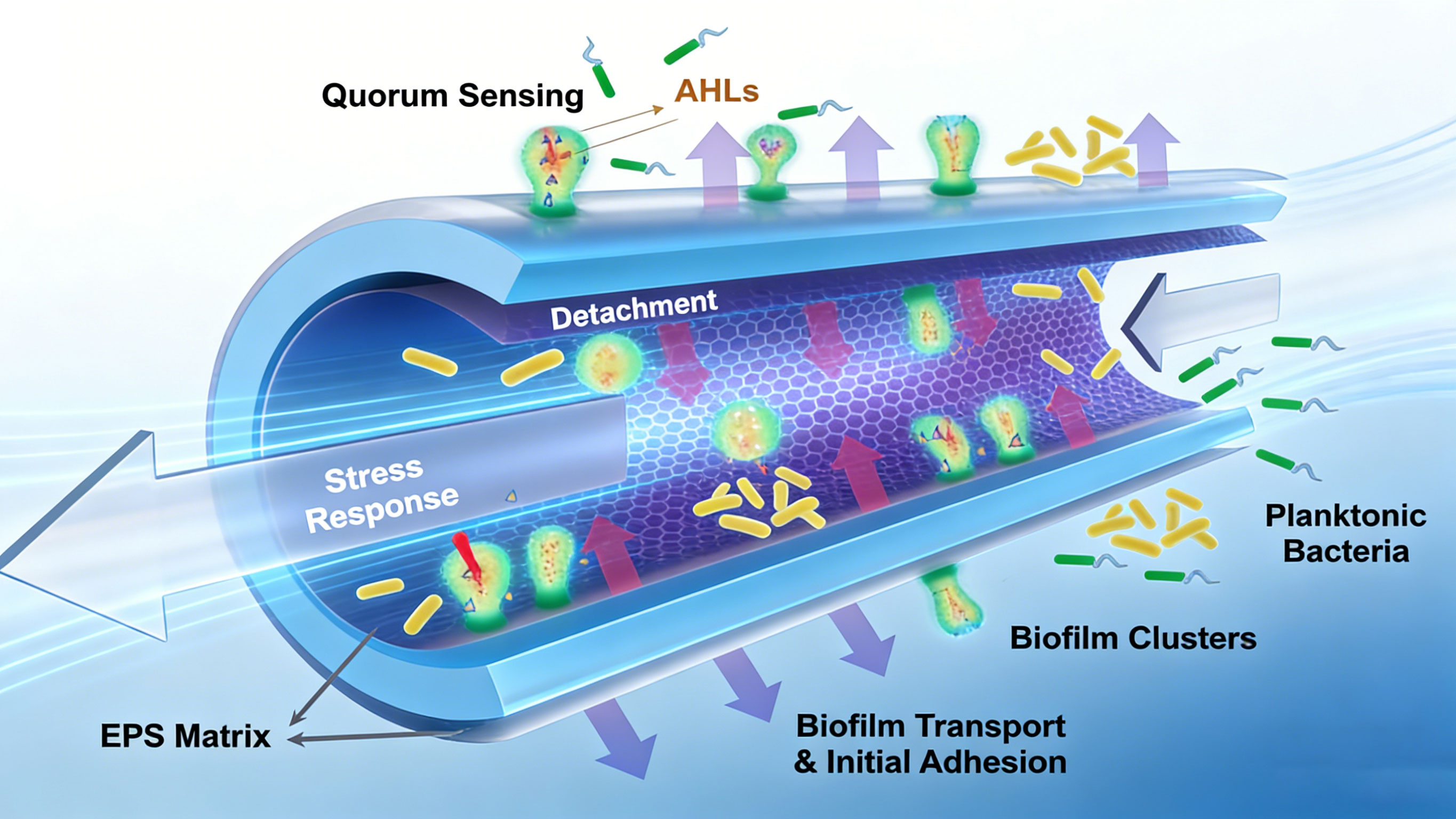
The Dynamic Lifecycle Process of Biofilms in Pipeline Environments
Although low-pressure mercury lamps have been used for years, their applicability in modern water and air systems is rapidly declining.
Require warm-up time and cannot respond instantly: Biofilms often form during system stagnation or intermittent flow, but mercury lamps cannot be frequently switched on/off and need several minutes to warm up, creating prolonged "dark periods" where microorganisms proliferate unchecked.
Large size and difficult to position near biofilm hotspots: Biofilms commonly accumulate at outlets, bends, valves, deep within HVAC coils, trapped water bends, or damp corners. The bulky structure of mercury lamps often prevents close access to these critical areas.
High heat generation, posing safety risks: Long-term operation raises water temperatures (stimulating microbial regrowth and scale crystallization), increases burn risks, and elevates energy consumption.
Environmental regulations driving phase-out: Global standards (such as RoHS 2.0 and the Minamata Convention) are accelerating the retirement of mercury-containing products.
Traditional UV mercury lamps offer some disinfection but are limited in proactively suppressing biofilm formation, particularly in tight spaces, intermittent flow, or cold conditions.
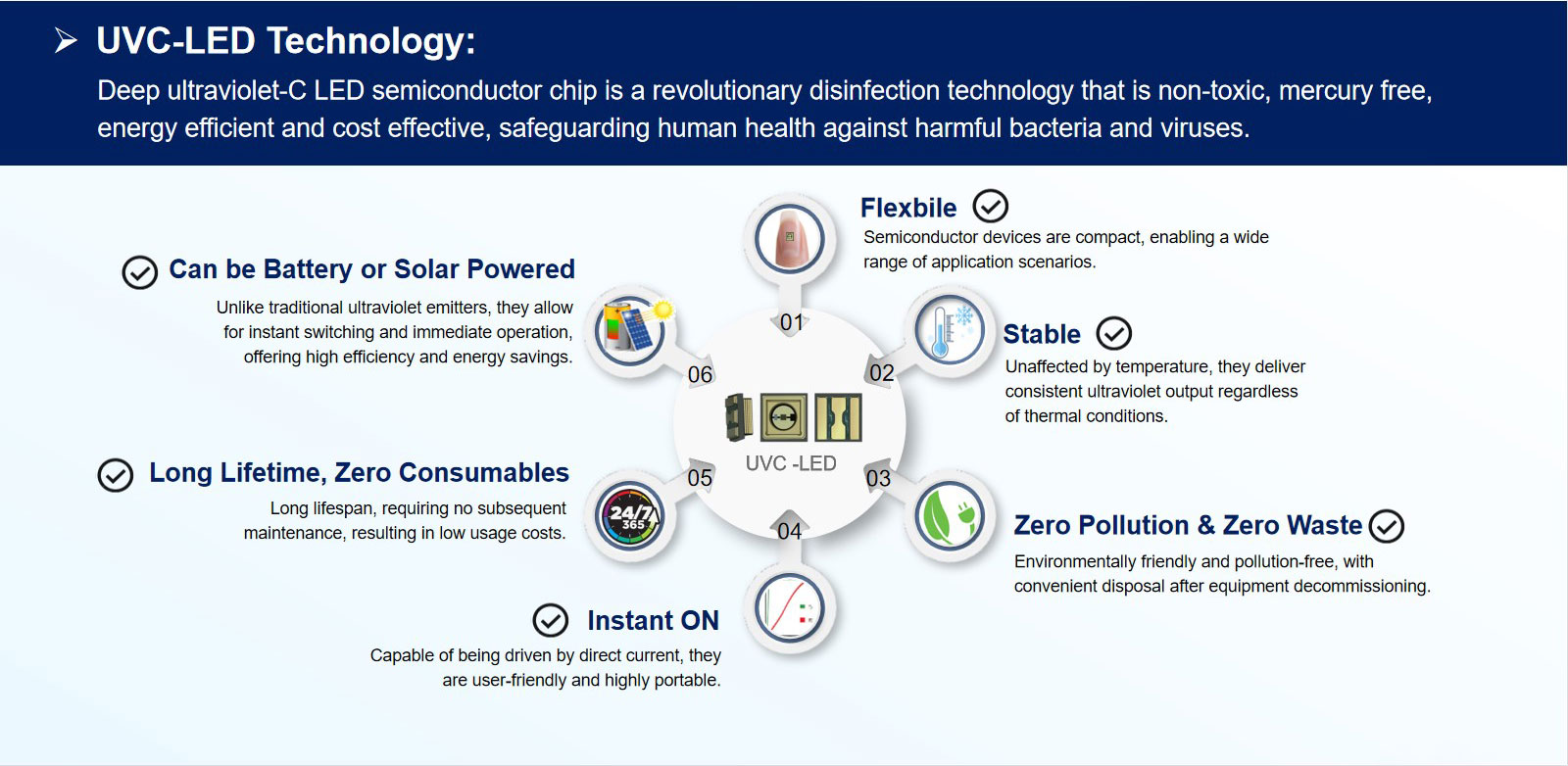
UVC LEDs destroy microbial DNA/RNA without chemicals, delivering pure physical disinfection and no secondary pollution. Smaller, more energy-efficient, and longer-lasting than mercury lamps, UVC LEDs excel at early-stage biofilm in water pipes inhibition.
Recent studies confirm efficacy for eliminating biofilm:
UVC LEDs reduce biofilm coverage
Effective against pre-existing biofilms and pathogens like Pseudomonas aeruginosa
275–280 nm wavelengths delay biofilm on RO membranes
Key advantages for water treatment solutions:
Deep penetration into biofilm layers for internal inactivation
Mercury-free, ozone-free, and eco-friendly
Compact for integration in faucets, purifiers, and pipes
Long-term cost savings through energy efficiency and low maintenance
Broad-spectrum against bacteria, viruses, and protozoa
UVC LEDs enable source-level removing biofilm across sectors:
Household systems: Prevent endpoint biofilm in drinking water machines, RO purifiers, and kitchen faucets
Commercial/public: Secure last-mile safety in vending machines, ice makers, and hotel systems
HVAC: Suppress growth on coils and condensate pans
Industrial: Reduce adhesion in cooling towers and circulation systems, minimizing chemicals
MASSPHOTON delivers high-performance UVC LED modules for water, air, and surface disinfection, supporting residential, commercial, medical, and industrial OEMs.


