Author: Site Editor Publish Time: 09-10-2025 Origin: Site


Eason Liao1*, Yiping Mao2,Xiaoxiao Wang1, Qing Zhang1, Shuzhong Li1,Jiancheng Wang1
1MASSPHOTON LIMITED Hong Kong, China, HK1100
2Affiliated Hospital of Xuzhou Medical University,Department of Infection Management, China, 221004
Abstract. This study systematically investigated the mechanisms underlying the effects of UV-C LED irradiation on the preservation of fresh fruits. High-power 270–280 nm gallium nitride (GaN)-based UV-C LED chips were employed, with device performance enhanced through optimized heat dissipation structures and a matrix arrangement design. Experimental results demonstrated that, under ambient conditions (22–27°C), a 75% duty cycle UV-C irradiation (45 s on/15 s off) achieved the most effective suppression of mold growth on apple slices and raspberries, completely inhibiting mold proliferation. The 25% duty cycle (15 s on/45 s off) provided a better balance between antibacterial efficacy and maintaining fruit freshness. In a 4°C refrigerated environment, the 25% irradiation mode (15 s on/45 s off, 40 cm distance) reduced the spoilage rate of raspberries from 100% to 20%. For strawberries, while UV-C irradiation completely suppressed mold growth, it induced significant
oxidative damage (44.4% of fruits exhibited water-soaked spots) and a higher weight loss rate (14% compared to 6% in the control group). These findings confirm that UV-C irradiation effectively controls postharvest microbial spoilage in fruits, but optimization of irradiation parameters is necessary to balance antibacterial efficacy with fruit quality preservation.
Keyword:UV-C treatment;raspberries;strawberry;retain freshness;
1 Introduction
Fresh fruits and vegetables, rich in vitamins, carbohydrates, and bioactive compounds [1], are indispensable for a healthy human diet. However, their short postharvest shelf life makes them highly susceptible to mold, dehydration, and discoloration. Spoilage not only leads to economic losses but also poses significant health risks. Researchers have been actively exploring more effective low-temperature preservation technologies to maintain the nutritional quality of fruits and vegetables, delivering safer, sensorially appealing, and nutrient-rich food products [2].
Studies have demonstrated that UV-C irradiation effectively reduces surface pathogens on fruits and vegetables. By inducing the formation of pyrimidine dimers in DNA strands, UV-C disrupts microbial replication, causing nucleic acid damage and ultimately leading to microbial death [3, 4]. UV-C LEDs, based on p-n junction semiconductor technology, convert electrical energy into radiative energy [5]. Depending on the semiconductor materials used, LEDs emit light at varying wavelengths [6, 7]. They offer significant advantages, including long lifespan, short warm-up time, mercury-free composition, compact size, durability [8, 9], and a wide range of wavelength options [10]. Additionally, UV-C LEDs exhibit low electromagnetic
interference, allow for rapid modulation of radiation intensity and pulse duration, provide narrow-band emission without spurious peaks, require minimal maintenance [11], and have negligible impacts on nutritional quality and sensory attributes, with high consumer acceptance [12, 13].
As a non-toxic and non-invasive method for food preservation and sterilization, UV-C offers distinct advantages. However, its limited penetration depth restricts its antimicrobial efficacy. Research indicates that UV-C can delay fruit softening and senescence by inhibiting the degradation of cell wall polysaccharides [14]. Nonetheless, continuous irradiation may cause thermal damage and oxidation in fruits. This study optimizes irradiation cycles, radiation doses, and the distance between the UV-C LED source and the fruit (set at 40 cm) to investigate the effects of UV-C on mold incidence and visual quality during fruit storage. The findings aim to provide a reference for low-damage sterilization techniques.
2 Material and method

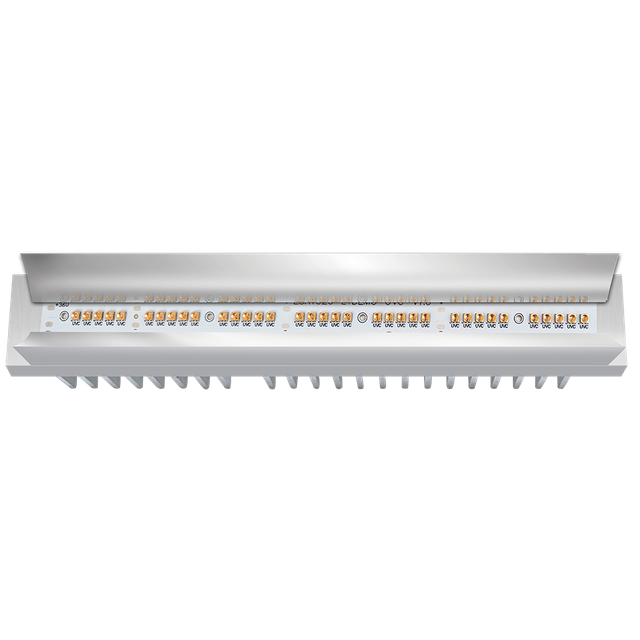
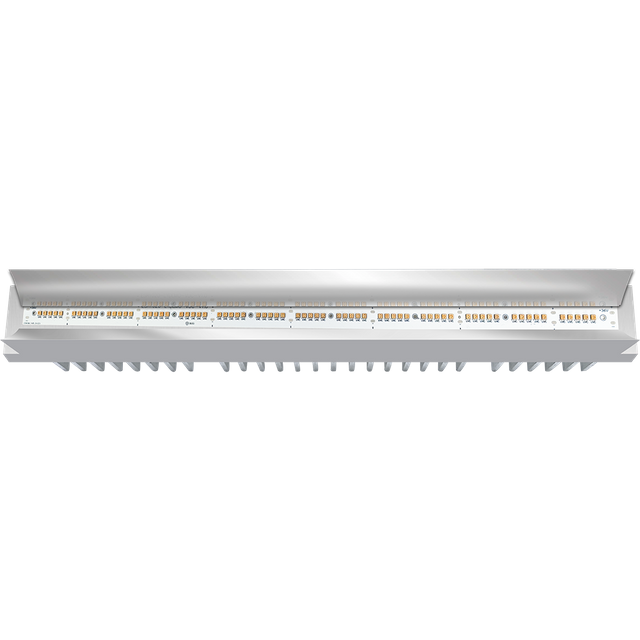
Fig. 1. UV-C LED Beads: A. LED Strip with 35 UV-C LED Beads; B. LED Panel with 14 UV-C LED Beads;C. Two refrigerators at 4℃, one for control (no UV) and one for UV treatment
UV-C LED Beads: This study employed high-power 270–280 nm gallium nitride (GaN)-based UV-C LED chips. The chips were bonded to a ceramic substrate using a eutectic soldering process, which effectively minimizes the void ratio at the chip-substrate interface. To enhance thermal management, an aluminum substrate and a small fan were incorporated at the back of the UV-C LED strip (Figure 1A), improving heat dissipation during operation and thereby extending the lifespan of the entire system.
The panel depicted in Figure 1B represents an optimized redesign of the configuration shown in Figure 1A. The number of LED beads was reduced from 35 to 14, and their arrangement was modified from a linear alignment to a matrix configuration. This adjustment expands the irradiation area while promoting more efficient heat dissipation. Furthermore, the thickness of the LED panel was reduced from 2 cm in Figure 1A to 1.5 mm, making it better suited for constrained upper spaces.
Figure 1C illustrates two 4 ℃ refrigerators used to simulate cold storage conditions for fruits and vegetables. One refrigerator served as the control group (no UV exposure), while the other was designated for the experimental group (UV-C treated) to assess the impact of different treatments on fruit quality and condition.
3 Result and discussions
3.1 Preservation Effects of UV-C LED under Ambient Conditions
This study investigated the inhibitory effects of different UV-C irradiation patterns on mold spoilage in apple slices and raspberries. Under open natural environmental conditions (humidity 55%–60%, ambient temperature 22 –27 ℃, the effects of UV-C LED irradiation with varying time intervals on fruit mold spoilage were preliminarily explored. Four UV-C irradiation patterns were established: 0% (negative control, no UV-C irradiation), 25% (15 s on/45 s off), 50% (30 s on/30 s off), and 75% (45 s on/15 s off). The changes in apple slices and raspberries were photographed and recorded every 4 hours.

Fig. 2. Testing of UV-C LED Preservation Effects on Apples and Raspberries under Ambient Conditions: A. Oxidative State of Apple Slices; B. Preservation State of Raspberries
As shown in Figure 2A, the storage experiment results for apple slices over a 68-hour period revealed significant differences in preservation outcomes. The negative control group (0% UV-C) exhibited pronounced oxidative reactions, with extensive mold colony formation, severe dehydration of the cut surface and surrounding areas, and 50% of the apples showing signs of rot, indicating extremely poor preservation. The 25%UV-C group (15 s on/45 s off) showed some suppression of mold growth, with only a few mold spots observed; however, dehydration of the cut surface and surrounding areas remained significant, with evident moisture loss. In contrast, the 50% UV-C (30 s on/30 s off) and 75% UV-C (45 s on/15 s off) groups demonstrated markedly superior preservation compared to the previous groups. Both groups exhibited no significant mold spots, maintaining a high level of freshness, indicating that UV-C treatment within this dosage range effectively inhibits mold growth. However, all UV-C-treated groups displayed a common yellowing reaction on the apple cut surfaces. Notably, the 75% UV-C group showed greater dehydration at the edges of the cut surfaces compared to the 50% UV-C group, likely due to prolonged UV-C exposure elevating the temperature of the apple surface and surrounding environment, accelerating cellular moisture transpiration and evaporation, resulting in increased edge dehydration.
As depicted in Figure 2B, over a 78-hour storage period, raspberries subjected to different UV-C irradiation patterns exhibited significant differences in spoilage, mold proliferation, and moisture retention compared to the negative control group. The control group (no UV-C treatment) showed extensive spoilage after 78 hours, accompanied by substantial mold colony proliferation in the affected areas. The 25% UV-C and 50% UV-C ( groups displayed no large-scale spoilage, with only minimal mold spots observed in localized areas and significantly fewer mold colonies compared to the control group. Mold spot expansion in these groups was also notably slower. The 75% UV-C group exhibited the most pronounced mold suppression, with no mold spots observed on the raspberry surfaces, indicating complete inhibition of mold growth. However, high-dose irradiation led to noticeable moisture loss, with the raspberry flesh appearing slightly shriveled compared to the 25% and 50% UV-C groups.
These results demonstrate that apple slices and raspberries exhibit significant differences in oxidation, mold growth, dehydration, and spoilage, with suppression effects positively correlated with UV-C irradiation duration. The 50% UV-C ( and 75% UV-C irradiation modes provided the most effective mold suppression for both apples and raspberries. However, high-intensity UV-C irradiation increased photooxidation and compromised moisture retention on fruit surfaces. The 25% UV-C mode achieved the best overall performance in terms of antibacterial efficacy and preservation quality.
The experimental results showed that, in terms of raspberry preservation (Figure 2), after 78 hours, the negative control group exhibited extensive spoilage accompanied by significant mold colony proliferation. The 25% and 50% UV-C irradiation groups displayed only localized mold spots while maintaining relatively high freshness, whereas the 75% UV-C irradiation group showed no mold formation but experienced some dehydration. These findings indicate that UV-C irradiation has a significant anti-spoilage and preservation effect on raspberries, with the inhibitory effect positively correlated with the proportion of irradiation time. Among the tested modes, the 75% UV-C irradiation mode demonstrated the best mold suppression effect on raspberries; however, the high irradiation intensity of UV-C tended to induce changes in the fruit. The 25% UV-C irradiation mode achieved the best overall performance in terms of both antibacterial efficacy and preservation.
3.2 Preservation Effects of UV-C LED under 4℃ Refrigerated Conditions
This study evaluated the inhibitory effects of intermittent UV-C LED irradiation on fruit spoilage and mold growth in a simulated cold storage environment at 4℃. Based on observations from natural environment tests regarding fruit surface oxidation and dehydration under four different irradiation intervals, the experimental setup was optimized. The number of LED beads was reduced from 35 to 14, and the irradiation pattern was set to 25% UV-C (15 s on/45 s off) to lower the UV-C irradiation intensity while enhancing heat dissipation from the LED beads. Additionally, the distance between the LED beads and the fruit was increased from 20 cm to 40 cm. This 20 cm increase in height was implemented to reduce the oxidative effects of UV-C on the fruit surface.

Fig. 3. Testing of UV-C LED Preservation Effects on Raspberries in a 4℃ Refrigerated Chamber
The experimental results (Figure 3) demonstrate that, after 92 hours of storage at 4℃, raspberries subjected to different treatments exhibited significant differences in mold proliferation, spoilage extent, and moisture retention. The negative control group showed initial mold contamination after 68 hours, with extensive mold proliferation by 92 hours, resulting in a 100% mold incidence rate. Although severe dehydration was not observed, the fruit surfaces displayed pronounced spoilage characteristics. In contrast, the 25% UV-C intermittent irradiation group exhibited only two instances of mold spoilage after 92 hours, corresponding to a 10% mold incidence rate, indicating a potent antibacterial effect compared to the control group and confirming the efficacy of this treatment in suppressing mold growth. However, this group showed noticeable dehydration and spoilage on the fruit surfaces. It is hypothesized that low-dose UV-C irradiation may still compromise the water-retaining structure of raspberry epidermis, accelerating moisture transpiration and loss, while inducing localized oxidative tissue damage, ultimately manifesting as dehydration and spoilage.

Fig. 4. Testing of UV-C LED Preservation Effects on Strawberries: A. Changes in Strawberry Damage; B. Changes in Strawberry Fresh Weight
The experimental results (Figure 4A) indicate that strawberries in the control group exhibited mold contamination as early as 29 hours, with a significant increase in surface mechanical damage, characterized by expanded epidermal lesions and deepened coloration. By 37 hours, all nine samples displayed localized mold spoilage, resulting in a 100% spoilage rate. At 67 hours, mold growth became rampant, accompanied by a fresh weight loss of 16.9 g (6% weight loss rate) (Figure 4B). In contrast, the 25% UV-C intermittent irradiation group completely inhibited mold growth within 29 hours, though surface damage was observed (Figure 4A). By 37 hours, 44.4% of the fruits exhibited water-soaked oxidative damage, which intensified by 67 hours, alongside a significant fresh weight reduction of 37.69 g (14% weight loss rate) (Figure 4B).
The results for raspberries and strawberries demonstrate that UV-C treatment at 4℃ effectively suppresses mold
proliferation during the experimental period, significantly reducing mold incidence and spoilage rates. This confirms the clear and substantial efficacy of UV-C technology in controlling postharvest diseases in berries, providing a viable approach to extending their shelf life. However, compared to the negative control group, all UV-C-treated groups exhibited common quality issues, including oxidative damage and moisture loss. These findings suggest that while UV-C irradiation is highly effective in controlling postharvest mold growth in fresh fruits, the associated oxidative stress and moisture loss issues require further optimization of irradiation parameters to mitigate their impact.
4 Conclusions
This study systematically assessed the critical performance parameters of UV-C LED systems for fruit preservation and antibacterial efficacy, including the number of LED beads, irradiation time intervals, distance between LED beads and fruit, bead arrangement and optical structure design, and environmental temperature. These findings provide a crucial foundation for the development of efficient, low-cost UV-C LED sterilization systems. Experimental results demonstrated that the 50% – 75% irradiation modes exhibited the strongest inhibition of mold growth on apple slices and raspberries; however, high-dose irradiation led to severe dehydration and oxidative damage. The 25% irradiation mode (15 s on/45 s off) achieved the optimal balance between antibacterial efficacy and preservation quality. In a 4℃ refrigerated environment, the optimized parameters —14 LED beads, 40 cm irradiation height, and 25% intermittent mode—resulted in a significantly reduced mold incidence rate of 10% for raspberries after 92 hours and complete suppression of mold growth in strawberries within 29 hours, markedly outperforming the control group. Nevertheless, challenges such as oxidative damage and moisture loss persisted.
Future research should focus on optimizing the synergistic parameters of UV-C irradiation intensity, cycle duration, and distance, while developing tailored protective technologies based on fruit epidermal characteristics. Additionally, exploring the integrated application of UV-C with low-temperature storage, modified atmosphere preservation, and other techniques could enhance antibacterial efficacy while minimizing oxidative stress and moisture loss. These advancements will facilitate the practical implementation of UV-C technology for the industrial-scale postharvest preservation of berries.
References
1. Koren, M. and L. D, Novel Industrial UV-C System for Preservation of Fruit and Vegetable Juices. IUVA News, 2018(20, 8–12).
2. Tadini CC, G.J., The Importance of Heating Unit Operations in the Food Industry to Obtain Safe and High-Quality Products. Front Nutr, 2022(9:853638).
3. Banaś, A.K., et al., All You Need Is Light. Photorepair of UV-Induced Pyrimidine Dimers. Genes, 2020(11, 1304).
4. Bhardwaj SK, S.H.D.A., UVC-based photoinactivation as an efficient tool to control the transmission of coronaviruses. Sci Total Environ, 2021: p. 792:148548.
5. MacIsaac SA, R.K.P.T., Improved disinfection performance for 280 nm LEDs over 254 nm low-pressure UV lamps in community wastewater. Sci Rep, 2023(13(1):7576. doi: 10.1038/s41598-023-34633-7. PMID: 37165026; PMCID: PMC10172208.).
6. Pulli, T., et al., Advantages of white LED lampsand new detector technology in photometry. Light Sci Appl, 2015(4,e332).
7. Nyangaresi PO, R.T.B.S., Evaluation of disinfection efficacy of single UV-C, and UV-A followed by UV-C LED irradiation on Escherichia coli, B. spizizenii and MS2 bacteriophage, in water. Sci Total Environ., 2023(859(Pt 1):160256. doi: 10.1016/j.scitotenv.2022.160256. Epub 2022 Nov
17. PMID: 36402311.).
8. Pelayo D, H.A.S.G., Performance of high-efficiency UV-C LEDs in water disinfection: Experimental, life cycle assessment, and economic analysis of different operational scenarios. J Environ Manage., 2024(364:121442.
9. Mohaghegh Montazeri M, H.S.T.F., Ultraviolet light-emitting diode (UV-LED) water disinfection photoreactors: A review. J Environ Manage, 2025(386:125678).
10. Bergman, R.S., Germicidal UV Sources and Systems. Photochem. Photobiol., 2021. 97, 466 –470.
11. Nassarawa, S.S., et al., Effect of light-emitting diodes (LEDs) on the quality of fruits and vegetables during postharvest period: A review. Food Bioproc Technol, 2021(14, 388–414.).
12. Yemmireddy V, A.A.M.J., Effect of ultraviolet light treatment on microbiological safety and quality of fresh produce: An overview. Front Nutr, 2022(9:871243).
13. Delorme, M.M., et al., Ultraviolet Radiation: An Interesting Technology to Preserve Quality and Safety of Milk and Dairy Foods. Trends Food Sci. Technol., 2020(102, 146–154.).
14. Sun H, H.D.T.Y., Effect of Chitosan/Thyme Oil Coating and UV-C on the Softening and Ripening of Postharvest Blueberry Fruits. Foods, 2022(11(18):2795.