Author: Site Editor Publish Time: 13-01-2026 Origin: Site


The microbiological safety of infant formula and complementary foods is a key focus in public health. Because infants have immature liver detoxification capacity, immune systems, and gut microbiota, they are highly sensitive to even low doses of microbial toxins. Bacillus cereus, a common foodborne pathogen, produces a heat‑stable emetic toxin (cereulide) that poses a significant threat to infants with underdeveloped immune systems. It has been identified by the WHO, EFSA, and Chinese regulatory authorities as a potential risk factor requiring strict control in infant foods.
This paper systematically reviews the microbiological characteristics, pathogenic mechanisms, and contamination routes of B. cereus in infant foods to clarify its core risk sources. It further focuses on UVC‑LED (260–280 nm) disinfection technology, analyzing its antimicrobial mechanism, its inactivation efficacy against B. cereus, and its practical limitations in food storage and transportation systems.
Bacillus cereus is a Gram‑positive, spore‑forming, facultative anaerobic rod widely distributed in soil, water, and on plant surfaces [1]. Its most notable feature is the strong resistance of its spores: spores can withstand temperatures of 80–85 °C for more than 30 minutes, and conventional pasteurization (63 °C, 30 min) is insufficient to inactivate them. In dry environments, spores can survive for years [2].
The pathogenicity of B. cereus derives from two types of enterotoxins, which differ markedly in heat resistance and pathogenic pathways—forming the core reason for its high risk in infant foods:
Diarrheal toxins: heat‑labile proteins produced by viable bacteria in the intestine, acting on the intestinal mucosa and causing watery diarrhea (incubation period 8–16 h) [3]. These toxins can be inactivated by heating at 100 °C for 5 minutes.
Emetic toxin: a cyclic dodecadepsipeptide that is extremely heat stable—remaining intact even after autoclaving at 121 °C for 30 minutes. Boiling water (100 °C) used for reconstituting infant formula cannot destroy this toxin [3].
Infants are extremely sensitive to B. cereus. Exposure may cause acute vomiting, hypoglycemia, and liver failure. Several fatal cases have been reported at low exposure levels, although no unified minimum safe dose in humans has been established. Based on animal models and exposure estimations, ingestion of approximately 1 μg/kg body weight can induce vomiting, while doses exceeding 5 μg/kg may lead to liver injury or even death [4].
Combined with recent investigations into infant formula recalls by companies such as Nestlé, contamination routes of B. cereus in infant foods can be clearly categorized into two main types:
Raw material contamination: dried milk powder and starch‑based ingredients are major sources. During production and drying, these materials are easily exposed to soil‑borne B. cereus, and dry conditions favor spore survival.
Processing equipment contamination: internal surfaces and crevices of spray dryers, powder silos, and conveyor systems are major reservoirs for spores. During high‑temperature drying, some spores adhere to equipment surfaces and form biofilms that are difficult to remove by conventional cleaning. These spores may later detach and contaminate products, causing cross‑contamination.
Internationally, EU Regulation (EC No 2073/2005) explicitly requires that toxigenic B. cereus strains must not be detected in infant foods. Although China’s National Food Safety Standard—Limits of Pathogenic Bacteria in Prepackaged Foods (GB 29921‑2021) does not specify a limit for B. cereus, it mandates risk control measures and requires that Cronobacter spp. be “not detected” in infant formula for 0–6‑month‑old infants, reflecting a stringent regulatory approach.
UVC radiation (200–280 nm) inactivates microorganisms by inducing thymine dimer formation in DNA, thereby blocking replication. DNA absorption peaks at around 265 nm, making UVC‑LEDs in the 260–280 nm range particularly efficient.
Under 265 nm UVC irradiation, vegetative cells can achieve a 3‑log (99.9%) reduction with doses of 10–20 mJ/cm² [5]. Due to the protective spore coat and dipicolinic acid (DPA), spores require much higher doses: 80–120 mJ/cm² for a 4‑log reduction [6]. In real environments, shielding by organic matter may increase the required dose by 2–3 times.
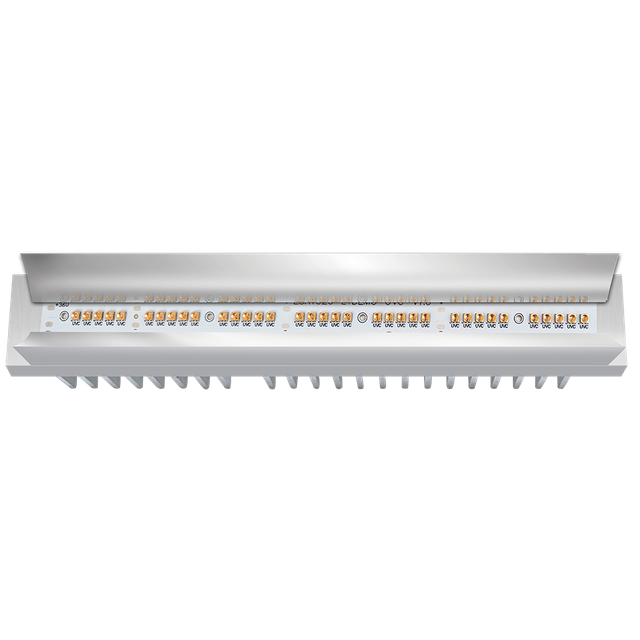
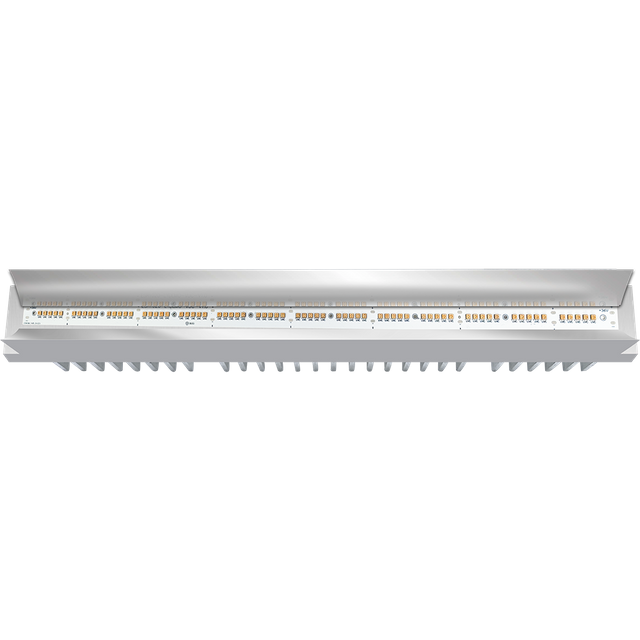
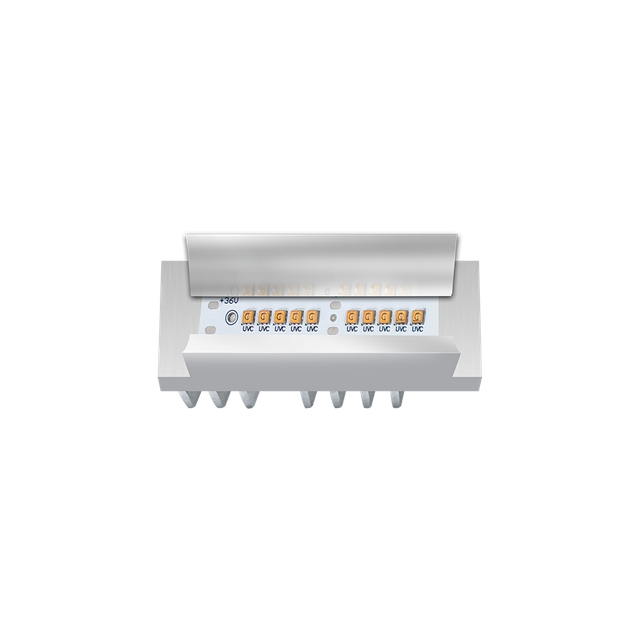
MASSPHOTON surface disinfection cabinets use chip‑level, highly uniform UVC‑LEDs as the core light source, focusing on the goal of “risk reduction for environments and surfaces.” Under direct irradiation without powder shielding, they can effectively reduce microbial loads on tools, containers, packaging surfaces, and detachable equipment components.
The independently developed UVC‑LED chip technology features precise wavelength control, intelligent dose regulation, and optimized penetration. Compared with traditional mercury‑based UVC lamps, MASSPHOTON UVC‑LED systems are mercury‑free, compact, and capable of instant start‑up.
In terms of application suitability, these performance characteristics allow precise adaptation to surface disinfection of tools in infant food production workshops, laboratories, milk preparation areas, and filling zones, effectively reducing surface contamination risks in milk powder production and safeguarding infant health.
Bacillus cereus is not a “newly emerging frightening bacterium.” The real risk lies in its low‑dose, highly stable toxin and the high vulnerability of infant populations. MASSPHOTON UVC‑LED surface disinfection cabinets, leveraging chip‑level precision technology, can serve as an effective auxiliary tool for environmental and surface disinfection—particularly suitable for routine sanitation of smooth equipment interiors and work surfaces under empty‑chamber conditions. They can significantly reduce vegetative cells and a proportion of surface spores, safeguarding every contact surface in the production process and allowing technology to become a reliable guardian of infant food safety.
Kotiranta A., L.K.H.M. Epidemiology and pathogenesis of Bacillus cereus infections. Microbes Infect., 2000, 2(2):189–198.
Commissi E. Risks for public health related to the presence of Bacillus cereus and other Bacillus spp. including Bacillus thuringiensis in foodstuffs. EFSA Journal, 2016, 14(7).
Mahler H., et al. Experimental evidence for the role of emetic toxin‑producing Bacillus cereus in food‑borne illness. Appl. Environ. Microbiol., 1997, 63(8):3021–3025.
Dierick K., et al. Fatal family outbreak of Bacillus cereus‑associated food poisoning. Eurosurveillance, 2005, 10(8):E050818.1.
P. S. Spore germination. Curr. Opin. Microbiol., 2003, 6(6):550–556.
Kozono L., et al. Inactivation of Alicyclobacillus acidoterrestris spores, Escherichia coli, and native microbiota in isotonic fruit‑flavoured sports drinks processed by UV‑C light. Int. J. Food Microbiol., 2023, 386:110024.