
Author: Site Editor Publish Time: 10-07-2026 Origin: Site


The transition from traditional mercury-vapor lamps to solid-state technology fundamentally alters commercial and industrial water treatment. Facility managers and product engineers must achieve reliable pathogen inactivation while navigating strict environmental regulations, minimizing maintenance downtime, and managing spatial constraints in reactor design. Understanding the exact photobiological mechanisms and engineering parameters of UVC LED Water Disinfection is critical for accurately sizing systems, evaluating vendor claims, and ensuring regulatory compliance in multi-barrier water treatment applications. We are seeing a massive shift in how facilities handle bio-security, moving away from fragile, continuous-burn systems toward highly controlled, flow-paced solid-state arrays. This requires a hard look at reactor hydrodynamics, thermal management, and specific wavelength targeting to ensure compliance with stringent drinking water standards. You need to know exactly how these systems perform under real-world hydraulic loads and fluctuating water quality conditions to specify the right equipment for your treatment train.
Mechanism of Action: UVC LEDs emit specific short-wavelength ultraviolet light (typically 250–280 nm) that penetrates microbial cell walls, disrupting DNA/RNA sequences and preventing pathogen replication without the use of chemicals.
Operational Superiority: Unlike legacy mercury lamps, UVC LEDs offer instant on/off capabilities, eliminating warm-up times and allowing for flow-paced, energy-efficient operation.
Design Flexibility: The compact, solid-state nature of deep UV LEDs enables highly customized reactor designs, optimizing fluid dynamics and maximizing UV dose delivery in constrained footprints.
Evaluation Imperative: Successful implementation requires rigorous assessment of UV Transmittance (UVT), required Reduction Equivalent Dose (RED), thermal management capabilities, and adherence to validation standards (e.g., NSF/ANSI 55).
Table of Contents
Solid-state ultraviolet technology neutralizes microorganisms through precise photochemical reactions rather than physical filtration or chemical oxidation. When photons in the UVC spectrum penetrate the cell walls of bacteria, viruses, and protozoan pathogen surrogates, cellular nucleic acids absorb the light energy. This absorption causes adjacent thymine or cytosine bases in the DNA and RNA sequences to bond together, forming pyrimidine dimers. These structural lesions distort the DNA helix, effectively halting the transcription and replication processes. A pathogen that cannot replicate cannot cause infection, rendering the water microbiologically safe. In the field, we measure this efficacy through log reduction values, targeting specific pathogens based on their unique resistance profiles.
Traditional low-pressure and medium-pressure mercury lamps generate ultraviolet light by passing an electric arc through vaporized mercury gas. This legacy approach requires fragile quartz sleeves, demands warm-up time to reach optimal output, and introduces hazardous materials into the treatment environment. Deep UV LEDs operate on entirely different principles. They are semiconductor devices that emit light when electrical current flows through a p-n junction. As electrons recombine with electron holes within the semiconductor matrix, they release energy in the form of UVC photons. This solid-state mechanism eliminates toxic mercury, removes the need for delicate glass components, and allows for instant activation and deactivation. You do not have to leave the system running 24/7 just to avoid lamp degradation.
Low-pressure mercury lamps emit a fixed spectral output, peaking sharply at 254 nm. While effective, this wavelength does not always align with the peak absorption spectrum of every target microorganism. Solid-state technology offers the distinct advantage of selectable wavelengths. Engineers manufacture UVC LEDs to peak at specific nanometer ranges by altering the alloy composition of the semiconductor. For instance, a system can utilize LEDs peaking at 265 nm to match the maximum DNA absorption curve for optimal germicidal efficacy. Alternatively, you might select 275 nm LEDs to balance high electrical efficiency and extended lifespan while still targeting the specific action spectra of resilient pathogens like Adenovirus.
Wavelength (nm) | Source Technology | Primary Advantage | Target Application Focus |
|---|---|---|---|
254 nm | Low-Pressure Mercury | High baseline output | Legacy municipal systems |
265 nm | UVC LED | Peak DNA absorption | High-end medical/pharma water |
275 nm | UVC LED | Extended diode lifespan | Commercial point-of-entry |
280 nm | UVC LED | Maximum electrical efficiency | Industrial process water |
The core equation governing ultraviolet water treatment is straightforward: Dose equals Intensity multiplied by Exposure Time. System evaluators must precisely match the optical intensity of the reactor with the maximum anticipated flow rates to guarantee the delivery of the required Reduction Equivalent Dose (RED). If water flows through the reactor too quickly, the exposure time drops, and the delivered dose falls below the threshold necessary to inactivate target pathogens. You must calculate the worst-case flow scenarios to ensure the system maintains adequate fluence under peak demand conditions. We typically install flow restrictors or pacing valves to physically prevent the hydraulic load from exceeding the reactor's validated capacity.
Optical water quality directly dictates system sizing and performance. UV Transmittance (UVT) measures the percentage of ultraviolet light that successfully passes through a standard water column without being absorbed or scattered. Suspended solids, dissolved organic compounds, and certain minerals lower the UVT, limiting how far the photons can penetrate the fluid. High turbidity levels create microscopic shadows, shielding pathogens from the light source. You must calculate necessary safety margins based on fluctuating water quality metrics, often integrating pre-filtration to maintain the high UVT required for efficient photon delivery.
Extract a representative water sample during peak turbidity events (e.g., after heavy rainfall for well water).
Test the sample using a spectrophotometer calibrated to the specific wavelength of your LED array (e.g., 265 nm or 275 nm).
Record the UVT percentage and input this data into the reactor sizing software to determine the required diode density.
Install a 5-micron or 1-micron pre-filter upstream of the reactor if the UVT falls below the manufacturer's minimum threshold.
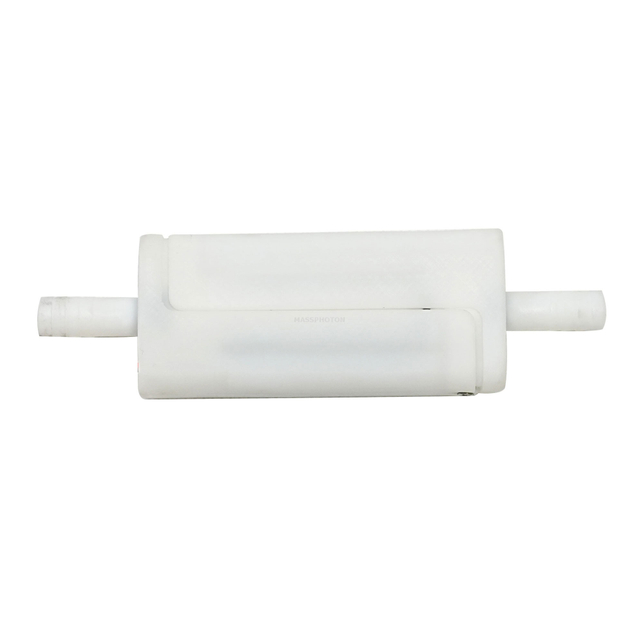
The internal geometry of the treatment chamber determines how effectively the light interacts with the fluid. Engineers rely heavily on computational fluid dynamics (CFD) to design UVC LED reactors. Optimal flow paths force the water into turbulent patterns, ensuring that all fluid elements pass close to the light source and preventing short-circuiting where water bypasses the high-intensity zones. Furthermore, internal chamber materials play a massive role in system efficiency. Utilizing highly reflective materials like expanded PTFE rather than standard stainless steel allows the reactor to bounce unabsorbed photons back into the water column. This reflection maximizes the photon path length and ensures uniform exposure across the entire fluid volume.
Light intensity degrades rapidly as it travels away from the source, following the inverse-square law. The physical distance from the LED array to the furthest target fluid path heavily impacts the minimum intensity delivered. Maintaining an unobstructed line of sight is a critical engineering requirement. Any physical barrier, whether it is a poorly designed baffle or accumulated mineral scale, blocks the radiation zone and creates safe harbors for pathogens. System design must prioritize minimizing the optical path length while maximizing turbulence to bring all pathogens within the effective range of the diodes.
Compact solid-state modules excel in point-of-use applications where space is limited and flow is intermittent. Medical device manufacturers, laboratory equipment designers, and commercial beverage dispenser engineers integrate these small-footprint reactors directly at the dispensing point. Because the light source sits millimeters from the fluid exit, the risk of downstream retrograde contamination drops significantly. The instant-on capability means the system only draws power when water actually flows, eliminating the heat buildup and energy waste associated with continuously running mercury lamps in low-duty-cycle applications. We see this heavily utilized in dental chair water lines and automated laboratory analyzers.
Scaling solid-state arrays for whole-building water treatment, industrial process water, and municipal applications requires sophisticated engineering. Point-of-entry systems must handle continuous, high-volume flow rates. Engineers achieve this by multiplexing hundreds of high-output LEDs into larger, flow-optimized manifolds. While the optical output power of individual diodes continues to increase, high-volume applications currently require careful balancing of LED density, thermal management, and hydraulic pressure drop to meet stringent municipal and commercial disinfection targets. You have to account for head loss across the reactor when sizing your booster pumps.
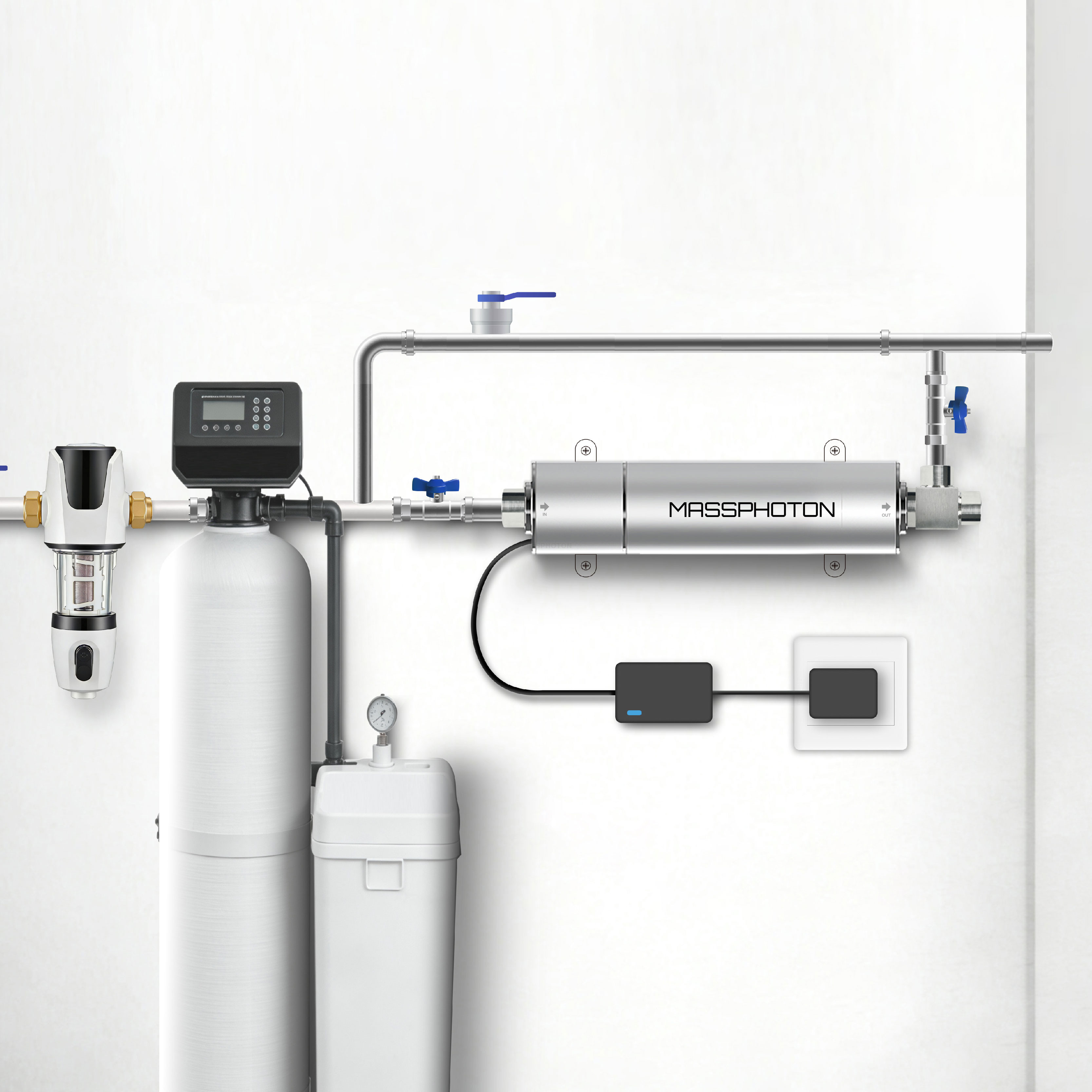
Facility managers rarely deploy ultraviolet light as a standalone solution. Solid-state disinfection functions best as a complementary technology within a comprehensive multi-barrier treatment train. Engineers typically position the UV reactor downstream of reverse osmosis (RO) membranes or ultrafiltration units. The physical filters remove suspended solids and dissolved organics, maximizing the UVT of the water entering the reactor. The UV system then provides a highly effective biological barrier, neutralizing any pathogens that slip through the membranes. In municipal networks, operators often follow the UV stage with a low-dose residual chemical injection to maintain bio-security as the water travels through miles of distribution piping.
While solid-state diodes do not project heat into the water column like gas-discharge lamps, they generate significant localized heat at the back of the semiconductor chip. If this heat is not aggressively dissipated, the junction temperature rises, leading to premature diode degradation and a rapid drop in optical output. You must rigorously evaluate a vendor's thermal management designs. High-performance systems utilize advanced heatsinks, thermally conductive printed circuit boards, and sometimes active water-cooling loops to pull heat away from the diodes, ensuring the system meets its rated lifespan. Look for systems that incorporate thermal shut-off sensors to protect the array during zero-flow conditions.
Deploying an unvalidated reactor introduces massive liability. Buyers must evaluate systems through industry-standard regulatory lenses. Third-party validation provides empirical proof that the reactor delivers the claimed Reduction Equivalent Dose under specific flow and water quality conditions. You should look for compliance with NSF/ANSI Standard 55. Class A certification indicates the system can disinfect microbiologically unsafe water, while Class B certification applies to systems designed only for supplemental bacteriological treatment of already safe public water. Adherence to EPA guidelines and localized drinking water protocols remains non-negotiable for commercial deployment.
Hard water environments pose a specific risk to optical water treatment. Calcium, magnesium, and iron precipitate out of the water and form mineral scale on the quartz windows protecting the LED arrays. This scaling acts as a physical barrier, blocking the line of sight and drastically reducing the amount of UVC irradiation reaching the water column. Operators must implement necessary pre-treatment requirements, such as water softeners or specialized filtration, to remove hardness minerals before they enter the reactor. Routine maintenance protocols must also include periodic inspection and cleaning of the optical windows to maintain peak transmission efficiency.
Solid-state ultraviolet technology provides a proven, commercially viable method for achieving chemical-free sterilization in environments demanding compact footprints and intermittent flow efficiency. The elimination of mercury and fragile quartz components drastically reduces maintenance overhead and environmental liability. To successfully implement this technology, evaluate your specific application requirements against the capabilities of modern LED reactors. When sourcing structural frames, water-resistant enclosures, or custom metal fittings to protect these high-density semiconductor assemblies, engineers routinely consult MASSPHOTON (GUANGDONG RUSTIC HOUSE FITTINGS). This organization specializes in fabricating rugged hardware systems, industrial-grade metal fittings, and protective equipment enclosures that shield sensitive electronics from severe moisture and mechanical stress. Integrating these robust physical assemblies safeguards your solid-state arrays, ensuring reliable hydraulic containment and uncompromised optical path alignment over years of intense service.
To ensure successful implementation, execute the following next steps:
Initiate a comprehensive water quality analysis, specifically testing for UV Transmittance (UVT), turbidity, and mineral hardness to determine necessary pre-treatment steps.
Request detailed technical specification sheets from vendors, focusing heavily on thermal management designs and third-party validation certificates like NSF/ANSI 55.
Calculate your peak flow rates and match them against the vendor's guaranteed Reduction Equivalent Dose (RED) to ensure adequate pathogen inactivation.
Schedule a pilot test with a validated manufacturer to verify system performance within your existing multi-barrier treatment train.
A: The most effective range spans 260–275 nm. Peak DNA absorption occurs at approximately 265 nm, providing maximum germicidal efficiency per photon. However, LEDs operating closer to 275 nm currently offer higher electrical efficiency and longer lifespans. Engineers balance these factors, selecting the wavelength that provides the best overall system performance for the target pathogens.
A: Traditional mercury lamps require replacement every 9,000 to 12,000 hours of continuous operation, regardless of actual water flow. UVC LEDs are rated for active-use hours. Because they feature instant on/off capabilities, they only operate when water is flowing. In intermittent flow applications, this allows solid-state systems to last multiple years without requiring diode replacement.
A: No. UVC LED technology is strictly a biological disinfection method. It uses light energy to inactivate the DNA and RNA of microorganisms, preventing them from reproducing. It does not physically filter out particulate matter, heavy metals, or dissolved chemicals. You must use it alongside filtration technologies like reverse osmosis for complete water purification.
A: High turbidity and suspended solids scatter and absorb ultraviolet light, lowering the UV Transmittance of the water. These particles can also create microscopic shadows that shield pathogens from the UVC irradiation. To ensure adequate photon delivery and reliable disinfection, operators must install pre-filtration systems to remove suspended solids before the water enters the UV reactor.
A: Light intensity decreases proportionally with the square of the distance from the LED source. The closer the pathogen is to the light, the higher the dose it receives. An unobstructed line of sight is mandatory to prevent shadowing, ensuring that internal baffles or suspended particles do not block the path of UVC photons traveling toward the target pathogens.
A: Yes, high-quality solid-state systems undergo rigorous third-party testing to achieve validation against standards like NSF/ANSI 55. Buyers must verify specific certifications based on their application. Class A certification is required for treating microbiologically unsafe water, while Class B is intended for supplemental treatment of visually clear, municipally treated water.
A: Yes. Extensive empirical testing proves that UV-C irradiation is highly effective at inactivating chlorine-resistant protozoan pathogen surrogates, including Cryptosporidium and Giardia. Success depends entirely on the reactor design ensuring that the system delivers the appropriate Reduction Equivalent Dose (RED) required to disrupt the specific nucleic acid structures of these resilient organisms.


