Author: Site Editor Publish Time: 17-09-2026 Origin: Site


The regulatory and operational shift away from traditional mercury-vapor UV lamps accelerates the adoption of solid-state disinfection technologies in water treatment infrastructure. Facility managers, product engineers, and system integrators face a complex challenge. You must achieve stringent pathogen deactivation targets and secure specific log reductions. Simultaneously, you have to manage tight footprint constraints, overcome intermittent flow challenges, and navigate the global phase-out of hazardous materials. We will objectively evaluate how solid-state technology addresses these exact constraints. You will understand the technical prerequisites, sizing realities, and operational factors required to determine if this technology is the correct architectural fit for specific applications. By examining reactor design, thermal management, and fluid dynamics, we provide a clear roadmap for implementing these systems effectively.
Instant-On Efficiency: Unlike mercury lamps that require warm-up periods and continuous power, UVC LEDs allow for on-demand disinfection, drastically reducing energy consumption in intermittent flow scenarios.
Targeted Wavelength Efficacy: Solid-state diodes can be engineered to emit at peak germicidal wavelengths (265nm–275nm), maximizing DNA/RNA disruption in bacteria, viruses, and cysts within seconds.
Chemical-Free & Taste-Neutral: UVC LED for drinking water provides rapid disinfection without introducing chemicals, ensuring zero disinfection byproducts (DBPs) and preserving the natural taste and odor of the water.
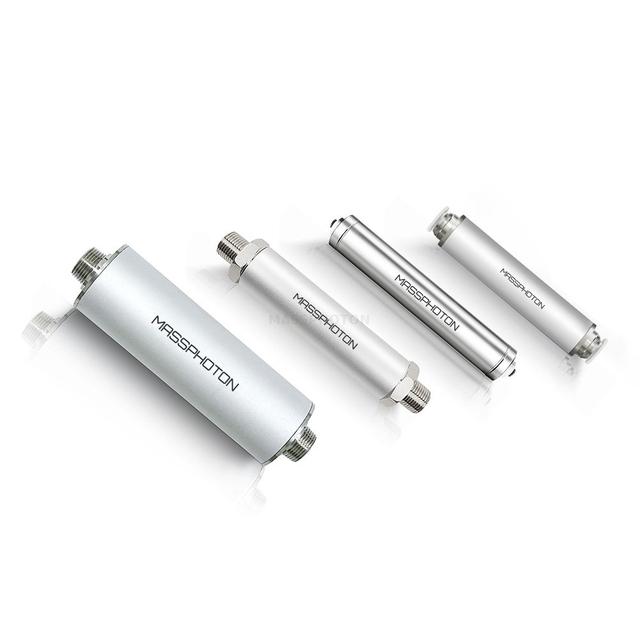
Footprint and Integration: The compact nature of LEDs enables integration into Point-of-Use (POU) and Point-of-Entry (POE) systems where traditional UV reactors cannot physically fit.
Implementation Prerequisites: Successful deployment requires strict adherence to water quality baselines (specifically UV Transmittance and turbidity) and precise thermal management to ensure diode longevity.
Table of Contents
Traditional mercury UV lamps use fragile glass tubes and quartz sleeves that can break during installation or maintenance. They also require more maintenance, including lamp replacement and quartz sleeve cleaning. Because the lamps contain mercury, damaged or used lamps require special handling and disposal.
Mercury UV lamps require warm-up time to reach full UV output and are often kept running even when water is not flowing. This can increase energy use and heat buildup inside the reactor. UVC LEDs provide instant on/off operation, making them better suited for intermittent water flow and on-demand disinfection.
Environmental regulations are encouraging the reduction of mercury-containing equipment. UVC LED systems contain no mercury and can reduce hazardous waste handling associated with traditional UV lamps. They also provide chemical-free disinfection without adding treatment chemicals to the water.
UVC LED systems combine compact size, instant operation, flexible control, and reduced maintenance requirements. When properly sized for water quality, flow rate, and required UV dose, they can provide reliable disinfection for Point-of-Use (POU), Point-of-Entry (POE), and other water treatment applications.
UVC LEDs use ultraviolet light to damage the DNA or RNA of microorganisms, reducing their ability to replicate. This physical disinfection process requires no additional treatment chemicals and can be used for drinking water and other water treatment applications.
Traditional low-pressure mercury lamps typically operate around 254 nm, while UVC LEDs can provide selected wavelengths, commonly within the 265–275 nm range. These wavelengths strongly overlap with the UV absorption range of microbial genetic material, supporting effective pathogen inactivation when the required UV dose is delivered.
Disinfection performance depends on UV dose, which is determined by UV intensity and exposure time. Higher water flow reduces exposure time, so the reactor must be properly designed to provide sufficient UV dose throughout the water stream. LED placement and reflective materials such as PTFE can also help improve UV light distribution inside the reactor.
Unlike mercury lamps that require warm-up time and are less suited to frequent switching, UVC LEDs can turn on immediately when water begins to flow and switch off when treatment is not needed. This makes UVC LED systems well suited for intermittent-flow applications such as Point-of-Use (POU) drinking water systems and water dispensers.
Target Pathogen | 2-Log Reduction (99%) | 3-Log Reduction (99.9%) | 4-Log Reduction (99.99%) |
|---|---|---|---|
Escherichia coli (E. coli) | 6.6 mJ/cm² | 10.0 mJ/cm² | 13.4 mJ/cm² |
Cryptosporidium parvum | 5.8 mJ/cm² | 8.7 mJ/cm² | 11.6 mJ/cm² |
Giardia lamblia | 5.5 mJ/cm² | 8.3 mJ/cm² | 11.1 mJ/cm² |
Rotavirus | 14.0 mJ/cm² | 21.0 mJ/cm² | 28.0 mJ/cm² |

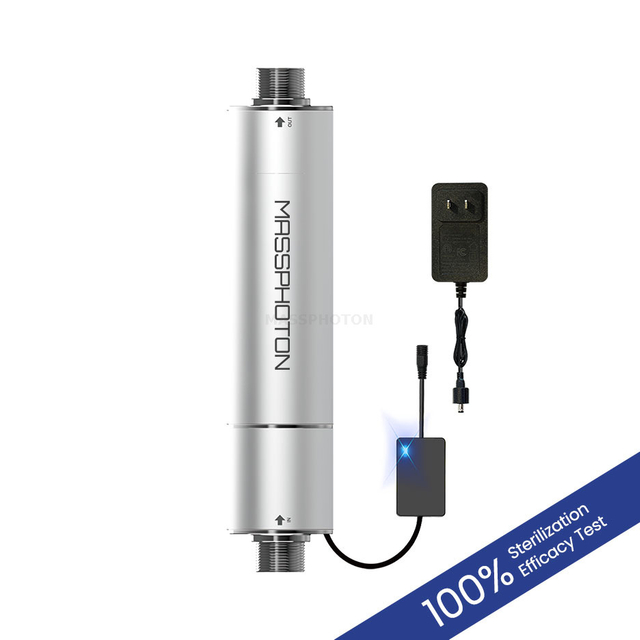
Point-of-Use (POU) systems treat water close to where it is consumed. Common applications include under-sink systems, water dispensers, ice makers, and medical water lines. Compact UVC LED reactors can be installed near the dispensing point and activated only when water flows, helping reduce the risk of microbial contamination.
UVC light disinfects water but does not remove sediment, dissolved solids, or other chemical contaminants. For this reason, UVC LED reactors can be combined with pre-filters, carbon filters, or Reverse Osmosis (RO) systems. Filtration improves incoming water quality, while the UVC LED reactor provides final microbial control.
Point-of-Entry (POE) systems treat water as it enters a building. Because whole-building systems can experience higher and changing flow rates, reactor capacity and UV dose must be carefully calculated. Higher-flow applications may require multiple UVC LED reactors arranged in parallel or series to provide the required treatment capacity.
UVC LED technology can also be scaled for higher-flow applications, but larger water volumes require greater UV output and more LED modules. For large systems, engineers should evaluate flow rate, UV Transmittance (UVT), required UV dose, and reactor configuration before selecting a UVC LED system. Modular reactor designs can provide additional capacity as treatment requirements increase.

Successful deployment hinges on rigorous technical evaluation. Thermal management stands as the most critical engineering dimension. Solid-state diodes generate heat at the semiconductor junction. This heat must travel through the diode package, into the solder joint, across the printed circuit board (PCB), and into the heatsink. Every layer introduces thermal resistance. If the thermal resistance is too high, the junction temperature spikes. High junction temperatures cause thermal droop, where the optical output of the diode drops significantly even though it draws the same electrical power. Prolonged exposure to high temperatures accelerates the degradation of the semiconductor lattice, drastically shortening the operational lifespan. Engineers utilize metal-core PCBs and high-thermal-conductivity interface materials to minimize this resistance. In high-flow reactors, engineers integrate water-cooling mechanisms. They route the incoming cold water over the back of the heatsink before it enters the disinfection chamber, utilizing the water itself to maintain optimal diode efficiency.
Sensor integration provides the necessary operational transparency for critical applications. You cannot verify disinfection by simply looking at the water. Integrated UV sensors offer real-time dose monitoring. These sensors measure the actual photonic intensity reaching the edge of the reactor wall. If the water becomes cloudy, or if the diodes begin to fail, the sensor detects the drop in intensity. Advanced systems tie these sensors directly to automated shut-off valves. If the delivered dose falls below the validated safety threshold, the system automatically halts water flow. This closed-loop monitoring ensures strict compliance with health standards and guarantees user safety.
Water quality prerequisites dictate the success or failure of any photonic disinfection system. The technology relies entirely on light transmission. UV Transmittance measures the percentage of light that can pass through a water sample over a specific distance. High transmittance means clear water; low transmittance means the light is being absorbed or scattered. Suspended solids and turbidity act as physical shields. Pathogens can hide behind these particles, safely traversing the reactor without absorbing a lethal dose. Dissolved minerals like iron and hardness pose a severe threat to the reactor's internal optics. These minerals precipitate out of the water and form scale on the quartz windows protecting the diodes. This scaling acts as a blinder, trapping the light inside the housing and allowing pathogens to pass untreated.
To ensure reliable operation, incoming water must meet specific quality baselines. Upstream filtration is often non-negotiable. The table below outlines the standard water quality parameters required for optimal reactor performance.
Water Quality Parameter | Maximum Allowable Limit | Impact on System Performance |
|---|---|---|
Hardness (Calcium/Magnesium) | < 120 mg/L (7 grains per gallon) | Causes rapid scaling on quartz windows, blocking photon transmission. |
Iron | < 0.3 mg/L | Stains quartz interfaces and absorbs UV light, reducing effective dose. |
Manganese | < 0.05 mg/L | Creates dark deposits on optics, severely limiting light penetration. |
Turbidity | < 1 NTU | Scatters light and provides physical shielding for microorganisms. |
Tannins | < 0.1 mg/L | Absorbs UV energy directly, preventing photons from reaching pathogens. |
UV Transmittance (UVT) | > 75% to 85% (Application dependent) | Low UVT means water absorbs the light before it reaches the pathogens. |
Traditional mercury UV lamps require regular replacement and maintenance, including handling fragile lamps and mercury-containing waste. UVC LEDs can operate only when water is flowing, which reduces unnecessary operating hours and can extend service life in intermittent applications. This makes them particularly suitable for water dispensers and Point-of-Use (POU) systems.
UVC LED reactors can be designed for compact installations, but smaller chambers provide less exposure time at higher flow rates. Engineers must therefore balance reactor size, UV output, and water flow to ensure the required UV dose is delivered.
Water does not move through a reactor at the same speed in every area, which can lead to uneven UV exposure. Reactor geometry and internal flow design can improve water mixing and UV distribution. Proper sizing should consider maximum flow rate, residence time, and UV intensity to maintain reliable disinfection performance.
To maximize the operational lifespan of a UVC LED for Drinking Water system, facility teams should follow a standardized maintenance protocol:
Inspect upstream pre-filters monthly to prevent turbidity spikes from entering the reactor chamber.
Monitor the real-time UV intensity sensor logs for gradual degradation trends that indicate early diode failure.
Perform a visual inspection of the quartz interface every six months for early signs of mineral scaling or biofouling.
Flush the reactor chamber with a mild descaling solution annually if deployed in hard water environments.
Verify the automated shut-off valve functionality during routine system audits to ensure fail-safe operation.
To move forward with implementation, execute the following steps:
Initiate a comprehensive baseline water quality analysis, specifically testing UV Transmittance, hardness, and iron levels at the installation site.
Audit your peak flow rates to determine the exact residence time required for your specific application.
Request detailed computational fluid dynamics models from shortlisted manufacturers to verify their reactor designs.
Implement necessary upstream pre-filtration based on your water quality baseline to protect the reactor optics.
A: Solid-state diodes offer instant-on capabilities, eliminating the warm-up times and continuous power draw of mercury lamps. They contain no hazardous heavy metals, require a much smaller footprint, and can be engineered to emit at peak germicidal wavelengths. Mercury lamps are fragile, degrade quickly with power cycling, and require frequent replacement.
A: High-quality diodes are typically rated for 10,000 to 15,000 hours of active use. Because they only power on during water flow, this active lifespan translates to many years in intermittent applications like residential taps or commercial water dispensers. This longevity far exceeds the annual replacement cycle of traditional mercury lamps.
A: Yes. Photonic disinfection is highly effective against chlorine-resistant cysts like Cryptosporidium and Giardia, as well as bacteria like E. coli. The targeted wavelengths penetrate the cell walls and disrupt the nucleic acids, preventing these complex pathogens from replicating and rendering them harmless within seconds.
A: No. It is a purely physical process that adds no chemicals to the water and creates no disinfection byproducts. This chemical-free approach ensures that the natural taste, odor, and palatability of the drinking water remain completely unchanged after treatment.
A: UV Transmittance is the most critical parameter, as low transmittance means light cannot penetrate the water. Additionally, high turbidity shields pathogens, while elevated levels of hardness and iron cause scaling on the quartz optics. This scaling blocks light transmission and requires upstream pre-filtration to prevent system failure.
A: Many reputable systems achieve NSF/ANSI 55 Class A or Class B certification. This third-party validation is essential. It confirms that an independent laboratory has tested the complete reactor assembly and verified its ability to deliver the required germicidal dose at the specified maximum flow rate.