Author: Site Editor Publish Time: 17-09-2026 Origin: Site


Industrial facilities face mounting pressure to modernize water treatment processes. The Minamata Convention aggressively pushes industries worldwide to phase out mercury-based technologies. Simultaneously, facility managers demand chemical-free disinfection methods to avoid hazardous byproducts and eliminate dangerous chemical storage liabilities. Legacy UV systems rely heavily on fragile quartz sleeves and toxic mercury lamps. These older systems suffer from long warm-up times and require frequent, tedious lamp replacements. Chemical dosing introduces severe safety risks and creates continuous consumable dependencies. You need a reliable, highly efficient alternative.
UVC LED technology is a commercially viable, highly deployable solution for specific water treatment applications. Solid-state disinfection offers unprecedented control over waterborne pathogens. We will break down the core architecture, scalability, and integration of these advanced systems. You will learn how to evaluate this technology for your facility based on strict engineering realities and integration requirements.
Operational Agility & Dynamic Adaptation: UVC LED systems offer instant on/off functionality without degradation to diode lifespan, allowing disinfection cycles to match intermittent industrial water flow rates and adapt to real-time water conditions precisely.
Footprint and Integration: The compact nature of LEDs enables integration into tight, closed-loop recirculating systems and point-of-use applications where traditional mercury lamps cannot fit.
Implementation Realities: Successful deployment requires precise calculation of UV Transmittance (UVT), flow dynamics, and thermal management; it is highly effective for targeted industrial streams but requires modular scaling for massive flow rates.
Table of Contents
Successful industrial water disinfection requires strict adherence to log reduction targets. Facilities need continuous compliance and minimal operational downtime. Water treatment systems must reliably neutralize pathogens without interrupting core production processes. Engineers evaluate success based on consistent microbial control and system reliability. Traditional methods often fall short when subjected to highly variable industrial conditions. Facilities cannot afford unplanned maintenance shutdowns caused by failing disinfection equipment.
Low-pressure and medium-pressure mercury lamps have inherent engineering flaws. They transfer unwanted heat directly into the water stream. This heat transfer causes massive problems in high-purity applications, specifically in semiconductor manufacturing where water temperature must remain strictly controlled. The quartz sleeves protecting the lamps are extremely fragile. They are highly prone to fouling and mineral scaling. Operators must frequently shut down systems, lock out the power, drain the reactor, and manually acid-wash these sleeves.
Mercury lamps also waste massive amounts of energy. They require continuous power to maintain their arc. You cannot simply turn them off when water stops flowing. If you power them down, they require a 10 to 15-minute warm-up period to reach germicidal intensity again. This continuous-on requirement degrades the lamp lifespan rapidly. It forces facilities to replace lamps frequently, increasing maintenance labor and operational friction. Furthermore, handling and disposing of broken mercury lamps requires strict hazardous waste protocols.
Handling chemicals like chlorine, chlorine dioxide, and ozone brings high compliance burdens. Facilities must maintain strict safety protocols for chemical storage and handling. Food processing, pharmaceutical, and semiconductor manufacturing sectors demand sustainable, byproduct-free decontamination. Chemical disinfectants often leave harmful residuals in the water. These residuals can alter product flavors, damage sensitive reverse osmosis membranes, or ruin microelectronics.
Facilities must eliminate chemical residuals to meet strict industry standards. They must protect downstream processes from oxidation damage. Solid-state UV technology provides a physical disinfection method. It adds nothing to the water. It creates no disinfection byproducts (DBPs) like trihalomethanes. This allows facilities to meet stringent environmental discharge limits. It simplifies regulatory reporting and eliminates the need for complex chemical neutralization steps before water discharge or reuse.

Understanding the underlying physics of solid-state disinfection is necessary for proper application. The architecture of these systems differs fundamentally from legacy gas-discharge lamps. Engineers build these reactors using advanced semiconductor materials. This fundamental shift in light generation enables entirely new reactor designs and operational strategies.
UVC LEDs typically emit light between 250 and 280 nm, with many systems using the 265–275 nm range for effective disinfection. Unlike low-pressure mercury lamps with a fixed 254 nm output, UVC LEDs can provide selected wavelengths that strongly overlap with the UV absorption range of microbial DNA and RNA. This UV exposure damages genetic material and reduces the ability of microorganisms to replicate, supporting effective water disinfection when the required UV dose is delivered.
Cycle-agnostic operation is a major engineering advantage. You can turn a diode on and off thousands of times without degrading its lifespan. You can pair these systems with advanced flow meters and UVT sensors. They activate instantly only when water actually moves through the reactor. They dynamically modulate their light intensity based on real-time water conditions.
This dynamic adaptability eliminates the heat buildup associated with traditional lamps. When water stops flowing in a legacy system, the continuous heat from the mercury lamp boils the stagnant water. This bakes minerals onto the quartz sleeve. Solid-state systems simply power down when flow stops. They remain cool. When flow resumes, they reach full germicidal intensity in microseconds. This capability transforms how facilities manage intermittent water demands.
UVC LED reactors use carefully positioned diode arrays to provide even UV exposure throughout the water flow. Engineers can use Computational Fluid Dynamics (CFD) to optimize flow paths and reduce areas where microorganisms might receive insufficient UV dose. Reflective materials such as expanded PTFE can improve light distribution inside the reactor, while the compact size of UVC LEDs allows flexible placement around the water stream. Together, these design features help provide more uniform UV dose and improve overall disinfection performance.
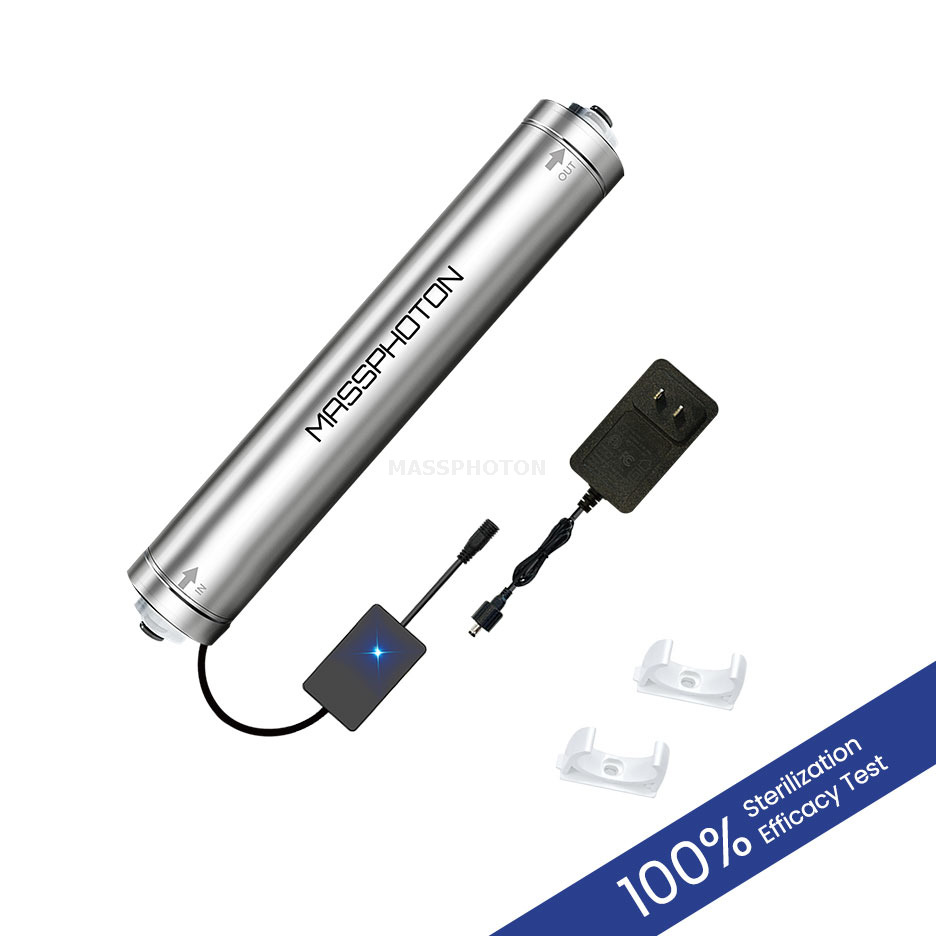
You must rigorously evaluate your specific water stream before deploying solid-state disinfection. Not all water profiles are suitable for this technology. You need to match the system capabilities to your exact engineering requirements. UVC LED for Industrial Water excels in targeted, high-purity applications, but requires careful sizing for complex fluids.
High-purity environments benefit immensely from this technology. Healthcare facilities, pharmaceutical plants, and microelectronics manufacturers require Ultrapure Water (UPW). These streams have extremely high UV Transmittance, often exceeding 99%. They contain virtually no suspended solids. Solid-state systems perform exceptionally well here. They provide reliable microbial control without adding heat to the sensitive UPW loop.
Industrial wastewater and food decontamination streams present different engineering requirements. These fluids often have low UV Transmittance. They contain high levels of organic compounds and suspended solids. You must design the reactor differently for these challenging fluids. The water layer passing over the diodes must be very thin. This ensures the photons can penetrate the murky fluid and reach the pathogens. You must carefully profile your water's optical properties before selecting a reactor design.
UVC LED reactors are compact and can be installed in tight spaces, closed-loop systems, and point-of-use applications. Unlike traditional mercury UV systems, which require extra space to remove long glass lamps during maintenance, UVC LED systems use small diode arrays that are easier to access and service. This compact design allows installation in treatment skids, mobile units, and processing equipment where space is limited, while supporting continuous chemical-free water disinfection.
Thermal management is important for maintaining UVC LED performance and lifespan. Heat generated at the diode and PCB must be removed effectively because overheating can reduce UV output and shorten LED life. Manufacturers typically use heat sinks and thermal interface materials (TIM), while high-output systems may also use liquid cooling. When selecting a UVC LED system, it is important to evaluate the cooling design, especially for equipment operating in high-temperature industrial environments.
Think of this technology as part of a holistic treatment train. It serves as the ultimate last-line of defense against pathogens. You must pair it with robust pre-filtration technologies. Reverse osmosis (RO) or ultrafiltration (UF) membranes should precede the UV reactor.
Removing turbidity and suspended solids before the point of use ensures maximum UV transmittance. Suspended particles act as physical shields. Pathogens can hide behind these particles and survive the UV exposure. By filtering out the particulates, you expose the pathogens directly to the germicidal light. This multi-barrier approach guarantees high-level disinfection efficacy and protects the optical windows of the UV reactor from physical abrasion.
Engineering Parameter | Legacy Mercury UV Lamps | Solid-State UV Systems |
|---|---|---|
Warm-Up Time | 10 to 15 minutes required to reach full germicidal intensity. | Instantaneous (microseconds). Ready immediately upon flow detection. |
Heat Transfer | Transfers significant heat into the water, risking biofilm in stagnant conditions. | Projects no heat into the water stream. Heat is managed at the diode board. |
Footprint & Integration | Large footprint. Requires extensive clearance for glass lamp removal. | Highly compact. Fits into tight skids and processing machinery. |
Wavelength Output | Fixed at 254nm (low pressure) or broad spectrum (medium pressure). | Tunable. Often optimized at 265nm-275nm for peak DNA absorption. |
Durability | Fragile quartz sleeves and glass lamps prone to breakage. Contains toxic mercury. | Rugged solid-state construction. No glass tubes. Mercury-free. |
Evaluating the financial impact of solid-state disinfection requires looking beyond the initial purchase price. You must analyze the long-term operational efficiency and the elimination of hidden maintenance costs. Legacy systems carry heavy ongoing expenses that drain facility budgets year after year.
The labor required to maintain mercury UV systems is substantial. Technicians must regularly shut down the process line, perform lock-out/tag-out procedures, and carefully extract fragile quartz sleeves. These sleeves require hazardous acid washing to remove mineral scale. If a sleeve breaks, glass shards contaminate the entire water line, causing catastrophic downtime.
Solid-state systems eliminate this entire workflow. There are no quartz sleeves to pull and no glass to break. Maintenance primarily involves wiping down a flat optical window during standard scheduled downtime. Furthermore, you eliminate the high costs and regulatory paperwork associated with disposing of hazardous mercury lamps. This reduction in labor hours and consumable replacement parts heavily offsets the initial investment.
UVC LED systems can reduce energy use in facilities with variable or intermittent water flow. Unlike traditional mercury UV lamps that are often kept running to avoid warm-up delays and frequent switching, UVC LEDs can turn on instantly when water begins to flow and switch off when treatment is not needed. By integrating with flow sensors, the system can match UV operation to actual water demand, helping reduce unnecessary power consumption.
Deploying advanced disinfection technology requires a realistic assessment of its current limitations. While highly effective, solid-state UV is not a universal replacement for every legacy system. You must navigate specific engineering challenges to ensure successful implementation. Overlooking these realities leads to system underperformance and compliance failures.
Low UV Transmittance (UVT) environments pose significant challenges. Heavy particulate loads or dissolved organics absorb UV light before it reaches the pathogens. In industrial wastewater, UVT can fluctuate wildly based on production cycles. If the UVT drops below the reactor's design threshold, disinfection fails.
You must implement rigorous pre-treatment to ensure efficacy. You cannot simply overpower a low-UVT fluid with more light. The physics of light attenuation prevent deep penetration in murky water. You must design the system based on the absolute worst-case UVT scenario your facility experiences. Continuous UVT monitoring is mandatory for variable industrial streams to ensure the reactor delivers the validated dose.
Current diode output has practical limitations. These systems are perfect for point-of-use applications, low-flow loops, or modular setups. However, massive municipal-scale flow rates present a scaling challenge. Treating millions of gallons per day requires an immense number of diodes.
While the technology advances rapidly, massive flow rates may still require hybrid approaches. You might use legacy systems for bulk primary disinfection and solid-state systems for targeted, point-of-use polishing. You must realistically assess your peak flow requirements. Work with engineers to determine if a modular solid-state approach can handle your maximum hydraulic load without causing unacceptable pressure drops in your piping network.
Selecting the right manufacturer requires extreme diligence. The market contains many unverified products. You must focus on verifying diode sourcing. Ask the vendor exactly which manufacturer supplies their raw diodes. Validate their specific wavelength claims with independent spectrometry reports.
Require third-party validation for all reactor designs. Look for certifications like NSF/ANSI standards or EPA UVDGM validation. These certifications prove the reactor actually delivers the stated dose under real-world flow conditions. Scrutinize the warranty terms carefully. Ensure the warranty covers operation in harsh industrial environments, including high ambient temperatures and frequent power cycling. Ask for detailed L70 lifespan data based on actual thermal testing of the fully assembled reactor.
Evaluation Criteria | Requirement | Verification Method |
|---|---|---|
Diode Provenance | Sourced from reputable semiconductor foundries. | Request bill of materials and supplier certificates. |
Hydraulic Design | Elimination of shadow zones and short-circuiting. | Demand Computational Fluid Dynamics (CFD) reports. |
Environmental Protection | High Ingress Protection (IP) ratings for drivers. | Check NEMA or IP rating documentation. |
Dose Validation | Proven log reduction under actual flow conditions. | Review third-party bioassay testing results. |
Solid-state UV technology represents a mature, highly efficient solution for modern water treatment. It dominates intermittent flow applications, space-constrained installations, and high-purity industrial loops. By eliminating fragile glass and toxic mercury, facilities drastically reduce their maintenance burdens. The ability to instantly cycle power based on real-time flow transforms operational efficiency. While scaling to massive flow rates requires careful engineering, the technology excels in targeted, critical disinfection roles.
To move forward with deployment, take the following actions:
Calculate your facility's specific flow rate requirements and identify peak demand windows.
Measure the minimum UV Transmittance (UVT) levels of your target water streams using a spectrophotometer.
Assess spatial constraints in your current piping network to identify optimal reactor integration points.
Request a site-specific UV dose calculation and CFD model from a qualified system integrator.
A: Lower UVT means fewer photons penetrate the water. Dissolved organics and minerals absorb the light. This requires a higher density of LEDs, slower flow rates, or a more restrictive, thin-film reactor design to achieve the required log reduction. Accurate UVT measurement is mandatory for proper sizing.
A: Yes. Advanced systems integrate seamlessly with real-time sensors. They monitor flow rates and water quality continuously. The system dynamically adjusts the diode power output to ensure consistent disinfection. This guarantees compliance without wasting energy during low-demand periods.
A: While they provide excellent primary disinfection without byproducts, they do not leave a residual in the water. Systems with long, complex piping runs may still require minimal chemical residuals to prevent downstream biofilm growth. They are highly effective for point-of-use applications.
A: High-quality diodes typically offer 10,000 to 20,000+ hours of active on-time. Because they only run when water actually flows, this translates to significantly longer calendar lifespans than continuous-on mercury lamps. Proper thermal management is critical to achieving this lifespan.
A: Industrial flow meters integrate directly with the LED drivers. This allows the control panel to instantly modulate power output or turn the system on and off based on real-time hydraulic flow. It ensures precise dosing and eliminates the overheating issues of legacy lamps.
A: Yes. The 250-280nm light effectively inactivates bacteria, viruses, and chlorine-resistant protozoa like Cryptosporidium and Giardia. The photons destroy the nucleic acids, preventing replication. You simply must ensure the reactor applies the correct validated UV dose for the target pathogen.