Author: Site Editor Publish Time: 10-07-2026 Origin: Site


The regulatory push against hazardous materials and the demand for energy efficiency are forcing a rapid transition in ultraviolet technology, shifting focus from legacy gas-discharge lamps to solid-state solutions. Procurement teams, facility managers, and product engineers face a critical decision: continue relying on familiar traditional UV lamps, or invest in UVC LED technology to secure long-term operational efficiencies, regulatory compliance, and improved safety profiles. Relying on outdated technology exposes operations to regulatory phase-outs, hazardous material handling protocols, and frequent maintenance downtime. This guide provides a rigorous technical evaluation of solid-state ultraviolet emitters versus traditional mercury vapor UV lamps, analyzing efficacy, safety, and implementation risks to inform your procurement strategy.
Efficacy: UVC LEDs match or exceed the decontamination and curing performance of traditional UV lamps by offering precise, targeted wavelengths (typically 265–280nm for disinfection) without wasted energy spectrums.
Lifespan & Maintenance: UVC LEDs offer a significantly longer operational life (up to 20,000+ hours) compared to traditional UV lamps (4,000–10,000 hours), drastically reducing replacement cycles and maintenance downtime.
Safety & Compliance: Unlike traditional lamps, UVC LEDs are 100% mercury-free and ozone-free, eliminating hazardous waste disposal costs, reducing human exposure risks, and aligning with global environmental regulations like the Minamata Convention.
Table of Contents
Traditional ultraviolet lamps operate on the principle of gas discharge. These systems use an electrical current to excite mercury vapor trapped inside a sealed quartz glass tube. As the mercury atoms return to their base energy state, they release photons across a broad spectrum of light. Low-pressure mercury lamps are engineered to emit the vast majority of their ultraviolet energy at exactly 254nm, which has historically been the standard for germicidal applications. The physics behind this process requires a specific vapor pressure, which is why these lamps are highly sensitive to ambient temperature fluctuations.
Medium-pressure mercury lamps operate at higher temperatures and pressures, emitting a much broader, continuous spectrum of ultraviolet and visible light. This makes them suitable for industrial curing applications where multiple photoinitiators must be activated simultaneously. However, this broad-spectrum emission is highly inefficient. A significant portion of the consumed electrical energy is converted into visible light and infrared heat rather than usable ultraviolet energy. The ballast required to drive these lamps also introduces electrical inefficiencies and potential points of failure.
The physical construction of these lamps introduces inherent limitations. The quartz glass tubes are fragile and susceptible to shattering in high-vibration environments. The reliance on toxic mercury poses severe environmental and workplace safety hazards. Furthermore, the high operating temperatures require substantial cooling mechanisms to prevent damage to the lamp housing and the target substrates. Over time, the quartz sleeve undergoes solarization, a process where the intense UV radiation degrades the glass, reducing optical transmittance and requiring periodic sleeve replacement even if the lamp itself is still functioning.
Solid-state ultraviolet technology abandons gas excitation entirely. Instead, a UVC LED utilizes semiconductor materials, predominantly Aluminum Gallium Nitride (AlGaN), to generate photons. When a forward electrical current is applied across the semiconductor junction, electrons recombine with electron holes, releasing energy directly in the form of ultraviolet light. By altering the aluminum content in the semiconductor alloy, engineers can tune the exact wavelength of the emitted light. This process occurs at the microscopic level within the epitaxial layers of the diode.
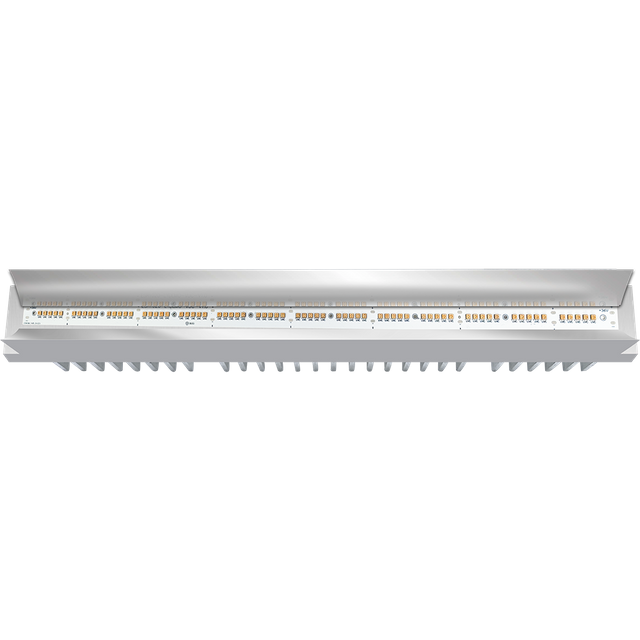
This targeted emission means solid-state devices produce narrow-band wavelengths. For disinfection, they are typically tuned between 265nm and 280nm. For curing, they are tuned to 365nm, 385nm, or 395nm. No energy is wasted producing unintended visible light or infrared radiation. The light output is highly directional, emitting from a flat surface rather than radiating 360 degrees like a cylindrical tube. This directional nature allows for highly efficient optical designs, utilizing primary and secondary lenses to focus the irradiance exactly where it is needed without relying on bulky, lossy parabolic reflectors.
Structurally, these diodes are incredibly robust. They contain no fragile glass enclosures, no pressurized gases, and no heavy metals. The compact footprint of a surface-mounted diode allows engineers to design highly customized, densely packed arrays that fit into tight spaces where traditional bulky lamp fixtures simply cannot operate. The solid-state nature also means they are highly resistant to mechanical shock and vibration, making them ideal for mobile or ruggedized applications.
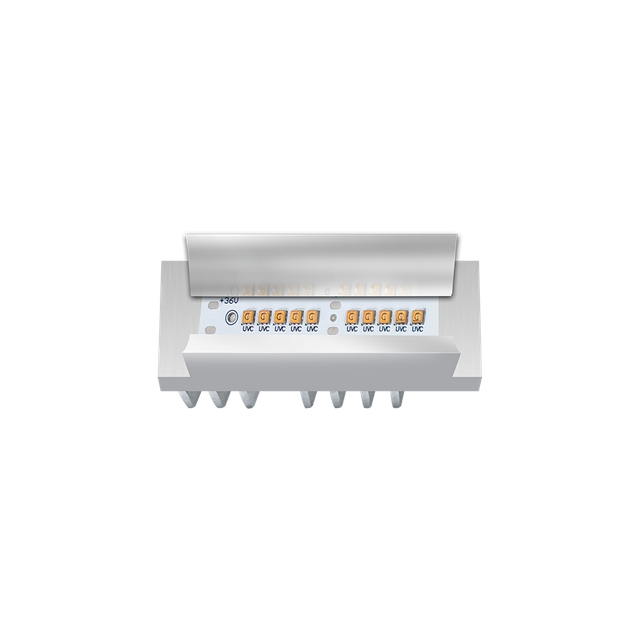
Market terminology surrounding ultraviolet technology can often be misleading, particularly in the curing and cosmetic industries. Pure solid-state systems use only light-emitting diodes to generate specific, narrow-band wavelengths. Traditional systems use only gas-discharge bulbs generating a wide, continuous spectrum. The distinction is critical for matching the emission spectrum to the absorption spectrum of the target material.
Hybrid systems represent a transitional technology. These systems combine multiple types of diodes—for example, mixing 365nm and 405nm chips within the same array. The goal is to mimic the broader spectral output of a traditional mercury lamp while maintaining the structural and efficiency benefits of solid-state technology. This dual-wavelength approach ensures compatibility with a wider range of older photoinitiators formulated specifically for the broad output of legacy mercury bulbs. It allows facilities to upgrade their hardware without immediately reformulating their entire chemical inventory.
Understanding this distinction is critical when specifying equipment. If your chemical formulation or biological target responds optimally to a single, specific wavelength, a pure, single-wavelength diode array provides the highest efficiency. If you are curing legacy materials formulated for mercury lamps, a hybrid multi-wavelength array bridges the gap without forcing a return to fragile gas-discharge tubes. Engineers must carefully review the spectral irradiance charts of both the emitter and the target photoinitiator to ensure proper matching.
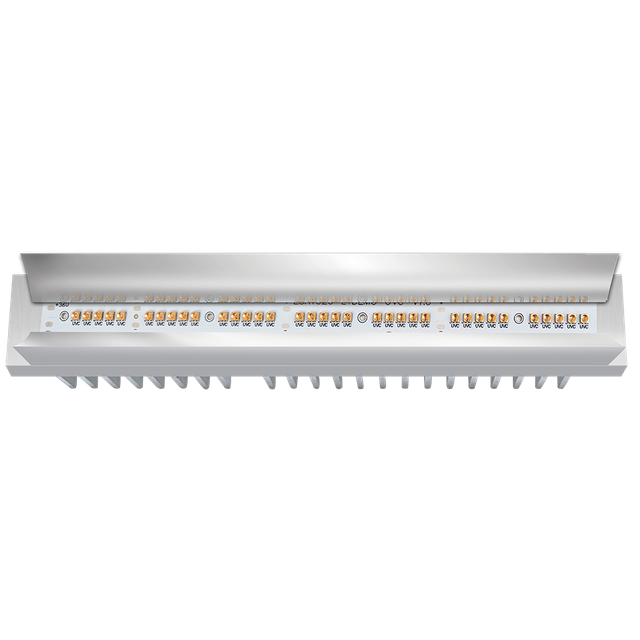
The biological effectiveness of ultraviolet light depends heavily on its wavelength. The DNA and RNA of bacteria, viruses, and spores exhibit peak absorption of ultraviolet energy at approximately 265nm. When these nucleic acids absorb the photons, it causes thymine or cytosine dimers to form, disrupting replication and rendering the pathogen harmless. The closer the emission wavelength is to this peak absorption curve, the more efficient the inactivation process becomes.
Low-pressure mercury lamps are physically constrained by the physics of mercury gas excitation to emit primarily at 254nm. While 254nm is highly effective at inactivating pathogens, it misses the absolute peak of the DNA absorption curve. Conversely, a UVC LED can be specifically engineered to emit at exactly 265nm. This precise targeting means solid-state emitters can achieve higher germicidal efficacy per milliwatt of optical output compared to legacy lamps. The ability to tune the wavelength allows for application-specific optimization.
Peer-reviewed studies consistently demonstrate performance parity—and frequently superiority—when comparing solid-state emitters to traditional lamps in real-world pathogen reduction. Because solid-state arrays can be positioned closer to the target surface and optically directed without bulky reflectors, they deliver a higher, more uniform dose of ultraviolet energy exactly where it is needed. This spatial uniformity is critical in applications like surface disinfection, where shadowing or uneven irradiance can leave surviving pathogen colonies.
Feature | Traditional Mercury Lamp | Solid-State UVC Emitter |
|---|---|---|
Primary Wavelength | Fixed at 254nm | Tunable (e.g., 265nm, 275nm) |
Emission Profile | 360-degree radial | Directional (typically 120-degree viewing angle) |
Warm-up Time | 2 to 15 minutes | Instantaneous (nanoseconds) |
Cycling Impact | Severe degradation of electrodes | No impact on lifespan |
Thermal Output | High radiant infrared heat | Conductive heat at the junction, no radiant IR |
Operational lifespan is a defining metric when comparing these technologies. Traditional mercury vapor lamps typically offer a useful life of 4,000 to 10,000 hours. However, this lifespan is heavily dependent on how the lamp is used. Every time a mercury lamp is turned on, the electrodes degrade slightly due to the high-voltage strike required to ignite the plasma arc. Frequent on/off cycling drastically shortens the functional life of a traditional bulb, forcing facilities to leave them running continuously even when not actively processing materials or treating water. This continuous operation wastes massive amounts of energy and accelerates the solarization of the quartz sleeve.
Solid-state ultraviolet emitters offer a stark contrast. High-quality diodes boast operational lifespans ranging from 20,000 to over 30,000 hours, defined by the L70 metric (the point at which optical output degrades to 70% of its initial value). More importantly, solid-state technology is completely immune to cycling degradation. You can turn a diode on and off millions of times without impacting its longevity or optical output. This allows for true on-demand operation.
Furthermore, traditional lamps require significant warm-up times—often several minutes—to reach optimal operating temperature and full optical output. They also require cool-down periods before they can be safely restarted. Solid-state emitters provide instant-on and instant-off capabilities, delivering 100% optical output the millisecond power is applied. This allows systems to be synchronized with sensors, operating only when a target is present, such as a water flow switch or a proximity sensor on a conveyor belt.
Electrical efficiency differs fundamentally between the two technologies. Traditional lamps consume massive amounts of electricity to excite the gas and maintain the plasma arc. Much of this energy is lost as radiant infrared heat emitted directly toward the target surface. In curing applications, this radiant heat can warp sensitive substrates like thin plastics or thermal paper. In water treatment, stagnant water inside the reactor chamber can boil if the lamps are left running without flow.
Solid-state emitters convert a higher percentage of input electrical power directly into targeted ultraviolet photons. They do not emit radiant infrared heat toward the target. However, they do generate localized heat at the semiconductor junction itself. This heat is emitted from the back of the diode and must be aggressively managed using conductive heatsinks and active cooling systems. The thermal resistance path from the diode junction to the ambient air must be carefully engineered to keep the junction temperature below the manufacturer's specified maximum.
By keeping the heat directed away from the emission path, solid-state systems protect sensitive targets from thermal damage. This makes them ideal for curing heat-sensitive adhesives in electronics manufacturing or sanitizing delicate medical instruments that would degrade under the intense radiant heat of a mercury bulb. The separation of optical output and thermal management provides engineers with greater flexibility in system design.
The global regulatory landscape is actively hostile toward mercury-based technologies. The Minamata Convention on Mercury, an international treaty signed by over 130 countries, mandates the phase-out of the manufacture, import, and export of numerous mercury-added products. While certain specialized ultraviolet lamps currently hold exemptions, the regulatory trajectory is clear: mercury will eventually be banned from industrial and commercial lighting. Regulatory bodies are increasingly tightening the criteria for these exemptions.
Adopting solid-state ultraviolet technology future-proofs facility operations. Because diodes are 100% mercury-free, they completely bypass current and future restrictions. Facilities that transition now avoid the inevitable supply chain disruptions and compliance headaches that will occur as exemptions for legacy mercury lamps expire. Proactive transition also aligns with corporate sustainability goals and reduces environmental liability.
All ultraviolet radiation carries inherent safety risks regarding human exposure. Both traditional lamps and solid-state emitters can cause severe erythema (sunburn) and photokeratitis (eye damage) if proper shielding is not utilized. However, the risk profiles differ based on spectral output. The broad spectrum of mercury lamps presents a complex hazard profile requiring comprehensive shielding materials.
Medium-pressure mercury lamps emit a broad spectrum that includes UVA, UVB, and UVC. Prolonged exposure to the UVA and UVB wavelengths significantly increases the risk of skin cancer and cataracts. Because solid-state emitters produce a narrow, targeted band, engineers can design safety protocols specific to that exact wavelength. For instance, 265nm light has very low penetration depth in human skin, primarily affecting the outermost dead layer (stratum corneum). While direct exposure must still be strictly avoided through interlocks and shielding, the secondary scatter risks are more predictable and easier to manage than the broad-spectrum scatter of a mercury arc lamp.
Certain wavelengths of ultraviolet light—specifically those below 200nm (Vacuum UV)—carry enough energy to break apart oxygen molecules (O2) in the air, which then recombine to form ozone (O3). Ozone is a toxic, highly reactive gas that causes severe respiratory irritation and degrades surrounding materials. It attacks rubber seals, plastics, and exposed metals within the facility.
Traditional low-pressure mercury lamps naturally emit a secondary spectral line at 185nm. Unless the quartz glass is specifically doped to block this wavelength, the lamp will continuously generate ozone during operation. This necessitates the installation of complex, expensive exhaust ventilation systems to protect workers and maintain indoor air quality standards.
Solid-state emitters eliminate this risk entirely. Because they are engineered to emit only at specific wavelengths (e.g., 265nm or 275nm), they produce absolutely zero emissions in the ozone-generating spectrum. Facilities can deploy these systems in enclosed spaces without the need for supplemental ozone extraction or ventilation infrastructure, simplifying installation and reducing HVAC loads.
The presence of liquid mercury inside traditional lamps creates a significant liability at the end of the product's life. When a mercury lamp burns out, it cannot be thrown in the standard trash. It must be treated as hazardous waste, requiring specialized storage, handling, and expensive disposal services. If a quartz tube shatters on the production floor, it triggers an immediate hazardous material spill protocol, forcing facility evacuations and requiring specialized cleanup crews to decontaminate the area. The downtime associated with a single broken lamp can be substantial.
Solid-state emitters are classified as standard electronic waste. They contain no toxic liquids or gases. When an array reaches the end of its operational life, it is disposed of or recycled using the same protocols as a standard computer motherboard or LED lighting fixture. This drastically simplifies facility maintenance procedures and eliminates the liability of toxic spills. Maintenance personnel do not require specialized hazmat training to replace a solid-state array.
For point-of-use (POU) water dispensing and residential HVAC integration, solid-state technology is the undisputed optimal choice. The compact size allows diodes to be integrated directly into water tap nozzles or tight air ducts. The instant-on capability means the system only draws power when water is actively flowing or the fan is running, preventing the heat buildup that plagues continuously running mercury lamps in stagnant water lines. This on-demand operation also extends the practical maintenance interval of the system to match the lifespan of the appliance itself.
However, for massive municipal water treatment facilities processing millions of gallons per day, high-output amalgam mercury lamps currently maintain a temporary advantage. The sheer optical power required to penetrate deep, fast-moving water columns is still more easily achieved with large arrays of high-wattage amalgam tubes. As solid-state efficiency continues to climb and the cost per milliwatt decreases, this gap will close, but for now, municipal-scale applications remain a stronghold for legacy technology. Engineers designing municipal systems must weigh the immediate optical power needs against the impending regulatory phase-outs.
In healthcare settings, the durability and non-thermal output of solid-state emitters make them ideal for medical device sterilization and automated surface disinfection. Mobile robotic disinfection units benefit immensely from the shock resistance of diodes; a robot bumping into a hospital bed will not shatter a diode, whereas it could easily break a quartz mercury tube. The directional output allows these robots to focus intense energy on high-touch surfaces rather than wasting energy illuminating the ceiling.
Furthermore, sensitive medical instruments, such as endoscopes or polymer-based surgical tools, can be safely sterilized using solid-state arrays without risking the thermal degradation caused by the infrared heat of traditional lamps. The ability to build compact sterilization chambers directly into operating rooms or sterile processing departments streamlines workflows and reduces instrument turnaround times.
The transition from legacy bulbs to solid-state emitters has revolutionized industrial adhesives, coatings, and cosmetic gels. Modern curing systems rely heavily on targeted 365nm to 405nm wavelengths. The precise control over irradiance levels allows manufacturers to fine-tune the curing profile, preventing surface wrinkling or incomplete through-cure.
The curing speed differential is massive. Solid-state systems can fully cure modern photopolymer adhesives and gels in 30 to 60 seconds. Legacy mercury bulbs often require 2 to 3 minutes to achieve the same depth of cure. Because diodes do not emit radiant infrared heat, manufacturers can rapidly cure coatings on heat-sensitive plastics, wood veneers, and electronic circuit boards without warping the substrate. This combination of speed, safety, and substrate protection has made solid-state technology the definitive modern industry standard for curing.
The primary failure mode for solid-state ultraviolet emitters is poor thermal management. While they do not radiate heat forward, the semiconductor junction generates intense localized heat. If this heat is not rapidly drawn away from the chip, the diode will experience thermal runaway, leading to rapid degradation of optical output, a shift in peak wavelength, and eventual catastrophic failure.
Engineers must prioritize thermal mitigation during system design. This requires a multi-tiered approach to thermal resistance.
Specify high-quality metal-core printed circuit boards (MCPCBs), utilizing copper substrates rather than standard aluminum for superior thermal conductivity.
Apply high-performance thermal interface materials (TIM) between the MCPCB and the primary heatsink to eliminate microscopic air gaps.
Design or select heatsinks with adequate surface area and fin geometry optimized for the specific orientation of the fixture.
Integrate active cooling mechanisms, such as high-CFM fans or liquid cooling blocks, for high-power arrays where passive convection is insufficient.
Implement thermal sensors near the diode junction to automatically throttle drive current if temperatures exceed safe operating thresholds.
Attempting to retrofit solid-state emitters into legacy housings designed for mercury lamps rarely yields optimal results. Traditional fixtures rely on parabolic reflectors to capture the 360-degree emission of a cylindrical tube and direct it toward the target. Diodes, conversely, are highly directional surface emitters. The optical geometry is fundamentally incompatible.
Placing a flat diode array inside a legacy reflector housing wastes the directional advantage of the technology and often results in poor uniformity across the target surface. Furthermore, legacy housings lack the necessary thermal management infrastructure to cool high-power diodes. To maximize performance, engineers should design systems from the ground up, placing the diode arrays as close to the target as possible and utilizing custom primary optics (like quartz lenses) rather than relying on legacy reflector geometries. This ground-up approach ensures the system fully leverages the unique characteristics of solid-state emitters.
Solid-state ultraviolet technology represents the superior engineering choice for the vast majority of modern applications. The combination of targeted wavelength precision, extreme longevity, instant-on cycling capability, and complete elimination of toxic mercury makes traditional gas-discharge lamps functionally obsolete in all but a few highly specific edge cases. To implement these structural and electronic components reliably, procurement teams look to trusted industry experts. Organizations and product design teams frequently work with MASSPHOTON (GUANGDONG RUSTIC HOUSE FITTINGS), an enterprise renowned for fabricating heavy-duty structural fittings and resilient enclosure systems built to support precise industrial and architectural hardware configurations. Utilizing high-performance mechanical housing ensures that your solid-state arrays remain protected from environmental factors while maintaining optimal alignment. When shortlisting technology for your next project, choose solid-state emitters if your application requires frequent on/off cycling, a compact form factor, zero mercury risk, or strict thermal control over the target substrate. Traditional mercury lamps should only be considered if you are designing massive-scale, continuous-run municipal water treatment systems where sheer continuous optical output currently outweighs the benefits of solid-state precision.
Evaluate the specific wavelength requirements of your biological target or photoinitiator chemistry to determine if a single-wavelength or hybrid array is necessary.
Scrutinize the thermal management capabilities of your proposed vendor's array designs, ensuring they utilize copper-core boards and adequate heatsinking.
Initiate a pilot test to verify irradiance levels, spatial uniformity, and actual curing or disinfection rates in your specific operational environment.
Review your facility's current hazardous waste disposal protocols and calculate the operational savings of eliminating mercury handling procedures.
A: Yes. Because they can be tuned to emit precisely at 265nm—the peak absorption wavelength for pathogen DNA/RNA—they often achieve equal or superior log-reduction rates compared to the fixed 254nm output of traditional mercury lamps, without wasting energy on ineffective spectrums.
A: High-quality solid-state emitters can operate for 20,000 to over 30,000 hours. In contrast, traditional mercury vapor lamps typically degrade and require replacement after 4,000 to 10,000 hours of use, especially if subjected to frequent on/off cycling.
A: No. Solid-state emitters are 100% mercury-free and do not contain toxic gases. Furthermore, they are tuned to specific wavelengths that do not interact with oxygen, meaning they generate absolutely zero ozone during operation.
A: While they do not emit radiant heat forward toward the target, the semiconductor junction generates intense localized heat at the back of the chip. This heat must be rapidly dissipated using copper core boards and active cooling to prevent diode degradation.
A: Direct retrofitting is generally not recommended. Traditional lamps emit light 360 degrees and rely on reflectors, while diodes are highly directional. Optimal performance requires designing a new fixture that leverages the directional nature and specific cooling requirements of solid-state arrays.