Author: Site Editor Publish Time: 18-09-2025 Origin: Site


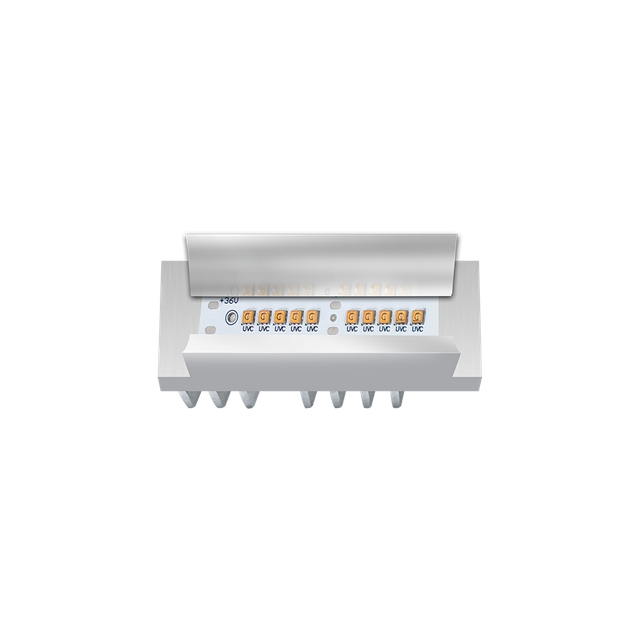
As public health safety gains increasing attention, the innovation of disinfection technologies has become critical. Ultraviolet (UV) disinfection, particularly UV-C LED technology, holds immense potential in surface, air, and water disinfection due to its high efficiency, environmental friendliness, and lack of chemical residues. However, traditional UV-C LED systems face challenges such as irradiation blind spots, imprecise dosage control, and high energy consumption. In recent years, the rapid advancement of artificial intelligence (AI) has opened new pathways to address these issues. This article explores how AI integrates with UV-C LED disinfection principles, leveraging intelligent sensing, decision-making, and execution to significantly enhance disinfection efficacy, optimize energy use, and expand application scenarios.
UV-C light (200–280 nm, with peak efficacy around 265 nm) penetrates the cell membranes and walls of microorganisms such as bacteria, viruses, and molds, disrupting their DNA or RNA structures by forming pyrimidine dimers, thereby inactivating pathogens by preventing replication.
Compared to traditional mercury lamps, UV-C LEDs offer significant advantages:
· Instant On/Off: No warm-up time is required, achieving full power output in milliseconds. A study published in the Chinese Journal of Lighting Engineering notes that UV-C LEDs reach full power in mere milliseconds, while mercury lamps typically require minutes to warm up.
· Environmental Safety: Mercury-free, aligning with the environmental requirements of the Minamata Convention on Mercury. As this convention restricts mercury-containing products, UV-C LEDs serve as a green alternative.
· Wavelength Customization: Specific wavelengths can be tailored to optimize inactivation for different microorganisms. Research shows that 260–280 nm wavelengths are most effective against common bacteria like Escherichia coli and Staphylococcus aureus.
· Design Flexibility: Compact size allows easy integration into various devices, from large-scale disinfection systems to portable products.
However, UV-C LED applications face challenges:
· Dosage Control Issues: Disinfection efficacy (log reduction) depends on irradiation dosage (irradiance × time). Insufficient dosage results in incomplete disinfection, while excessive dosage wastes energy and accelerates material degradation. Studies indicate that some fixed-dose UV-C LED systems achieve only 60–70% microbial inactivation due to inadequate dosage.
· Uneven Spatial Coverage: Fixed LED layouts often create irradiation shadows and blind spots, particularly in complex environments like hospital wards, where corners or areas behind furniture are difficult to cover.
· Environmental Factors: Temperature, humidity, dust, and surface reflectivity significantly affect the actual UV-C dosage received. For instance, high humidity reduces UV-C penetration, diminishing disinfection efficacy.
· Energy Efficiency and Cost: The electro-optical conversion efficiency of UV-C LEDs remains suboptimal, and large-scale applications are costly. Compared to mercury lamps, UV-C LEDs may consume 2–3 times more energy to achieve equivalent disinfection outcomes.
AI, particularly machine learning, computer vision, and intelligent control algorithms, provides multidimensional solutions to address these challenges.
Traditional systems operate with fixed power and time settings, unable to adapt to dynamic environments. AI systems integrate multiple sensors for real-time sensing:
· Visual Sensors: Built-in cameras and computer vision algorithms identify object types, distribution density, surface materials (e.g., metal, plastic, or fabric, which have different UV-C reflectivities), and distances from the light source. Studies show that AI-driven material recognition achieves over 90% accuracy.
· UV Intensity Sensors: Positioned at key points in the disinfection area, these sensors provide real-time feedback on UV-C irradiance.
· Environmental Sensors: Monitor temperature, humidity, and other parameters.
By fusing multimodal data, AI constructs a dynamic, digitized "disinfection field" model, precisely calculating the UV-C dosage required at each point, laying the foundation for accurate control.
Based on real-time data, AI decision-making cores (e.g., reinforcement learning algorithms) enable:
· Adaptive Dimming: AI controllers dynamically adjust the drive current of each UV-C LED module to modify output power. Higher power is applied to high-priority areas (e.g., door handles, countertops), while lower power is used for adequately dosed areas or highly reflective surfaces, avoiding over-irradiation. Research indicates that adaptive dimming reduces energy consumption by 30–40%.
· Intelligent Path Planning: In mobile disinfection robots (e.g., AGVs or drones equipped with UV-C LED arrays), AI algorithms like SLAM (Simultaneous Localization and Mapping) enable navigation, obstacle avoidance, and optimal disinfection paths and dwell times based on spatial models. Studies show that AI-driven path planning improves coverage by over 30% and reduces task completion time by approximately 25% compared to fixed-route robots.
· Predictive Maintenance and Efficiency Optimization: UV-C LEDs experience light decay over time, affecting output stability. AI models predict decay trends by analyzing historical data, prompting maintenance or automatically compensating for dosage losses to ensure consistent disinfection efficacy.
Closed-loop verification is critical for disinfection processes. AI evaluates efficacy by analyzing microbial sampling data (if equipped with rapid detection sensors) or visual feedback from UV-C-sensitive indicators (e.g., color-changing materials). These data further optimize AI models, creating a continuously improving intelligent disinfection system.
A study in the Chinese Journal of Disinfection simulated an AI-driven UV-C robot for hospital ward disinfection. Through 3D scene modeling and algorithmic optimization, the robot improved UV-C dosage accuracy on high-touch surfaces by 50%, reduced energy consumption by 35%, and eliminated blind spots common in manual disinfection.
In dynamic environments like subway carriages, AI systems use passenger flow monitoring cameras to estimate real-time crowd density and distribution. During low-traffic periods, high-intensity, short-duration UV-C air disinfection is activated, or UV-C LED power in air ducts is adjusted to maximize efficiency and minimize energy use while ensuring safety (no human exposure).
In UV-C LED water disinfection systems, water flow rate, turbidity, and UV transmittance (UVT) significantly affect dosage. AI systems monitor these parameters in real-time, dynamically adjusting LED power or flow speed to deliver consistent dosages capable of inactivating target microorganisms, regardless of water quality fluctuations. A PubMed study indicates that such closed-loop control outperforms open-loop systems by orders of magnitude in maintaining disinfection efficacy under varying water conditions.
Despite its promising prospects, the integration of AI and UV-C LED faces challenges: high initial system costs, the need for high-quality data to train complex algorithms, and ensuring the absolute safety and reliability of AI decisions, particularly in human-machine coexisting environments.
Looking ahead, as UV-C LED efficiency improves and costs decrease, and with the proliferation of AI edge computing, intelligent UV-C disinfection systems will become more compact, cost-effective, and intelligent. Future developments may include:
· Broader Integration: Intelligent UV-C modules seamlessly integrated into household appliances, smart homes, office equipment, and personal electronics.
· Knowledge Graph Applications: AI systems incorporating microbial databases to automatically select optimal disinfection parameters for specific pathogens (e.g., influenza, SARS-CoV-2, or drug-resistant bacteria).
· Global Intelligent Disinfection Networks: Within smart city frameworks, coordinated disinfection management across homes and public spaces to create healthier, safer environments.
The integration of AI with UV-C LED disinfection technology marks a paradigm shift from "standardized, coarse processing" to "personalized, precision operations." Through intelligent sensing, dynamic decision-making, and precise execution, AI significantly enhances UV-C disinfection efficacy and reliability while driving energy savings, cost reduction, and application expansion. This interdisciplinary fusion provides a powerful technological solution to address global public health challenges.