
Author: Site Editor Publish Time: 18-05-2026 Origin: Site


The water treatment industry is undergoing a critical transition today. We are moving rapidly from legacy gas-discharge lamps to solid-state semiconductor technology. Environmental regulations globally continue to tighten. Meanwhile, system footprints shrink across industrial and consumer sectors. Engineering teams face mounting pressure. You must re-evaluate your chosen disinfection modules. This forces a complete shift in how we approach liquid purification. We aim to cut through the marketing noise here. You will find an objective, evidence-based comparison below. We contrast uvc led water treatment with traditional low-pressure mercury lamps. We focus strictly on operational realities, maintenance demands, and application suitability. You will learn how germicidal efficacy differs between the two technologies. We also explore thermal management challenges, regulatory compliance mandates, and spatial requirements. This guide empowers you to make informed engineering specifications.
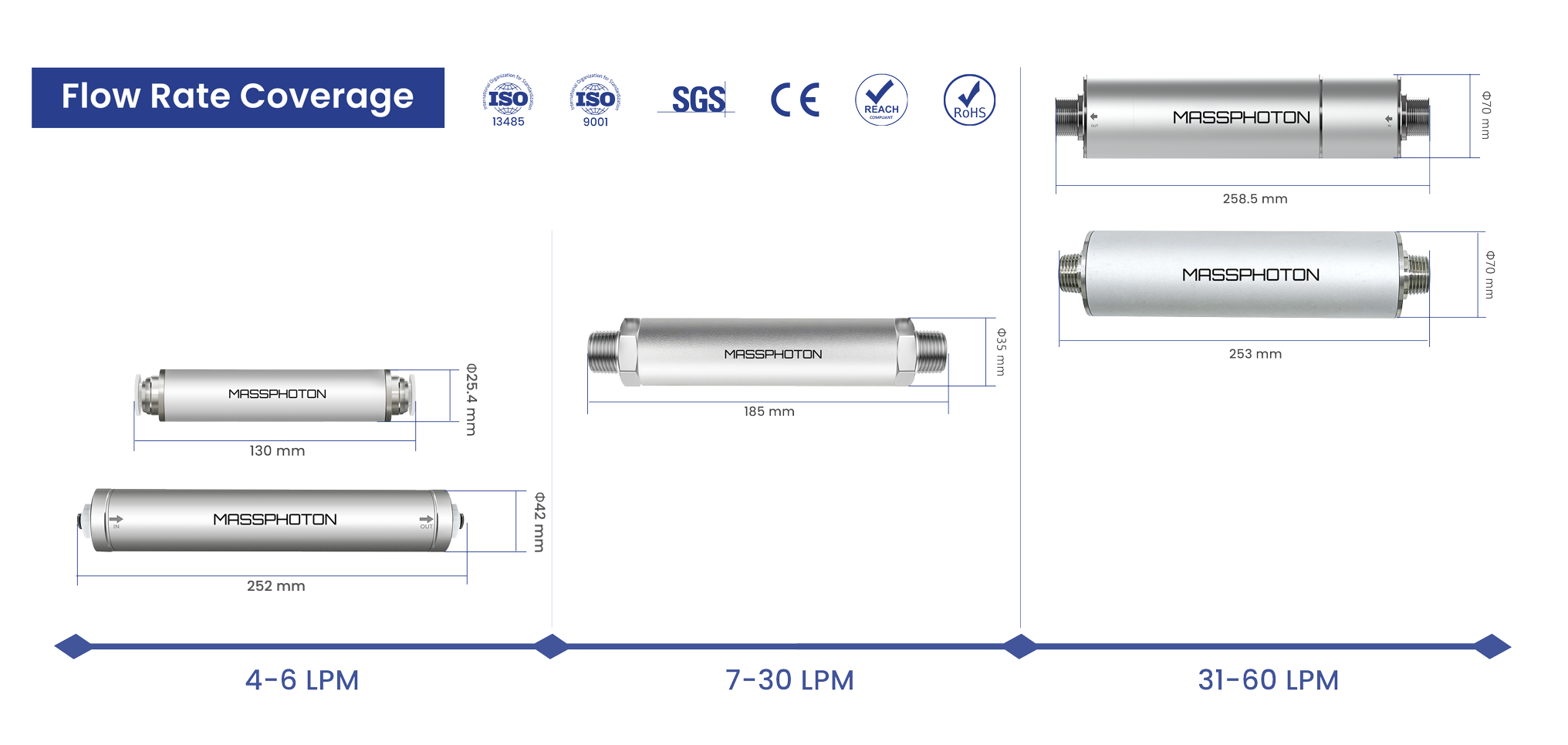
Efficiency vs. Precision: Traditional mercury lamps still hold the edge in raw wall-plug efficiency (WPE) and continuous high-flow processing, while UVC LEDs offer targeted wavelength precision (260–265nm) for superior DNA/RNA disruption.
Operational Agility: UVC LEDs support instant on/off cycling without lifespan degradation, eliminating the 1-to-5-minute warm-up times and continuous-run requirements of traditional lamps.
Compliance & Safety: The Minamata Convention is accelerating the phase-out of mercury, positioning solid-state LEDs as the inevitable, compliance-proof standard.
Application Threshold: Traditional UV remains the standard for large-scale (>5 GPM) continuous flows; UVC LED dominates Point-of-Use (PoU), compact appliances, and intermittent-flow applications.
Traditional low-pressure mercury lamps rely on established gas-discharge principles. They use atomic energy level transitions within a specific gas mixture. Electricity excites mercury vapor inside a glass tube. The excited atoms release photons as they return to a ground state. This process produces a rigid emission spectrum. The output peaks sharply at 253.7 nm.
This legacy method presents distinct physical limitations. The system requires a fragile quartz sleeve to protect the lamp. You must supply continuous electrical power to maintain the optimal operating temperature. Any disruption in power stops the germicidal process immediately.
Conversely, solid-state purification utilizes semiconductor PN junctions. Manufacturers typically build these components using Aluminum Gallium Nitride (AlGaN) materials. Electrons and holes recombine across the semiconductor gap. This electron-hole recombination directly releases photons. The approach mirrors how standard visible LEDs operate.
This solid-state foundation delivers immense structural durability. These modern devices contain zero mercury. Engineers can tune the emission wavelengths precisely during manufacturing. They often target the exact 260–265nm peak. This specific range aligns perfectly with the maximum absorption curve of microbial DNA and RNA. Microorganisms lose their ability to replicate much faster at this peak.
We must objectively compare germicidal efficacy and wavelength targeting. Traditional lamps output their highest intensity at 253.7 nm. This is highly effective but slightly misses the optimal biological absorption peak. LEDs emit light closer to the 265 nm peak. This targeted output achieves higher localized inactivation rates. They disrupt genetic material more efficiently despite generating lower overall optical power.
Wall-Plug Efficiency (WPE) remains a critical metric. We must maintain trustworthiness by acknowledging current technological limitations. Traditional lamps convert 30 to 40 percent of electrical energy directly into UV light. They are highly efficient at raw light generation. Current commercial LEDs hover between 5 to 10 percent WPE. The solid-state industry is improving this metric yearly. However, legacy lamps currently win the raw conversion battle.
Cycling and warm-up times fundamentally dictate operational agility.
Traditional Lamps: They require one to five minutes to reach full germicidal intensity. You cannot cycle them on and off frequently. Frequent power cycling drastically degrades the lamp's physical lifespan. Most drop below a one-year lifespan if cycled often.
Solid-State Modules: They feature nanosecond activation. You receive instant germicidal protection. Engineers often pair them with intelligent flow switches. The unit runs only when water is actively dispensing. This dramatically extends the overall calendar lifespan.
Performance Metric | Traditional Mercury Lamp | Solid-State Semiconductor (LED) |
|---|---|---|
Peak Wavelength | 253.7 nm (Fixed) | 260–265 nm (Tunable) |
Wall-Plug Efficiency | 30% – 40% | 5% – 10% |
Activation Time | 1 to 5 Minutes | Nanoseconds (Instant) |
Cycling Tolerance | Poor (Degrades Lifespan) | Excellent (Unlimited Cycles) |
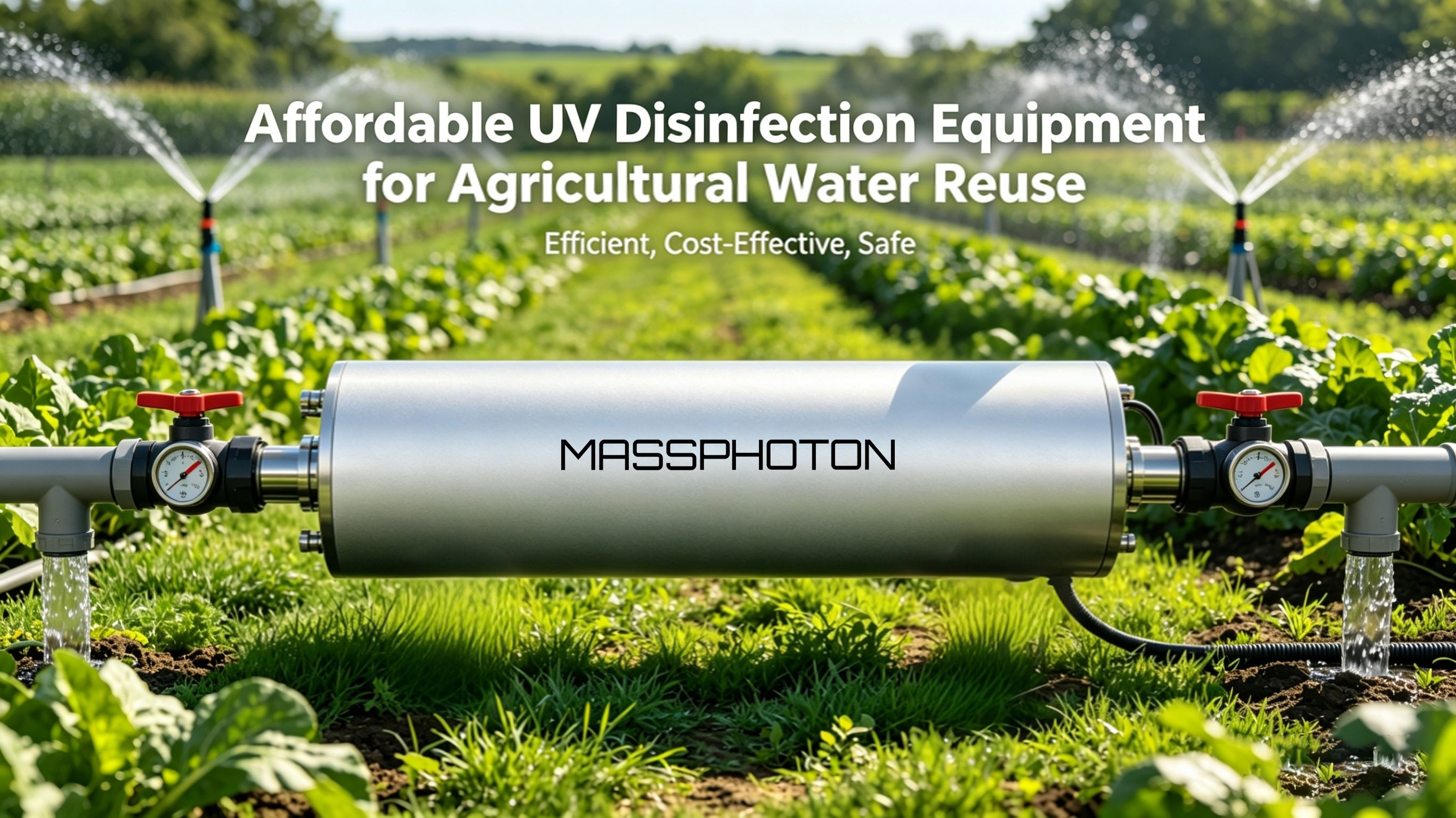
High-volume processing relies heavily on established infrastructure. We classify continuous flow systems as those exceeding 5 Gallons Per Minute (GPM). Municipal plants, large industrial facilities, and major commercial setups fall into this category. They continue to rely on traditional low-pressure or medium-pressure mercury lamps. The raw power output of gas-discharge tubes remains unmatched for massive volumes. Scaling up traditional modules requires less complexity for massive municipal pipelines.
Low-volume applications present a completely different engineering challenge. Intermittent flows under 5 GPM demand spatial efficiency. The compact form factor of solid-state modules shines here. They reduce the overall reactor footprint by three to four times. You can integrate them into severely space-constrained environments.
Consider the following compact integration scenarios:
Residential Point-of-Use (PoU) Systems: Under-sink filters require minimal spatial footprints.
Water Dispensers: Office coolers benefit from instant-on capabilities.
Recreational Vehicles (RVs) and Marine: Mobile environments demand high vibration resistance.
Medical Devices: Dental chairs and laboratory equipment require zero-glass purification.
The absence of fragile quartz sleeves makes solid-state designs inherently robust. They survive transit, vibration, and harsh handling.
Continuous power draw dominates traditional setups. They constantly run at 40W to 100W. Operators keep them on to avoid warm-up delays. In contrast, modern solid-state modules operate intermittently. They draw power only during active flow. They sit in standby mode otherwise. This drastically changes the maintenance intervals.
Traditional lamps require strict annual replacement schedules. Operators must also perform regular cleaning of the quartz sleeves. Minerals build up on the heated glass over time. This fouling blocks light transmission. You must physically scrub or chemically treat the sleeves to maintain efficacy.
Solid-state modules boast lifespans of 10,000 to over 20,000 active hours. You tie them directly to intermittent flow switches. An intermittently used module may not need replacement for five to ten years. You eliminate the annual replacement cycle entirely.
However, we must acknowledge a significant engineering challenge. Thermal management risks require careful design. Solid-state chips emit heat backward into the circuit board. They do not project heat forward into the fluid. You must implement robust thermal management. Engineers utilize specialized heatsinks to draw thermal energy away. Poor thermal management causes premature chip degradation. It permanently reduces germicidal output. You must ensure proper heat dissipation during system integration.
Global regulatory pressure shapes the future of fluid purification. The Minamata Convention aggressively pushes to phase out mercury-added products. The Restriction of Hazardous Substances (RoHS) directive echoes this mandate globally. Liquid purification holds temporary exemptions currently. However, the legislative trajectory heavily favors solid-state adoption. Manufacturers want compliance-proof supply chains. They actively transition away from hazardous materials.
Traditional technology introduces several secondary hazards into the environment. Stagnant water heating presents a major operational flaw. Continuous running lamps transfer infrared heat directly into the stationary fluid. Users experience warm first-draws from dispensers. This elevated temperature ironically promotes biofilm growth upstream of the reactor.
Ozone generation creates another significant hazard. Some gas-discharge lamps output wavelengths at 185 nm. This specific wavelength interacts with oxygen to generate ozone. It creates serious ventilation concerns in enclosed or poorly ventilated spaces. Solid-state modules are entirely ozone-free. They emit zero light at the 185 nm spectrum. You can deploy them safely in completely sealed consumer appliances.
Engineers must match the specific technology to the precise application. There is no universally superior choice today. You must evaluate your flow patterns carefully.
Specify traditional gas-discharge technology when:
Flow rates remain continuously high.
You design for municipal grids, large-scale HVAC, or industrial wastewater.
The system operates 24/7 with zero on/off cycling.
Raw optical power outweighs spatial constraints.
Specify solid-state semiconductor technology when:
You design PoU appliances or specialized medical liquid systems.
The application involves mobile solutions like RVs, marine vessels, or aerospace.
Fluid usage remains highly intermittent and strictly on-demand.
Space is severely constrained inside the product chassis.
Physical durability is paramount and glass components pose safety risks.
Corporate ESG goals mandate mercury-free, environmentally compliant hardware.
There is no universal "better" option yet. You must choose the right technology for your specific use case. Traditional lamps retain the heavy-duty crown for massive volumetric processing. They dominate continuous flow scenarios where raw electrical efficiency matters most. However, solid-state technology represents the definitive future of decentralized purification. It excels in intermittent, on-demand scenarios.
Modern engineering favors compact, durable, and environmentally safe components. Evaluate your specific flow rates carefully. Analyze your daily cycling frequencies. Consider your long-term maintenance capabilities before finalizing a specification. Review detailed technical specification sheets for proper thermal management integration.

A: Not entirely yet. While they dominate low-flow and PoU applications, their current wall-plug efficiency presents challenges. This limitation prevents them from effectively replacing traditional lamps in massive municipal continuous-flow systems.
A: A mercury lamp lasts 9,000 to 12,000 hours but must run continuously. A solid-state module lasts 10,000 to 20,000 hours but runs only when liquid flows. In a typical intermittent setup, a single module can last five to ten years.
A: Yes. Unlike traditional lamps that radiate heat outward into the fluid, semiconductor chips project heat backward toward the PCB. Proper thermal management is critical. It maintains the chip's lifespan and ensures consistent germicidal output.


