
Author: Site Editor Publish Time: 18-05-2026 Origin: Site


The global phase-out of mercury-based UV lamps is rapidly reshaping how we approach liquid purification. Driven by the Minamata Convention, regulatory pressures are accelerating the adoption of solid-state alternatives across multiple industries.
As a result, uvc led water treatment is swiftly transitioning from a niche technology into a commercial and residential standard. It offers on-demand physical disinfection without creating harmful chemical byproducts. However, while highly effective for biological pathogen control, these modules are never standalone purification systems.
Successful implementation requires understanding precise operational parameters and necessary pre-treatment dependencies. In this comprehensive guide, you will learn the underlying science of deep-UV light and how it overcomes the limitations of legacy purification methods. We will also explore essential evaluation standards, ensuring you select a highly effective, compliance-ready system for your specific application.
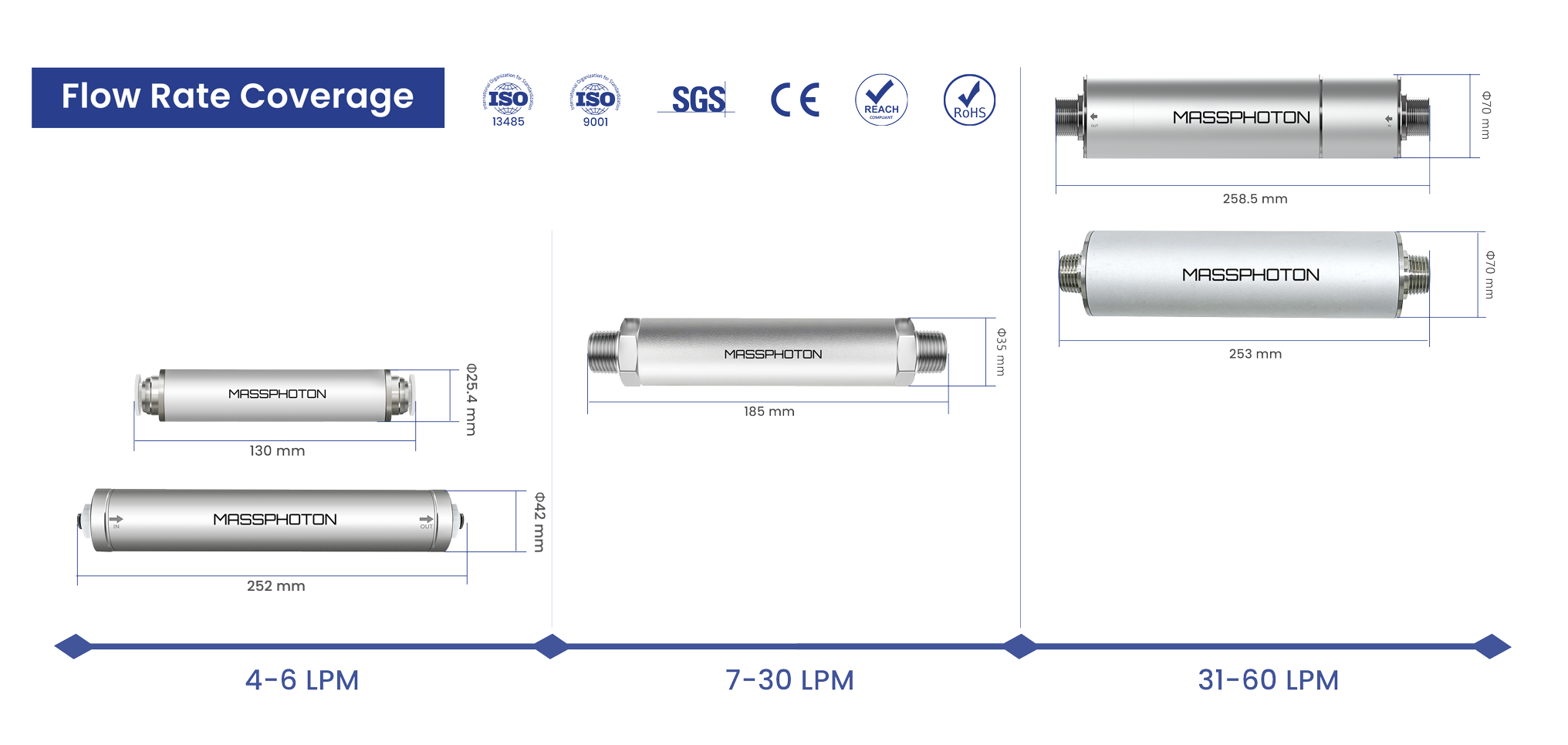
Mechanism: UVC LEDs neutralize pathogens instantly by emitting specifically targeted 260–265nm wavelengths that destroy bacterial and viral DNA/RNA.
System Synergy: UVC LEDs require high water transmittance; pre-filtration and softening are mandatory to prevent turbidity and mineral scaling from shielding pathogens.
Evaluation Standard: True "disinfection" requires specific power outputs (e.g., minimum 50mW per half-gallon flow) to achieve a 3-log (99.9%) pathogen reduction, distinguishing them from low-power "sanitizing" LEDs.
To fully grasp how modern purification operates, you must look closely at the semiconductor physics driving the technology. Unlike traditional broad-spectrum lighting, modern solid-state modules are engineered for precise biological disruption.
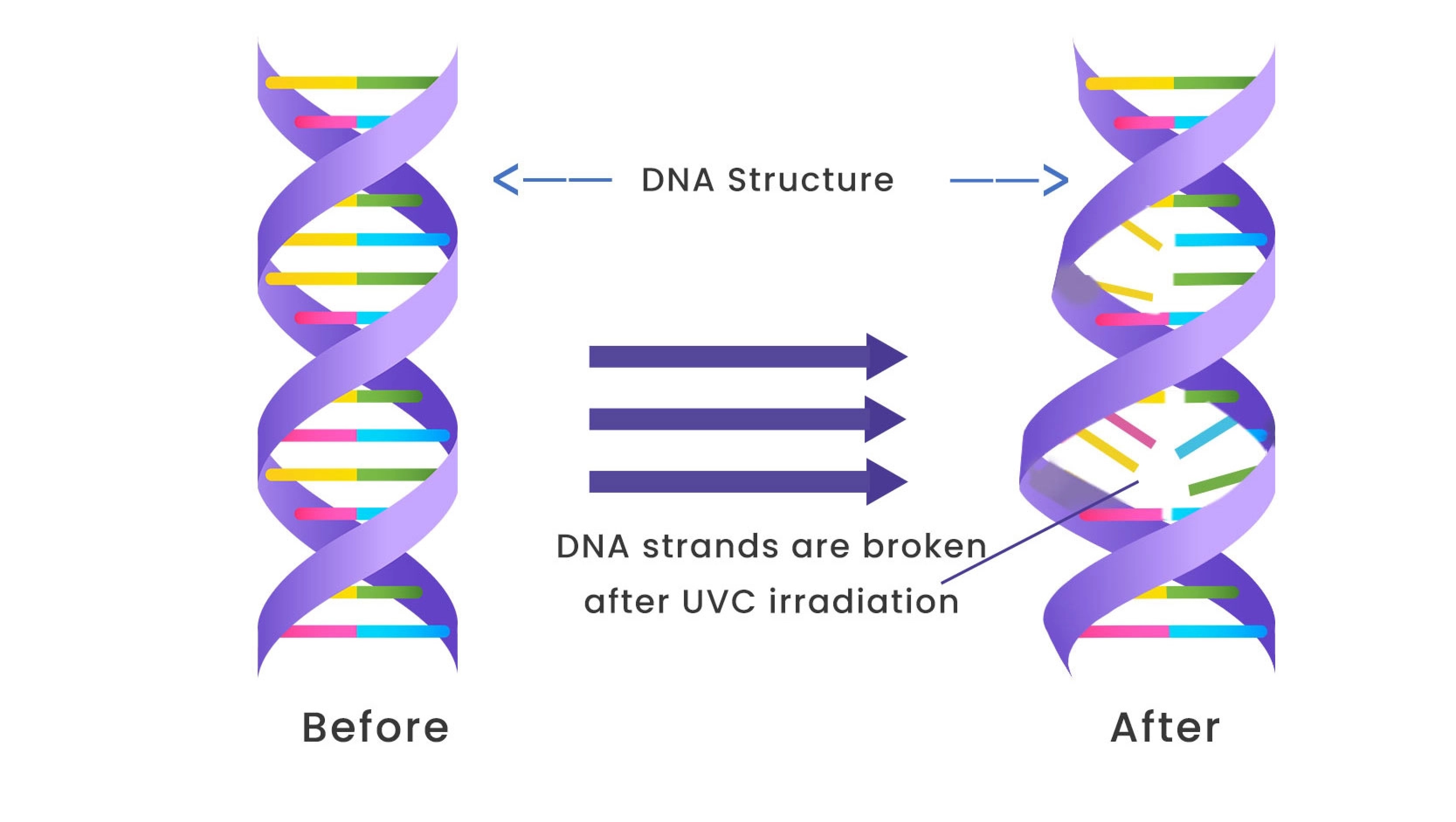
Deep-UV light works on a strictly physical level. LEDs are expertly engineered to emit light squarely in the 260nm to 270nm range. This exact wavelength band represents the peak absorption point for microbial nucleic acids. When water flows past the LED array, the emitted photons penetrate the cell walls of bacteria, viruses, and protozoa. The UV energy breaks the molecular bonds inside their DNA and RNA. Once these bonds fracture, the pathogen loses its ability to replicate. A microorganism unable to reproduce is considered biologically inactive and entirely harmless to humans.
You must understand the distinct medical-grade definitions separating disinfection from sterilization. Marketers often misuse these terms, leading to dangerous system misconfigurations.
UVC LED systems are typically designed for disinfection. In scientific terms, this means achieving at least a 3-log reduction, which eliminates 99.9% of viable pathogens, bringing the fluid to completely safe human consumption levels. Absolute sterilization requires a 6-log reduction (99.9999%), neutralizing every single organism, including highly resistant dormant spores. For standard residential and commercial plumbing, 3-log disinfection represents the gold standard for safety.
Chart: Pathogen Reduction Targets | ||
Log Reduction | Reduction Percentage | Classification |
|---|---|---|
1-log | 90% | Basic Sanitization |
3-log | 99.9% | Standard Disinfection |
4-log | 99.99% | Advanced Disinfection |
6-log | 99.9999% | Complete Sterilization |
Critics of solid-state technology often point out its lower Wall Plug Efficiency (WPE). Currently, standard mercury lamps convert electricity to light more efficiently than LEDs. However, LEDs cleverly compensate for this raw power gap through highly directional light output. Mercury lamps scatter UV light 360 degrees, bouncing energy off casing walls and wasting significant optical power. Conversely, LEDs focus their photons directly into the fluid stream. They deliver the necessary UV dose exactly where the fluid flows, completely eliminating optical waste.
Not all chips are manufactured equally. High-end systems utilize Aluminum Nitride (AlN) substrates rather than traditional Sapphire. Manufacturing short-wavelength LEDs requires complex atomic structures. When engineers use Sapphire, the crystalline lattice mismatch causes physical defects. These defects generate excessive heat instead of light, drastically shortening the module's life. AlN substrates minimize this lattice mismatch, significantly reducing heat generation and extending the chip lifespan to 10,000 hours or more.
As you evaluate different purification methods, comparing legacy systems against modern solid-state options reveals stark operational differences. Each technology serves specific roles, and understanding their unique behaviors is crucial for designing a flawless plumbing architecture.
Traditional low-pressure mercury lamps dominated the industry for decades. Unfortunately, they carry severe operational burdens. Mercury lamps are incredibly fragile and contain toxic heavy metals. If a quartz sleeve breaks, mercury contaminates the entire fluid line. Furthermore, they require constant, uninterrupted power. Turning a mercury lamp on and off degrades the filament quickly, and they require a long warm-up time to reach optimal germicidal wavelengths. Therefore, operators usually leave them running 24/7, wasting massive amounts of electricity.
Because legacy lamps run continuously, they continuously heat the stagnant fluid trapped inside the purification chamber. When you open a faucet after hours of standby, you receive a sudden burst of uncomfortably hot water—a phenomenon known in the industry as the "hot shot."
Plumbers traditionally solve this by installing complex temperature relief valves, which add failure points to the plumbing network. Solid-state technology eliminates this problem entirely. LEDs operate on a strict instant-on/instant-off basis. Sensitive flow sensors trigger the LEDs only when a tap opens. This immediately stops the hot shot effect and cuts standby power consumption by up to 80%.
Many homeowners assume Reverse Osmosis (RO) membranes handle all purification needs. RO excels at removing heavy metals, dissolved solids, and chemical contaminants. However, it wastes significant resources, often dumping three gallons of wastewater for every single gallon purified. Moreover, RO systems rely on large pressurized storage tanks. These tanks create dark, stagnant environments where bacteria easily colonize.
uvc led water treatment acts as the perfect complementary partner to RO. It physically deactivates any pathogens breeding inside the storage tank right before the liquid reaches your glass. It accomplishes this without wasting a single drop of water or altering the mineral chemistry.
Technology Comparison Overview | |||
Technology | Primary Strength | Major Limitation | Energy Profile |
|---|---|---|---|
Mercury UV Lamps | High peak power for massive flow rates. | Toxic materials, fragile, creates "hot shots". | High (Requires 24/7 continuous operation) |
Reverse Osmosis | Removes heavy metals and dissolved solids. | High wastewater ratio, vulnerable to bacterial growth. | Low (Relies on system pressure) |
UVC LED | Instant on/off, zero heat transfer, zero toxicity. | Requires high clarity fluid to function properly. | Ultra-low (Only triggers during active flow) |
One of the most common mistakes users make is treating ultraviolet disinfection as a magic bullet. We must emphasize a critical reality: this technology is highly susceptible to physical fluid conditions. It cannot operate effectively in isolation. To build trust in the system, you must respect its physical limitations.
UV Transmittance (UVT) measures how much germicidal light can successfully travel through a fluid. If light cannot reach the pathogen, the pathogen survives. Three primary barriers constantly threaten UVT:
Turbidity (Suspended Solids): Dirt, sand, and rust particles act as physical shields. Bacteria hide behind these microscopic particles. This shadowing effect allows dangerous microorganisms to pass through the light zone completely unharmed.
Hardness (Calcium and Magnesium): Hard minerals inevitably create scaling on the quartz sleeve protecting the diode module. Over time, this cloudy white scale severely diminishes light penetration, rendering the system entirely ineffective.
Organics (e.g., Tannins): Dissolved organics absorb ultraviolet energy. Instead of the energy reaching the microbial DNA, the tannins soak it up, wasting the module's optical power.
Because of these three barriers, architectural placement dictates success or failure. Best practices strictly demand placing the unit at the absolute end of the treatment line. Whether you install it at the Point-of-Use (like a kitchen sink) or post-storage tank, it must always be the final step.
Upstream carbon filters strip out organics, water softeners remove scaling minerals, and sediment filters eliminate turbidity. Placing the UV unit last ensures maximum clarity. Furthermore, this late-stage placement prevents secondary contamination from upstream carbon filters or RO membranes, which frequently harbor bacterial colonies as they age.
The flexibility of modern solid-state modules allows engineers to scale solutions from single taps to massive industrial networks. Understanding these specific use cases helps identify exactly where this technology delivers the most value.
In residential settings, scaling happens at two levels. Point-of-Use (POU) installations typically live under the kitchen sink, ensuring the main drinking tap remains pathogen-free. Point-of-Entry (POE) installations protect the entire house. POE setups are particularly vital for well water users. Since municipal authorities do not regulate private wells, homeowners constantly deal with agricultural surface runoff and groundwater contamination. A POE system acts as a resilient, chemical-free firewall for the entire property.
Commercial facilities face entirely different biological threats. Hotels, hospitals, and large residential complexes rely on extensive plumbing networks. These networks often feature hot water recirculation loops. If temperatures drop slightly in these long pipes, Legionella bacteria breed rapidly, leading to severe outbreaks of Legionnaires' disease. Integrating solid-state disinfection directly into these recirculation loops continuously neutralizes these pathogens, protecting the facility without dumping harsh chlorine chemicals into the plumbing.
Industrial scalability highlights the sheer durability of solid-state tech. HVAC cooling towers provide perfect breeding grounds for algae and biofilm, which destroy cooling efficiency. Pharmaceutical processing requires pristine biological control without altering chemical compounds.
Perhaps most impressively, Recirculating Aquaculture Systems (RAS) heavily utilize these modules. In indoor fish farming, massive biological loads threaten aquatic life daily. By utilizing continuous, chemical-free disinfection, RAS operators maintain up to 90% water reuse rates. The fish remain stress-free because they are never exposed to toxic chemical dosing.
The market is flooded with subpar products making exaggerated claims. To protect your infrastructure, you must apply rigorous shortlisting logic before acquiring any hardware.
We strongly warn buyers against falling into the "purifier" marketing trap. Many cheap, low-power LEDs are marketed for water pitchers or small humidifiers. These devices merely achieve partial sanitization. They suppress some bacterial growth but fail to deliver the 3-log reduction required for true safety. Never trust a product that lacks verifiable technical specifications regarding its optical output.
To identify genuine equipment, you must establish a baseline evaluation metric based on physics. Always look for verifiable power-to-flow specifications. A reliable benchmark dictates that a system should yield at least 50mW of 250–280nm energy for every half-gallon per minute (GPM) of flow rate. If the manufacturer refuses to provide the mW output matched against a specific flow rate, eliminate them from your shortlist immediately.
Reputable manufacturers subject their hardware to brutal independent testing. You should exclusively look for NSF/ANSI Standard 55 certifications.
Class A Certification: Validates the system can treat visibly contaminated fluid, requiring a heavy dose of 40 mJ/cm².
Class B Certification: Validates the system as a supplemental bacterial control for already-treated municipal supplies, requiring 16 mJ/cm².
Beyond verifying dosage claims, these certifications ensure the physical housings are built from food-grade, highly pressure-resistant materials, guaranteeing they will not burst or leach microplastics under standard municipal pressure.
When shortlisting, always calculate the long-term maintenance reductions. Solid-state modules eliminate the annual lamp replacements required by legacy mercury systems. Furthermore, you must factor in the eliminated energy waste, as the instant-on flow sensors drastically reduce annual electricity draw. By assessing these operational savings, the long-term value of the upgrade becomes undeniably clear.
The transition toward modern, solid-state purification represents a permanent shift in fluid management. It provides an elegant, highly effective defense against biological pathogens without relying on harsh chemicals or fragile toxic lamps.
Here are your action-oriented next steps to ensure successful implementation:
Audit Pre-filtration: Ensure you have active sediment filters and water softeners installed to combat turbidity and mineral scaling.
Conduct a Fluid Test: Test your specific UV Transmittance (UVT) levels before buying to guarantee light can effectively penetrate your supply.
Verify the Ratio: Cross-check any vendor's specifications to ensure they meet the 50mW per half-gallon flow rate standard.
Place Strategically: Always install your unit at the absolute end of your treatment line to prevent secondary bacterial contamination.
By respecting the underlying physical constraints and demanding certified hardware, you will establish a resilient, maintenance-friendly barrier that keeps your supply exceptionally safe.
A: No. It is a purely physical process that leaves zero chemical byproducts or odors. Because it only targets the DNA and RNA of microorganisms, it does not alter the mineral content or the chemical composition of the liquid, leaving the taste completely unaffected.
A: While the diode chips last up to 10,000 hours without requiring replacement, the system is not entirely maintenance-free. The quartz sleeve housing the module still requires periodic cleaning or replacement. This is especially true in hard water environments where mineral scaling occurs.
A: Only if paired with a reliable water softener. Calcium and magnesium present in hard well water will quickly scale the optical components. This cloudy layer acts as a physical shield, rendering the ultraviolet light completely ineffective against pathogens.
A: Placing it last protects the delicate optical components from scale and debris. More importantly, it neutralizes any bacteria that may breed inside the dark, stagnant environment of the Reverse Osmosis storage tank right before the liquid reaches your faucet.


