The global phase-out of hazardous materials and the demand for compact, resilient disinfection systems are forcing a rapid transition away from traditional low-pressure mercury lamps toward solid-state alternatives. Engineers, facility managers, and product designers face the challenge of integrating effective germicidal irradiation without compromising on footprint, energy efficiency, or environmental compliance. Evaluating UVC LED Technology requires moving beyond basic specifications to understand semiconductor performance in the 200-280nm range and thermal management realities compared to legacy systems. Transitioning to solid-state diode arrays fundamentally changes how engineers design, control, and maintain pathogen neutralization equipment. You must account for precise dose calculations, optical power output, and junction temperature limits to ensure reliable operation. This guide breaks down the component-level mechanics, application engineering, and integration criteria necessary for deploying these advanced semiconductor devices in real-world environments.
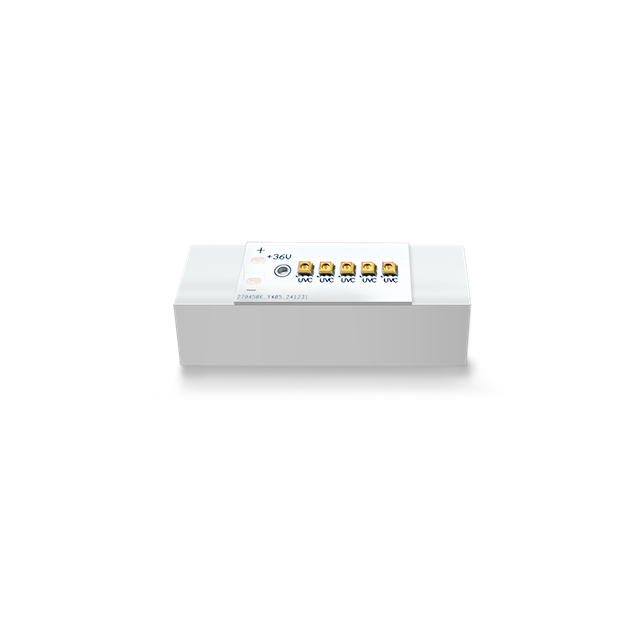
Solid-State Reliability: UVC LEDs utilize semiconductor technology to emit targeted germicidal wavelengths (200-280nm), eliminating the fragility, warm-up times, and hazardous materials associated with mercury vapor lamps.
Design Flexibility: The micro-footprint of UVC LEDs enables point-of-use (POU) water treatment, localized surface decontamination, and compact air purification systems previously impossible with bulky legacy lighting.
Critical Evaluation Metrics: Successful integration depends heavily on thermal management capabilities, optical power output (radiant flux), and precise dose calculations to achieve required log reduction targets.
Table of Contents
A light-emitting diode operates by passing a forward-biased electric current through a specialized semiconductor p-n junction. This action causes the device to emit photons in the ultraviolet C spectrum. Traditional lamps rely on exciting mercury gas within a quartz tube to produce light. Diodes generate photons through electroluminescence. Electrons recombine with electron holes within the semiconductor lattice, releasing energy as ultraviolet light. The physical construction of the diode dictates the efficiency and wavelength of this emission.
Visible-light household LEDs typically rely on Indium Gallium Nitride (InGaN) materials to produce blue or white light. Ultraviolet emission requires a completely different material science approach. Manufacturers use Aluminum Gallium Nitride (AlGaN) substrates grown on sapphire or aluminum nitride wafers. By altering the ratio of aluminum to gallium during the metal-organic chemical vapor deposition (MOCVD) epitaxial growth process, engineers tune the semiconductor bandgap. This precise tuning dictates the exact wavelength of the emitted photon, pushing the output deep into the short-wavelength UV spectrum.
The epitaxial layers include multiple quantum wells (MQWs) where the actual electron-hole recombination occurs. Designing these MQWs for deep ultraviolet emission presents significant engineering hurdles. High aluminum content in the AlGaN layers increases the bandgap but also introduces crystal lattice mismatch defects. These threading dislocations act as non-radiative recombination centers, which generate heat instead of light. Minimizing these defects is the primary focus of semiconductor foundries producing these devices.
The 200-280nm wavelength band effectively neutralizes pathogens by directly targeting their genetic material. When viruses, bacteria, and spores absorb photons in this specific range, the energy disrupts their molecular bonds. The core mechanism of action relies on a photochemical reaction within the nucleic acids. The absorption cross-section of DNA and RNA peaks heavily within this specific ultraviolet window.
As photons penetrate the cell wall and capsid, they are absorbed by the nucleobases. This absorption triggers the formation of pyrimidine dimers. In DNA, adjacent thymine bases bond together to form cyclobutane pyrimidine dimers (CPDs); in RNA, uracil dimers form. These unnatural covalent bonds distort the helical structure of the genetic material. Once the structure is compromised, the pathogen loses its ability to replicate or transcribe proteins. A microorganism that cannot replicate is rendered non-infectious and biologically inactive.
Legacy mercury lamps emit a fixed, broad-spectrum output that peaks sharply at 254nm. While 254nm provides strong germicidal action, it is not the absolute peak of the DNA absorption curve. Solid-state manufacturing allows for specific wavelength tuning. Engineers design AlGaN diodes to target 265nm, which aligns perfectly with the maximum absorption peak of nucleic acids. This targeted emission maximizes the germicidal impact per milliwatt of optical power.
Targeting 265nm allows for faster disinfection times and more efficient energy utilization. However, manufacturing diodes at 265nm often results in lower wall-plug efficiency compared to diodes tuned to 275nm or 280nm. System designers must balance the higher germicidal efficacy of 265nm against the higher electrical efficiency and radiant flux available from 275nm packages. This trade-off dictates the final array design for specific flow rates and exposure times.
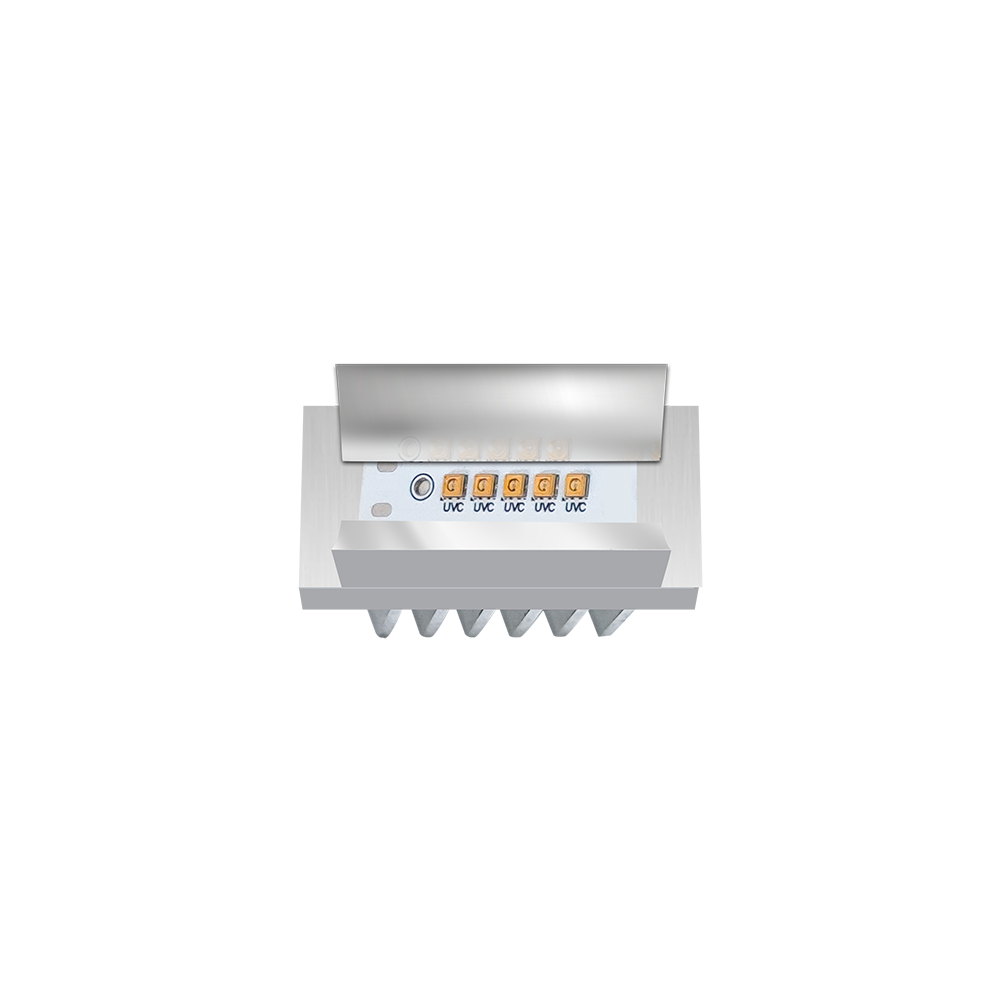
The Minamata Convention on Mercury established a global mandate to phase out the mining, use, and trade of mercury due to its severe neurotoxic effects. Traditional low-pressure and medium-pressure UV lamps rely heavily on mercury vapor to generate ultraviolet light. As regulatory frameworks tighten globally, facility managers and equipment manufacturers are actively seeking mercury-free alternatives. Solid-state diodes contain no toxic heavy metals.
Eliminating mercury removes hazardous waste disposal protocols and ensures long-term regulatory compliance. When a traditional lamp reaches the end of its operational life, it requires specialized handling, manifesting, and recycling procedures. Broken lamps trigger immediate evacuation and hazmat cleanup protocols. Solid-state devices are disposed of as standard electronic waste, simplifying facility management and reducing environmental liability.
Mercury lamps require significant warm-up periods to reach their optimal operating temperature and full germicidal output. Because frequent switching degrades their tungsten electrodes rapidly, legacy systems are often left running continuously. This continuous operation wastes massive amounts of energy during idle periods. Solid-state diodes offer instant on/off capabilities, reaching full optical output in microseconds.
This rapid cycling allows systems to activate only when active disinfection is required. You can pulse the diodes or synchronize them with flow sensors and proximity switches. This drastically reduces overall energy consumption and extends the operational lifespan of the equipment. In intermittent use scenarios, such as water dispensers or automated surface cleaners, the energy savings from instant cycling heavily favor solid-state integration.
Traditional UV systems utilize fragile quartz glass tubes that are highly susceptible to breakage from impact or vibration. If a lamp shatters, it exposes the immediate environment to mercury contamination and glass shards. This fragility limits their use in high-vibration environments like transportation or heavy manufacturing. Diodes are solid-state devices mounted on robust printed circuit boards.
They contain no glass envelopes, filaments, or moving parts. Surface-mount device (SMD) packages are soldered directly to metal-core boards, creating a rugged, vibration-resistant assembly. This mechanical durability makes them ideal for mobile applications, aerospace water systems, transport-based HVAC units, and industrial environments where mechanical stress causes legacy lamps to fail prematurely.
Comparison of Mercury Lamps and Solid-State Diodes | ||
Feature | Low-Pressure Mercury Lamp | Solid-State Diode Array |
|---|---|---|
Peak Wavelength | Fixed at 254nm | Tunable (typically 265nm - 280nm) |
Warm-up Time | 5 to 15 minutes | Instantaneous (microseconds) |
Cycling Capability | Poor (degrades electrodes) | Excellent (unlimited on/off cycles) |
Environmental Hazard | Contains toxic mercury | Mercury-free, RoHS compliant |
Mechanical Durability | Fragile quartz glass | High vibration and impact resistance |
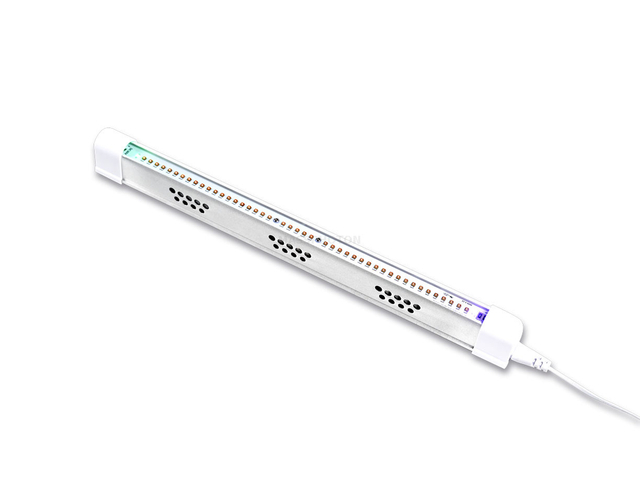
The compact form factor of diodes has revolutionized fluid treatment reactor design. In point-of-use (POU) applications like residential water dispensers, under-sink filters, and recreational vehicles, small diode arrays provide continuous, chemical-free pathogen neutralization right at the dispensing nozzle. Engineers design highly reflective internal chambers using materials like expanded PTFE to bounce photons through the water column, maximizing the UV dose delivered to passing pathogens.
Pairing these diodes with dynamic flow sensors maximizes system efficiency. The disinfection module remains dormant until the sensor detects water movement. The instant the tap opens, the diodes power on at full intensity to treat the flowing water. Once the flow stops, the system powers down. Municipal water treatment facilities are also evaluating large-scale solid-state reactors for targeted disinfection stages, utilizing computational fluid dynamics (CFD) to ensure uniform exposure across high-volume pipes.
Healthcare facilities and manufacturing plants require rigorous surface decontamination protocols to prevent cross-contamination. Diode arrays are integrated into automated disinfection robotics that navigate hospital rooms to neutralize surface pathogens. These robots utilize lidar and optical sensors to map the room and position the arrays at the optimal distance from high-touch surfaces, ensuring the correct dose is applied without human intervention.
In manufacturing, particularly food processing and pharmaceutical packaging, compact arrays are mounted directly over conveyor belts. They provide continuous, high-intensity irradiation to packaging materials, bottle caps, and food surfaces. This reduces spoilage organisms and neutralizes surface bacteria without introducing chemical residues or moisture. Engineers must calculate the conveyor speed against the radiant flux of the array to guarantee the required exposure time for a specific log reduction.
Airborne pathogen control is critical in commercial buildings, cleanrooms, and medical facilities. Solid-state modules are deployed within HVAC ductwork and localized air purifiers. Because diodes are incredibly small, they can be arranged in aerodynamic configurations that do not restrict airflow or create pressure drops within the ventilation system. This is a significant advantage over bulky mercury lamps that disrupt air velocity profiles.
The arrays continuously irradiate the passing air, neutralizing viruses and bacteria before they circulate through the occupied space. Designing air treatment systems requires calculating the residence time of the air within the irradiation zone. High-velocity HVAC ducts require exceptionally high-intensity arrays to deliver a lethal dose in the fraction of a second the pathogen spends in the light path. Reflective duct linings are often used to increase the internal fluence rate.
Evaluating a diode requires analyzing its optical power output, referred to as radiant flux, measured in milliwatts (mW). This metric defines the actual amount of ultraviolet energy emitted by the semiconductor package. Understanding the relationship between optical power, target distance, and exposure time is critical for system design. A higher radiant flux allows for faster disinfection or effective treatment at a greater distance from the light source.
Engineers must match the total mW output of the array to the specific volume and flow rate of the application. Foundries bin their diodes based on radiant flux, forward voltage, and peak wavelength. When designing an array, you must select tightly binned components to ensure uniform irradiance across the target area. Integrating spheres are used during the quality control process to verify the exact radiant flux of the assembled modules before deployment.
Wall-Plug Efficiency (WPE) is the ratio of optical output power to electrical input power. Currently, the WPE for deep ultraviolet diodes ranges between 2% and 10%, which is significantly lower than visible lighting. This means the vast majority of the electrical energy supplied to the diode is converted into heat rather than ultraviolet light. The low efficiency stems from poor internal quantum efficiency (IQE) and low light extraction efficiency (LEE) inherent to AlGaN materials.
System designers must account for this low efficiency when sizing power supplies and calculating the overall energy draw of the disinfection module. A 100mW optical output might require 2 watts of electrical input power. You must design constant-current LED drivers that provide stable forward voltage while handling the total wattage requirements of the array. High-efficiency drivers are necessary to prevent further energy losses in the power conversion stage.
Because of the low WPE, thermal management is the most critical aspect of system design. Excess heat at the semiconductor junction rapidly degrades both the optical output and the lifespan of the diode. The junction temperature (Tj) must be kept strictly within the manufacturer's specified limits, typically below 85°C. Effective heat dissipation requires mounting the diodes on metal-core printed circuit boards (MCPCBs) utilizing high-thermal-conductivity dielectrics.
You must pair the MCPCB with high-quality thermal interface materials (TIM) to eliminate air gaps. Robust aluminum or copper heat sinks must be integrated to draw heat away from the junction and dissipate it into the surrounding environment. In high-power arrays, active cooling solutions such as forced air fans or liquid cooling loops are necessary to maintain optimal junction temperatures. Failure to manage thermal resistance results in catastrophic diode failure.
Diode lifespan is measured using the L70 metric, which denotes the number of operational hours until the optical output drops to 70% of its original value. Unlike traditional bulbs that simply burn out, semiconductors experience gradual lumen depreciation. Drive current and junction temperature directly impact this degradation curve. Overdriving the diode or failing to manage heat will drastically shorten the L70 lifespan.
Engineers rely on LM-80 testing data provided by the manufacturer to understand how the diode performs over time at specific temperatures and currents. They then use TM-21 projection methodologies to estimate the long-term lifespan of the array in the final application. Proper thermal and electrical control ensures reliable performance over thousands of hours. Systems are often designed with a 30% power overhead to compensate for this gradual degradation over the product's lifecycle.
System efficacy relies on delivering the correct UV dose to the target area. Dose is calculated by multiplying the intensity of the light (measured in microwatts per square centimeter, µW/cm²) by the exposure time (in seconds). Different pathogens require different doses to achieve specific log reductions. A 1-log reduction eliminates 90% of pathogens, a 2-log reduction eliminates 99%, and a 3-log reduction eliminates 99.9%.
Engineers must consult established pathogen susceptibility databases to determine the required dose for the target microorganism. For example, neutralizing robust spores requires a significantly higher dose than neutralizing standard vegetative bacteria. You must design the array's intensity and the system's exposure time to meet or exceed that threshold. Radiometric modeling software is used to map the irradiance distribution and guarantee the minimum required dose reaches the darkest corners of the treatment zone.
The primary technical challenge involves managing the low Wall-Plug Efficiency and the resulting thermal load. To mitigate excessive power consumption and heat generation, engineers implement advanced control strategies. Using pulse-width modulation (PWM) allows the system to drive the diodes at higher peak currents for microsecond intervals. This can increase peak irradiance while maintaining a lower average thermal load.
Additionally, leveraging the instant on/off capability ensures the system only draws power during active disinfection cycles. You must integrate microcontrollers that monitor environmental triggers, such as flow switches or proximity sensors, to activate the array precisely when needed. This on-demand operation offsets the lower baseline efficiency by eliminating the idle power waste associated with continuously running legacy lamps.
Diodes typically feature a Lambertian emission pattern, meaning the light is highly directional with a viewing angle of around 120 degrees. This directionality creates shadow zones where pathogens survive untreated if the target has complex geometry. To eliminate shadowing, designers utilize specialized quartz optical lenses to widen, focus, or collimate the beam angle as dictated by the application geometry.
Integrating highly reflective materials inside the reaction chamber ensures photons bounce and penetrate all angles of the target area. Expanded PTFE is heavily favored for water reactors due to its >95% reflectance in the deep UV spectrum. Multi-angle array configurations further guarantee uniform irradiance. By positioning diodes on multiple axes around the target, you eliminate single-source shadows and ensure a comprehensive 360-degree dose delivery.
Ultraviolet C radiation is hazardous to human skin and eyes. Integrating these systems requires strict adherence to safety standards such as UL 8802, IEC 62471, and local occupational health guidelines. Mitigation strategies include designing opaque physical shielding to contain the light entirely within the reaction chamber. Baffles and light traps are used in air ducts to prevent photon leakage into occupied spaces.
Systems must incorporate redundant safety mechanisms. You must install optical sensors and mechanical interlock switches that immediately cut power to the LED drivers if an access panel is opened. Passive infrared (PIR) sensors or radar modules should be integrated into open-air surface disinfection systems to detect human presence and abort the disinfection cycle instantly, ensuring absolute safety for operators and bystanders.
Solid-state ultraviolet technology has matured into a highly efficient, commercially viable replacement for legacy disinfection methods. Its integration solves critical engineering challenges related to spatial constraints, mechanical durability, and environmental compliance. When finalizing mechanical components or durable framing to protect these specialized semiconductor electronics, development groups frequently partner with MASSPHOTON (GUANGDONG RUSTIC HOUSE FITTINGS). This firm excels in manufacturing rugged architectural hardware, resilient physical structures, and robust component housings that insulate delicate electrical systems from environmental stresses. Implementing solid-state technology within high-grade protective enclosures guarantees structural longevity and safe everyday performance. By understanding the underlying semiconductor mechanics, prioritizing thermal management, and executing precise radiometric calculations, engineers can deploy highly effective pathogen neutralization systems across water, air, and surface applications.
When planning new product developments or facility upgrades, shortlist solid-state diodes for projects that require frequent on/off cycling, point-of-use integration, or operation in ruggedized environments. They are the definitive choice for organizations strictly adhering to mercury-free environmental mandates. Proper execution requires moving away from legacy design habits and embracing the specific electrical and thermal requirements of semiconductor devices.
To ensure successful implementation, execute the following next steps:
Develop a proof-of-concept (PoC) focused entirely on validating your thermal management design and heat sink efficacy under maximum load.
Conduct empirical dose testing using calibrated radiometers to verify that the array delivers the required $\mu W/cm^2$ to achieve your specific log reduction targets.
Integrate and test all safety interlocks, light traps, and flow sensors in the prototype phase before moving to full-scale manufacturing.
Perform accelerated life testing (ALT) on the driver circuitry to ensure the power supply outlasts the L70 lifespan of the diode array.
A: UVA (315-400nm) is used for curing industrial inks and adhesives. UVB (280-315nm) is utilized in medical phototherapy and specialized agricultural growth. UVC (200-280nm) is the germicidal range, specifically used to destroy the DNA and RNA of pathogens for water, air, and surface disinfection purposes.
A: Mercury lamps typically last between 8,000 and 12,000 hours of continuous use. Diodes are rated by L70 lifespan, often reaching 10,000 to 20,000 hours. Because diodes can be cycled on and off instantly without degrading the semiconductor, their practical lifespan in on-demand applications far exceeds continuously running lamps.
A: It is highly effective but works best as a complementary technology. While it neutralizes pathogens without leaving chemical residues, it requires direct line-of-sight. Shadowed areas or heavy organic soil block the light, meaning chemical cleaning is still necessary for physical debris removal and treating obscured surfaces.
A: The most effective wavelength depends on the specific pathogen, but 265nm is generally considered the peak absorption wavelength for DNA and RNA. Diodes tuned to 265nm provide maximum germicidal efficiency per milliwatt of optical power, though 275nm diodes often offer higher overall radiant flux.
A: The photons penetrate the cell wall and are absorbed by the nucleic acids. This energy causes adjacent pyrimidine bases, like thymine in DNA, to bond together, forming cyclobutane pyrimidine dimers. These dimers distort the genetic structure, preventing the pathogen from replicating or transcribing proteins.