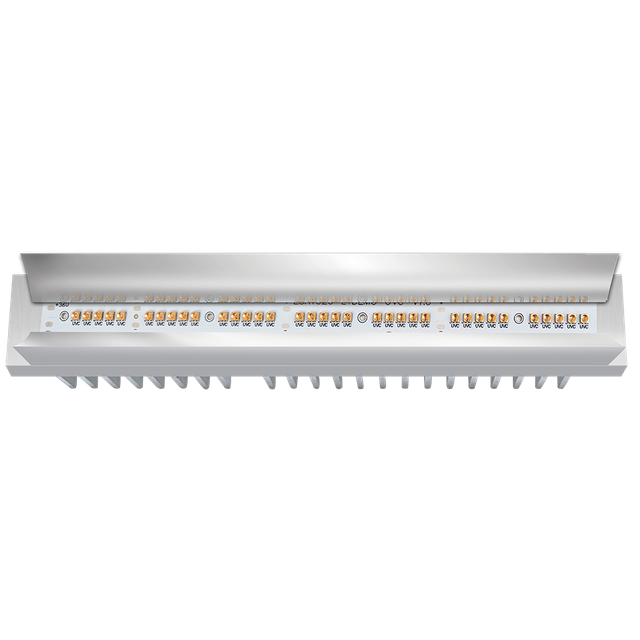
How can you ensure that your UVC LED effectively inactivates harmful microorganisms? In this article, we'll explore the best methods to test UVC LEDs, covering tools, calculations, and safety considerations. You'll understand how to measure irradiance, calculate doses, and validate UVC LED performance for optimal disinfection.
UVC LED technology has revolutionized the field of disinfection by offering a more efficient, durable, and compact solution compared to traditional UVC lamps. UVC LEDs emit ultraviolet light at wavelengths typically between 260 to 280 nm, which is highly effective in killing or inactivating harmful microorganisms such as bacteria, viruses, and fungi. Unlike mercury-based UVC lamps, UVC LEDs are solid-state devices, meaning they have no harmful chemicals and can be easily integrated into various applications.
Difference between UVC LEDs and Traditional UVC Lamps:
| Feature | UVC LED | Traditional UVC Lamp |
|---|---|---|
| Light Source | Solid-state (semiconductor) | Gas discharge (mercury vapor) |
| Warm-up Time | Instant on/off | Requires warm-up time |
| Lifespan | 25,000+ hours | 8,000-10,000 hours |
| Size & Design | Compact and flexible | Larger and bulkier |
| Environmental Impact | Eco-friendly, no mercury | Contains mercury |
UVC LEDs also have instant on/off capabilities, unlike traditional lamps, which need some time to reach full intensity. Their compact size allows for more versatile design possibilities, from handheld disinfection devices to large-scale sterilization systems.
Testing UVC LEDs is critical for ensuring that the device functions as intended in real-world applications. Effective disinfection depends heavily on the correct UVC output and exposure duration. Without accurate testing, it’s difficult to guarantee that pathogens are properly inactivated, which could pose a health risk.
Importance of Ensuring Effectiveness in Disinfection: UVC LEDs are used in various environments, including air purifiers, water treatment systems, and surface sterilizers. To be effective, these systems must deliver the correct amount of UVC light, which is why testing ensures they meet the required germicidal dose.
UVC LEDs must be tested for irradiance (power per area) and dose (energy per area).
Testing confirms whether the light intensity is strong enough to kill or deactivate harmful microorganisms.
Compliance with Safety Standards and Regulations: In many regions, UVC devices must meet strict safety standards to ensure they are safe for use. Testing verifies that the UVC LED devices operate within regulated limits for human exposure to UV radiation, preventing potential harm to users.
Regulatory bodies like FDA or IEC set safety guidelines for UVC devices.
Testing helps companies ensure compliance with these regulations and avoid penalties.
Impact of Incorrect Testing on Performance and Safety: Failure to accurately test UVC LEDs can result in underperformance, leading to insufficient pathogen inactivation. Incorrect testing might also result in safety risks for end-users, such as overexposure to harmful UVC radiation.
A well-tested UVC LED ensures the product delivers consistent and reliable results, providing peace of mind to both manufacturers and consumers. Misleading results or faulty testing methods can lead to product recalls, legal issues, and loss of consumer trust.
A UVC radiometer is an essential tool for measuring the intensity of ultraviolet light emitted by UVC LEDs. It works by capturing the amount of UV radiation that reaches a sensor, which is then converted into a readable value, often expressed in irradiance (W/cm²). This device ensures that the UVC LED is producing the correct amount of energy required for effective disinfection.
Key Features to Look for in a UVC Radiometer:
Wide wavelength range: Ensure the radiometer covers the specific UVC range (typically 260-280 nm) to accurately capture the intensity of UVC light.
Accuracy: High precision is crucial for measuring irradiance and verifying that the UVC LED is operating at the specified output.
Calibration: A good radiometer should come with proper calibration standards, so results are consistent and reliable.
How to Use a Radiometer for Measuring Irradiance and Dose:
Position the radiometer: Place the sensor directly in the path of the UVC light source.
Measure irradiance: Check the output in terms of irradiance (μW/cm²) at the target distance.
Calculate dose: Multiply irradiance by exposure time to determine the total energy (dose) delivered to a specific area.
| Measurement Parameter | Radiometer Measurement | Importance |
|---|---|---|
| Irradiance (μW/cm²) | Intensity of UVC light | Determines germicidal strength |
| Dose (J/cm²) | Energy per unit area | Affects pathogen inactivation |
| Wavelength range | 260–280 nm | Essential for effective UVC action |
UVC dosimeters are practical tools used to measure the cumulative exposure to UVC light over time. These devices typically consist of a chemical substance or a film that changes color when exposed to UV radiation. UVC dosimeters are perfect for field testing or environments where continuous monitoring isn't necessary.
Benefits of Using Dosimeters for Simple Testing:
Easy to use: Just place the dosimeter in the area where UVC light exposure is expected and wait for the color change.
Affordable and portable: Ideal for quick, cost-effective checks in various settings.
Visual confirmation: The color change provides immediate feedback, allowing users to confirm UVC exposure without technical instruments.
Differences Between Active and Passive Dosimeters:
Active dosimeters require a reader or device to measure the amount of light exposure accurately. These are more precise and often used for detailed testing.
Passive dosimeters do not require a reader; instead, the color change on the card indicates exposure levels. These are more for qualitative testing rather than precise quantification.
| Type of Dosimeter | Active Dosimeter | Passive Dosimeter |
|---|---|---|
| Measurement Type | Precise light measurement | Visual color change |
| Usage | Detailed exposure analysis | Quick confirmation of exposure |
| Cost | Higher | Lower |
A spectrometer is a critical instrument used for measuring the wavelength of UVC LEDs. Accurate wavelength measurement is crucial because the germicidal effect of UVC light is most effective within the 260–280 nm range. A spectrometer analyzes the emitted light and provides detailed data about its wavelength distribution, ensuring that the UVC LED is operating within the optimal spectrum.
How to Validate the Spectral Output of UVC LEDs:
Use the spectrometer to capture the light emitted by the UVC LED.
Compare the measured wavelengths to the expected 260–280 nm range.
Ensure that the peak wavelength falls within this range to guarantee maximum disinfection capability.
Understanding Wavelength Accuracy in Relation to Germicidal Effectiveness:
UVC light is most effective at wavelengths close to 265 nm because this is where the UV light most efficiently disrupts the DNA or RNA of microorganisms.
If the wavelength is outside the optimal range, the UVC LED might not be as effective at killing or deactivating pathogens.
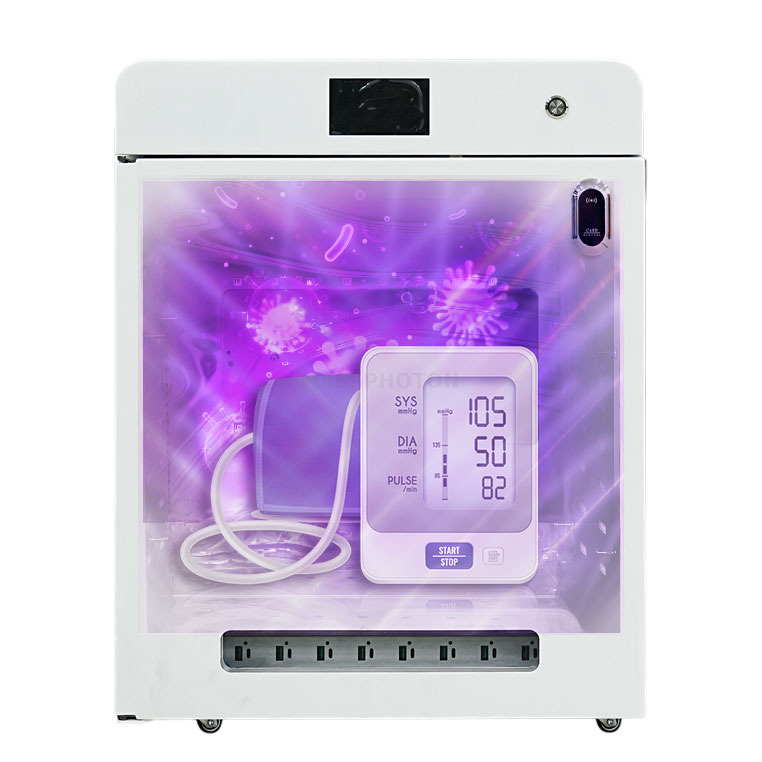
Irradiance (measured in μW/cm²) is a crucial factor in determining how effectively a UVC LED can disinfect a surface or medium. Irradiance refers to the intensity of the UVC light that reaches a specific area, and it plays a significant role in the amount of microbial inactivation that occurs. The higher the irradiance, the faster pathogens are destroyed.
Steps for Measuring Intensity at the Target Distance:
Position the sensor: Place a UVC radiometer or photodiode at the target distance from the UVC LED.
Check the reading: Measure the intensity of the light in μW/cm². This value indicates how much energy is being delivered to the surface.
Ensure consistency: For accurate results, the sensor should be held steady at a fixed distance to avoid errors caused by distance variations.
Understanding the Relationship Between Irradiance and Disinfection Time:
Irradiance and exposure time together determine the dose of UVC light, which is responsible for killing microorganisms.
Higher irradiance requires less time to inactivate pathogens, making it an important factor in systems where time is a limiting factor.
| Parameter | Definition | Significance |
|---|---|---|
| Irradiance (μW/cm²) | Power per unit area of the UVC light | Indicates the effectiveness of the UVC LED in disinfection. |
| Exposure Time (seconds) | Duration of exposure to UVC light | Longer exposure times can help ensure better microbial inactivation. |
| Dose (J/cm²) | Irradiance × Exposure Time | The total energy delivered, determining disinfection effectiveness. |
The UVC dose is the total energy delivered by the UVC LED to a given area. It’s a product of irradiance (intensity) and exposure time, and it’s crucial in microbial inactivation. In simpler terms, if a surface is exposed to UVC light for a longer time or with higher irradiance, the dose increases, and the likelihood of pathogen elimination is higher.
How to Calculate the UVC Dose (Irradiance × Exposure Time):
Measure irradiance: Use a radiometer to determine the intensity at the target area (μW/cm²).
Calculate exposure time: Determine the amount of time the surface or object is exposed to UVC light.
Multiply irradiance by exposure time: This will give you the dose in J/cm².
Why Dose is Crucial for Microbial Inactivation: The UVC dose is directly tied to how well a UVC LED will perform in terms of sterilization. Microorganisms require a certain amount of energy (dose) to be inactivated. Too little energy (low dose) may not kill the microbes effectively, whereas too much energy could lead to unnecessary power consumption.
Example Calculation for Effective Disinfection:
Suppose you have a UVC LED emitting 100 μW/cm² and the exposure time is 5 seconds.
UVC Dose = 100 μW/cm² × 5 seconds = 500 μJ/cm² (microsieverts per square centimeter).
UVC LEDs are sensitive to temperature, and heat can significantly impact their performance. When the temperature of the LED junction rises, the efficiency and output of the LED can decrease, leading to inaccurate measurements. This is why it's important to control the temperature when measuring UVC LED output.
Impact of Heat on UVC LED Performance:
As temperature increases, the efficiency of the LED drops, meaning it will produce less UVC light at higher temperatures.
Overheating can cause long-term damage to the UVC LED, shortening its lifespan and reducing disinfection effectiveness.
Why Controlling the LED Junction Temperature is Important:
The junction temperature refers to the temperature at the LED’s semiconductor layer, which is where the light is emitted.
Stable junction temperature ensures that the UVC LED operates within its optimal range, providing consistent irradiance and effective disinfection.
Methods to Ensure Accurate Readings Without Thermal Distortion:
Use a heatsink: Attach a heatsink to the UVC LED to dissipate heat efficiently.
Monitor temperature: Use a thermal sensor to continuously monitor the junction temperature during testing.
Test in controlled environments: Perform testing in environments with consistent temperature control to prevent heat fluctuations from skewing results.
The germicidal efficacy of UVC light is at the core of its disinfecting power. UVC light works by breaking the chemical bonds in the DNA or RNA of microorganisms, rendering them inactive and unable to reproduce. Testing this efficacy is essential to confirm that UVC LEDs can reliably eliminate harmful pathogens in real-world applications.
Role of UVC Light in Pathogen Inactivation:
UVC light disrupts cellular DNA and RNA, preventing microbes from replicating.
Different microorganisms, such as bacteria, viruses, and molds, require different doses of UVC light for complete inactivation.
How to Correlate UVC Dose with Microbial Reduction:
UVC dose (irradiance × exposure time) directly correlates with the degree of pathogen inactivation. The higher the dose, the more effective the disinfection.
Standardized protocols are often used to correlate the UVC dose with microbial reduction:
ISO standards (e.g., ISO 15858:2011 for UV disinfection).
Independent laboratory tests to confirm the level of pathogen kill at different doses.
| Microbial Type | Required UVC Dose (J/cm²) | Effectiveness at Standard Dose |
|---|---|---|
| Bacteria (e.g., E. coli) | 4–6 J/cm² | 99.9% reduction |
| Viruses (e.g., influenza) | 6–8 J/cm² | 99.99% reduction |
| Fungi (e.g., Aspergillus) | 8–10 J/cm² | 99.99% reduction |
UVC LEDs are versatile and can be used in various environments for disinfection purposes. However, the effectiveness of UVC LEDs can vary depending on the application — air, water, or surface disinfection. Proper testing in each of these environments ensures that UVC LEDs perform as expected.
Testing UVC LEDs in Air, Water, and Surface Disinfection:
Air disinfection: UVC LEDs are used in air purifiers and HVAC systems. Testing measures how effectively the UVC light can reach and sanitize particles in the air.
Water disinfection: UVC LEDs are used in water sterilization systems. The effectiveness is often tested based on how much UV energy penetrates the water to deactivate harmful microorganisms.
Surface disinfection: UVC LEDs are used in handheld devices, conveyors, and surface sterilizers. Testing involves measuring how much UVC light reaches the surface and kills germs.
How to Measure the Effectiveness Across Various Applications:
Air systems: Use dosimeters and radiometers to test the UVC irradiance in the air at different points in the system.
Water systems: Measure UVC transmittance and penetration depth in water to ensure the light reaches pathogens.
Surface systems: Perform direct UVC intensity testing to ensure proper coverage and exposure time.
Real-World Considerations:
Shadowing: UVC LEDs may not effectively disinfect areas in shadow. Testing ensures that light is evenly distributed over surfaces.
Reflectivity: Reflective surfaces can amplify UVC exposure, so testing accounts for surface reflectivity in practical applications.
Exposure time: Adequate exposure time is essential for effective disinfection, especially in high-speed applications like air and water sterilization.
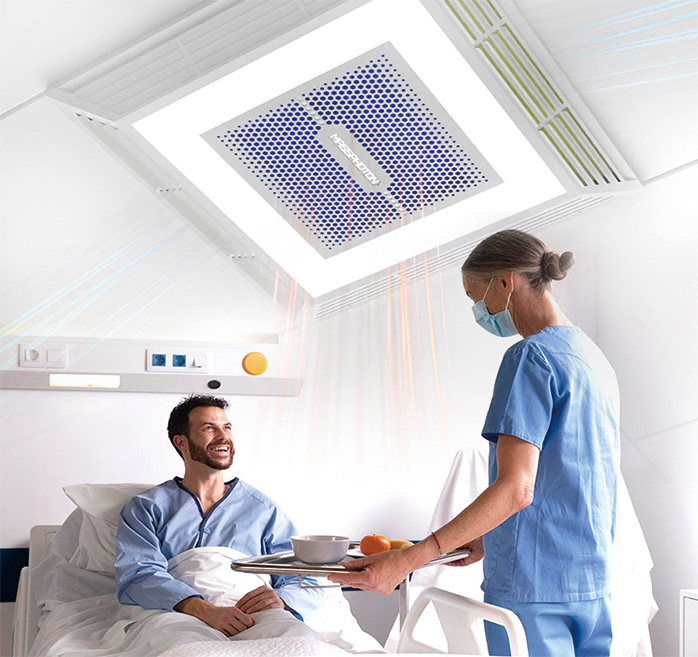
When working with UVC LEDs, safety is paramount. UVC light is harmful to human skin and eyes, so protective measures must be taken during testing and usage.
Ensuring the Safety of Workers and Operators During Testing:
Avoid direct exposure to UVC light, especially at high intensities.
Use UV-protective goggles and gloves to prevent skin and eye exposure during testing.
Protective Measures When Working with UVC Light:
Shielding: Use barriers or protective enclosures around the testing area to block UVC radiation from escaping.
Automated systems: Where possible, use automated testing systems to minimize human exposure to UVC light.
Compliance with Health and Safety Standards:
Ensure that UVC LED systems meet health and safety guidelines provided by organizations like OSHA or NIOSH.
Regularly check UVC LED systems for leaks or damage that could lead to hazardous exposure.
The effectiveness of UVC LEDs can be tested using various tools such as radiometers, dosimeters, and spectrometers. Measuring irradiance and calculating UVC dose are key factors for microbial inactivation. Additionally, testing UVC LEDs in different environments like air, water, and surface disinfection ensures their reliability. Safety protocols must be followed to prevent harmful exposure to UVC radiation. MASSPHOTON offers high-performance UVC LEDs that are ideal for disinfection and sterilization applications, providing advanced, eco-friendly solutions for various industries.
A: UVC LED is a solid-state light source emitting ultraviolet light in the 260–280 nm range, which effectively inactivates microorganisms by disrupting their DNA/RNA. It is more energy-efficient and environmentally friendly compared to traditional UVC lamps.
A: To test UVC LEDs, measure irradiance using a radiometer, calculate the dose, and assess microbial reduction using standardized protocols. These tests ensure the LED performs as required for disinfection.
A: Irradiance, measured in μW/cm², determines the intensity of UVC light, which directly affects the disinfection time. Higher irradiance means faster pathogen inactivation.
A: Yes, UVC LEDs are highly effective in water sterilization. Testing includes measuring UVC light penetration and intensity to ensure sufficient disinfection of pathogens in the water.
A: Temperature affects UVC LED performance. High temperatures can decrease efficiency and lifespan. It's essential to monitor and control the temperature during testing to get accurate readings.