

Size Dependence of Ultrafast Electron Transfer from Didodecyl Dimethylammonium Bromide-Modified CsPbBr3 Nanocrystals to Electron Acceptors
Qiaoyun Wu, Lin Cheng, Pan Liang,* Rongrong Hu,* Bobo Yang, Jinlei Li, Yuanyuan Wang, Xiaoyang Li, Jun Zou, and Donghai Feng*

Main text
Figures
Tables
References
ABSTRACT
Charge transfer efficiencies in all-inorganic lead halide perovskite nanocrystals (NCs) are crucial for applications in photovoltaics and photocatalysis. Herein, CsPbBr₃ NCs with different sizes are synthesized by varying the ligand contents of didodecyl dimethylammonium bromide at room temperature. Adding benzoquinone (BQ) molecules leads to a decrease in the PL intensities and PL decay times in NCs. The electron transfer (ET) efficiency (ηET) increases with NC size in complexes of CsPbBr₃ NCs and BQ molecules (NC-BQ complexes), when the same concentration of BQ is maintained, as investigated by transient photobleaching and photoluminescence spectroscopies. Controlling the same number of attached BQ acceptor molecules per NC induces the same ηET in NC-BQ complexes even though with different NC sizes. Our findings provide new insights into ultrafast charge transfer behaviors in perovskite NCs, which is important for designing efficient light energy conversion devices.

CsPbBr3 NCs with different concentrations of DDAB ligands were synthesized on the basis of the reported literature at room temperature under an air atmosphere.17 Adding the DDAB ligands in amounts of 0.05, 0.1, 0.3, and 0.5 mmol can significantly affect the absorption and PL emission peaks of DDAB-modified CsPbBr3 NCs. The first exciton absorption peaks of as-grown CsPbBr3 NCs are blue-shifted from 509 to 477 nm with an increase in DDAB ligand concentration, and the corresponding PL emission peaks are blue-shifted from 512 to 480 nm, as shown in panels a and b, respectively, of Figure 1. In comparison, an only ∼6 nm PL peak shift happened upon addition of different contents of conventional OAm ligands (see Figure S1). It is known that the shifted emission peak is correlated with the NC size and bandgap of CsPbBr3 NCs,15,32 indicating that DDAB ligands have better size control for CsPbBr3 NCs compared to conventional OAm ligands when using room-temperature methods. The detailed synthesis procedures can be found in the experimental section in the Supporting Information.


Figure 2. PL spectra of as-grown CsPbBr3 NCs (normalized solid lines) and NC-BQ complexes (dashed lines) for different BQ concentration of (a) 0.46 mM and (b) 4.63 mM (b).
Figure 3. PL decay curves of as-grown CsPbBr3 NCs and NC-BQ complexes with different sizes of NCs. The BQ concentrations are 0.46 and 4.63 mM in the NC-BQ complexes. The initial PL intensities are normalized to the same values.

Figure 4. BQ concentration-dependent PL intensity for CsPbBr3 NC sizes of (a) 13.3 nm and (b) 6.3 nm. Integrated PL intensities (black lines) and the m values (red lines) as a function of BQ concentrations for CsPbBr3 NC sizes of (c) 13.3 nm and (d) 6.3 nm.
Figure 5. (a) PL spectra of as-grown CsPbBr3 NCs with NCs sizes of 6.3 and 13.3 nm and the corresponding NC-BQ complexes with different m values. Time-resolved PL spectra of as-grown CsPbBr3 NCs and NC-BQ complexes with different m values with NC sizes of (b) 13.3 nm and (c) 6.3 nm. (d) ηET as a function of m value.
To further demonstrate the interfacial ET mechanism, the relationship between BQ concentrations and PL intensities of CsPbBr₃ NCs with different sizes is investigated. The PL spectra of 13.3 and 6.3 nm as-grown CsPbBr₃ NCs and their corresponding NC-BQ complexes with different concentrations of BQ are shown in panels a and b of Figure 4. For 13.3 and 6.3 nm NCs, increasing the BQ concentration decreases the PL intensity. The adsorption of BQ molecules onto NCs surfaces is governed by the Langmuir adsorption isotherm and follows a Poissonian distribution. The integrated PL intensities and the formation of m values for 13.3 and 6.3 nm NCs as a function of BQ concentrations are plotted in panels c and d of Figure 4 (detailed calculation information can be found in the Supporting Information). As shown in panels c and d of Figure 4, with an increase in the BQ concentration (thus the m value), the integrated PL intensities decrease for both large and small NC-BQ complexes. Note that, when the NC size is decreased along with an increased E_g, the driving force increases in NC-BQ complexes, which accelerates the ET process. However, at the same BQ concentrations, the m value is smaller in 6.3 nm NCs than in 13.3 nm NCs, which plays the dominant role in the ET processes, resulting in longer ET times and thus longer decay times in 6.3 nm NCs as shown in Figure 3.

Further investigations of ultrafast charge dynamics in different-sized NCs with and without BQ but with the same m value are measured by using transient photobleaching spectra (or time-resolved differential transmission measure-ments).40 The wavelengths of pump and probe pulses are set at the first exciton transition for each sample of CsPbBr3 NCs and NC-BQ complexes. For as-grown CsPbBr3 NCs with sizes of 13.3 and 6.3 nm, a pump fluence (Fp) of 20 μJ/cm2 produces an average of 0.74 and 0.038 electron−hole pair per NC (termed ⟨N⟩ below), respectively41 (detailed calculation information can be found in the Supporting Information). Figure 6 shows the transient photobleaching dynamics of as-grown CsPbBr3 NCs with sizes of 13.3 and 6.3 nm and their corresponding NC-BQ complexes with the same m value. All of the transient photobleaching dynamics exhibit two decay components, fast and slow decay (τTA1 and τTA2, respectively). Figure 6a shows the transient photobleaching dynamics of as-grown NCs with an L of 13.3 nm, showing the fast and slow decay processes with a τTA1 of 300 ps and a τTA2 of 1130 ps. The fast decay component can be ascribed to the electron and/or hole trapping processes, while the slow decay component in photobleaching measurement is in accordance with the detected fast PL decay component and can be attributed to the nonradiative recombination processes.29 The photobleach-ing dynamic in 13.3 nm NC-BQ complexes also shows a fast decay component τTA1 of 185 ps and a slow decay component τTA2 of 1000 ps. The shortening of τTA1 and τTA2 after adding BQ molecules, compared with that of in as-grown NCs, can be attributed to ET from the conduction bands of CsPbBr3 NCs to LUMO of BQ electron acceptors. The transfer efficiencies of the fast and slow processes are 38% and 12%, respectively. As shown in Figure 6b, as-grown CsPbBr3 NCs and NC-BQ complexes with a size of 6.3 nm exhibit similar phenomena but with different decay time constants, compared with that in 13.3 nm NCs. The times of fast and slow decay processes are as follows: τTA1 = 120 ps and τTA2 = 800 ps in 6.3 nm as-grown NCs, which is faster than that in 13.3 nm NCs. For the 6.3 nm NC-BQ complexes, the lifetimes of fast and slow decay components change to a τTA1 of 71 ps and a τTA2 of 700 ps. The two processes show transfer efficiencies of 41% and 13%, respectively. The detailed parameters are listed in Table S3. Note that the ratios of time constants between NCs with and without BQ are nearly independent of pump fluence (or ⟨N⟩), as shown in Figure S6 and Table S4. According to the results presented above, we can conclude that controlling the same m value can obtain the same ET efficiencies in NC-BQ complexes even with different sizes.
In conclusion, CsPbBr3 NCs with various sizes have been synthesized by varying the contents of the DDAB ligand at room temperature under an air atmosphere. Electron acceptor BQ molecules are employed to investigate the ultrafast interfacial ET processes from CsPbBr3 NCs by using time-resolved PL and differential transmission spectra. The addition of BQ molecules can effectively quench the PL in all-sized CsPbBr3 NCs. Upon addition of the same concentration of BQ molecules, ηET increases with NC size, due to the fact that the number of BQ molecules per NC is larger in larger NCs. When the same number of BQ molecules per NC is maintained, both the degree of PL quenching and ηET in NC-BQ complexes are almost the same for different NC sizes. This reveals that the acceptor number per NC is the dominant factor for controlling the efficiency of interfacial ET processes, as compared with NC sizes.
This work is supported by the National Natural Science Foundation of China (Grants 12104311, 12174108, and 12004239), the Shanghai Chenguang Program (Grant 22CGA74), the National Key R&D Program of China (Grant 2021YFB3501700), the Shanghai Science and Technology Committee (STCSM) Science and Technology Innovation Program (Grants 22N21900400 and 23N21900100), the Key R&D Program of Jiangsu Province (Grant BE2023048), and the Key R&D Program of Zhejiang Province (Grant 2024C01193).
(1) Gong, X.; Voznyy, O.; Jain, A.; Liu, W.; Sabatini, R.; Piontkowski, Z.; Walters, G.; Bappi, G.; Nokhrin, S.; Bushuyev, O.; Yuan, M.; Comin, R.; McCamant, D.; Kelley, S. O.; Sargent, E. H. Electron-Phonon Interaction in Efficient Perovskite Blue Emitters. Nat. Mater. 2018, 17, 550-556.
(2) Lim, J.; Kober-Czerny, M.; Lin, Y.-H.; Ball, J. M.; Sakai, N.; Duijnstee, E. A.; Hong, M. J.; Labram, J. G.; Wenger, B.; Snaith, H. J. Long-Range Charge Carrier Mobility in Metal Halide Perovskite Thin-Films and Single Crystals via Transient Photo-Conductivity. Nat. Commun. 2022, 13, 4201.
(3) De Quilettes, D. W.; Vorpahl, S. M.; Stranks, S. D.; Nagaoka, H.; Eperon, G. E.; Ziffer, M. E.; Snaith, H. J.; Ginger, D. S. Impact of Microstructure on Local Carrier Lifetime in Perovskite Solar Cells. Science 2015, 348, 683-686.
(4) Protesescu, L.; Yakunin, S.; Bodnarchuk, M. I.; Krieg, F.; Caputo, R.; Hendon, C. H.; Yang, R. X.; Walsh, A.; Kovalenko, M. V. Nanocrystals of Cesium Lead Halide Perovskites (CsPbX₃, X = Cl, Br, and I): Novel Optoelectronic Materials Showing Bright Emission with Wide Color Gamut. Nano Lett. 2015, 15, 3692-3696.
(5) Fakharuddin, A.; Gangishetty, M. K.; Abdi-Jalebi, M.; Chin, S.-H.; Congreve, D. N.; Tress, W.; Deschler, F.; Vasilopoulou, M.; Bolink, H. J. Perovskite Light-Emitting Diodes. Nat. Electron. 2022, 5, 203-216.
(6) Li, J.; Ren, C.; Qiu, X.; Lin, X.; Chen, R.; Yin, C.; He, T. Ultrafast Optical Nonlinearity of Blue-Emitting Perovskite Nanocrystals. Photon. Res. 2018, 6, 554-559.
(7) Hu, R.; Peng, W.; Cheng, L.; Wu, Q.; Dong, G.; Liang, P.; Yang, B.; Li, Y.; Zou, J.; Feng, D. Enhancement of Photoluminescence in CsPbBr₃ Nanocrystals with 1-Octanethiol by Light Illumination for Potential Emitting Applications. ACS Appl. Nano Mater. 2024, 7, 12903-12910.
(8) Zhang, Q.; Shang, Q.; Su, R.; Do, T. T. H.; Xiong, Q. Halide Perovskite Semiconductor Lasers: Materials, Cavity Design, and Low Threshold. Nano Lett. 2021, 21, 1903-1914.
(9) Yoo, J. J.; Seo, G.; Chua, M. R.; Park, T. G.; Lu, Y.; Rotermund, F.; Kim, Y.-K.; Moon, C. S.; Jeon, N. J.; Correa-Baena, J.-P.; Bulović, V.; Shin, S. S.; Bawendi, M. G.; Seo, J. Efficient Perovskite Solar Cells via Improved Carrier Management. Nature 2021, 590, 587-593.
(10) Wu, X.; Ji, H.; Yan, X.; Zhong, H. Industry Outlook of Perovskite Quantum Dots for Display Applications. Nat. Nanotechnol. 2022, 17, 813-816.
(11) Yang, T.; Zheng, Y.; Du, Z.; Liu, W.; Yang, Z.; Gao, F.; Wang, L.; Chou, K.; Hou, X.; Yang, W. Superior Photodetectors Based on All-Inorganic Perovskite CsPbI₃ Nanorods with Ultrafast Response and High Stability. ACS Nano 2018, 12, 1611-1617.
(12) Kong, Z.-C.; Liao, J.-F.; Dong, Y.-J.; Xu, Y.-F.; Chen, H.-Y.; Kuang, D.-B.; Su, C.-Y. Core@Shell CsPbBr₃@Zeolitic Imidazolate Framework Nanocomposite for Efficient Photocatalytic CO₂ Reduction. ACS Energy Lett. 2018, 3, 2656-2662.
(13) Li, N.; Chen, X.; Wang, J.; Liang, X.; Ma, L.; Jing, X.; Chen, D.-L.; Li, Z. ZnSe Nanorods–CsSnCl₃ Perovskite Heterojunction Composite for Photocatalytic CO₂ Reduction. ACS Nano 2022, 16, 3332-3340.
(14) Wu, X.; Xu, R.; Li, X.; Zeng, R.; Luo, B. Amino Acid-Assisted Preparation of Homogeneous PbS/CsPbBr₃ Nanocomposites for Enhanced Photoelectrocatalytic CO₂ Reduction. J. Phys. Chem. C 2022, 126, 15744-15751.
(15) Xu, F.; Kong, X.; Wang, W.; Juan, F.; Wang, M.; Wei, H.; Li, J.; Cao, B. Quantum Size Effect and Surface Defect Passivation in Size-Controlled CsPbBr₃ Quantum Dots. J. Alloys Compd. 2020, 831, 154834.
(16) Dutta, A.; Dutta, S. K.; Das Adhikari, S.; Pradhan, N. Tuning the Size of CsPbBr₃ Nanocrystals: All at One Constant Temperature. ACS Energy Lett. 2018, 3, 329-334.
(17) Chen, Z.; Mei, S.; He, H.; Wen, Z.; Cui, Z.; Yang, B.; Yang, D.; Zhang, W.; Xie, F.; Zou, J.; Guo, R. Rapid Large-Scale Synthesis of Highly Emissive Solid-State Metal Halide Perovskite Quantum Dots across the Full Visible Spectrum. Opt. Laser Technol. 2021, 143, 107369.
(18) Ye, F.; Zhang, H.; Li, W.; Yan, Y.; Cai, J.; Gurney, R. S.; Pearson, A. J.; Liu, D.; Wang, T. Ligand-Exchange of Low-Temperature Synthesized CsPbBr₃ Perovskite toward High-Efficiency Light-Emitting Diodes. Small Methods 2019, 3, 1800489.
(19) Veldhuis, S. A.; Ng, Y. F.; Ahmad, R.; Bruno, A.; Jamaludin, N. F.; Damodaran, B.; Mathews, N.; Mhaisalkar, S. G. Crown Ethers Enable Room-Temperature Synthesis of CsPbBr₃ Quantum Dots for Light-Emitting Diodes. ACS Energy Lett. 2018, 3, 526-531.
(20) Mo, Q.; Shi, T.; Cai, W.; Zhao, S.; Yan, D.; Du, J.; Zang, Z. Room Temperature Synthesis of Stable Silica-Coated CsPbBr₃ Quantum Dots for Amplified Spontaneous Emission. Photon. Res. 2020, 8, 1605-1612.
(21) Pan, J.; Quan, L. N.; Zhao, Y.; Peng, W.; Murali, B.; Sarmah, S. P.; Yuan, M.; Sinatra, L.; Alyami, N. M.; Liu, J.; Yassitepe, E.; Yang, Z.; Voznyy, O.; Comin, R.; Hedhili, M. N.; Mohammed, O. F.; Lu, Z. H.; Kim, D. H.; Sargent, E. H.; Bakr, O. M. Highly Efficient Perovskite-Quantum-Dot Light-Emitting Diodes by Surface Engineering. Adv. Mater. 2016, 28, 8718-8725.
(22) Jathar, S. B.; Rondiya, S. R.; Bade, B. R.; Nasane, M. P.; Barma, S. V.; Jadhav, Y. A.; Rokade, A. V.; Kore, K. B.; Nilegave, D. S.; Tandale, P. U.; Jadkar, S. R.; Funde, A. M. Facile Method for Synthesis of CsPbBr₃ Perovskite at Room Temperature for Solar Cell Applications. ES Mater. Manuf. 2021, 12, 72-77.
(23) Cheng, L.; Hu, R.; Jiang, M.; Men, Y.; Wang, Y.; Li, J.; Jia, T.; Sun, Z.; Feng, D. Extremely Long-Lived Charge Separation in CsPbBr₃ Perovskite Quantum Dots with an Electron Acceptor Benzoquinone. Nano Res. 2024, DOI: 10.1007/s12274-024-6466-z.
(24) Kobosko, S. M.; DuBose, J. T.; Kamat, P. V. Perovskite Photocatalysis. Methyl Viologen Induces Unusually Long-Lived Charge Carrier Separation in CsPbBr₃ Nanocrystals. ACS Energy Lett. 2020, 5, 221-223.
(25) Venkateswarlu, D.; Swetha, T.; Akhil, S.; Palabathuni, M.; Mishra, N.; Singh, S. P. Surface Engineering of CsPbBr₃ Perovskite Nanocrystals: Hole Transfer Dynamics and Enhanced Photocurrent Response Using a Novel Organic Molecule. Mater. Adv. 2023, 4, 1935-1940.
(26) Li, Q.; Lian, T. Ultrafast Charge Separation in Two-Dimensional CsPbBr₃ Perovskite Nanoplatelets. J. Phys. Chem. Lett. 2019, 10, 566-573.
(27) Sarkar, S.; Ravi, V. K.; Banerjee, S.; Yettapu, G. R.; Markad, G. B.; Nag, A.; Mandal, P. Terahertz Spectroscopic Probe of Hot Electron and Hole Transfer from Colloidal CsPbBr₃ Perovskite Nanocrystals. Nano Lett. 2017, 17, 5402-5407.
(28) Zhang, P.; Zhu, G.; Shi, Y.; Wang, Y.; Zhang, J.; Du, L.; Ding, D. Ultrafast Interfacial Charge Transfer of Cesium Lead Halide Perovskite Films CsPbX₃ (X = Cl, Br, I) with Different Halogen Mixing. J. Phys. Chem. C 2018, 122, 27148-27155.
(29) Wu, K.; Liang, G.; Shang, Q.; Ren, Y.; Kong, D.; Lian, T. Ultrafast Interfacial Electron and Hole Transfer from CsPbBr₃ Perovskite Quantum Dots. J. Am. Chem. Soc. 2015, 137, 12792-12795.
(30) Shang, Q.; Kaledin, A. L.; Li, Q.; Lian, T. Size Dependent Charge Separation and Recombination in CsPbI₃ Perovskite Quantum Dots. J. Chem. Phys. 2019, 151, 074705.
(31) Zhu, H.; Yang, Y.; Hyeon-Deuk, K.; Califano, M.; Song, N.; Wang, Y.; Zhang, W.; Prezhdo, O. V.; Lian, T. Auger-Assisted Electron Transfer from Photoexcited Semiconductor Quantum Dots. Nano Lett. 2014, 14, 1263-1269.
(32) Luo, X.; Lai, R.; Li, Y.; Han, Y.; Liang, G.; Liu, X.; Ding, T.; Wang, J.; Wu, K. Triplet Energy Transfer from CsPbBr₃ Nanocrystals Enabled by Quantum Confinement. J. Am. Chem. Soc. 2019, 141, 4186-4190.
(33) Butler, K. T.; Frost, J. M.; Walsh, A. Band Alignment of the Hybrid Halide Perovskites CH₃NH₃PbCl₃, CH₃NH₃PbBr₃ and CH₃NH₃PbI₃. Mater. Horiz. 2015, 2, 228-231.
(34) Maes, J.; Balcaen, L.; Drijvers, E.; Zhao, Q.; De Roo, J.; Vantomme, A.; Vanhaecke, F.; Geiregat, P.; Hens, Z. Light Absorption Coefficient of CsPbBr₃ Perovskite Nanocrystals. J. Phys. Chem. Lett. 2018, 9, 3093-3097.
(35) Peng, W.; Hu, R.; Yang, B.; Wu, Q.; Liang, P.; Cheng, L.; Cheng, X.; Li, Y.; Zou, J. Solution-Grown Millimeter-Scale Mn-Doped CsPbBr₃/Cs₄PbBr₆ Crystals with Enhanced Photoluminescence and Stability for Light-Emitting Applications. Phys. Chem. Chem. Phys. 2024, 26, 373-380.
(36) Koscher, B. A.; Swabeck, J. K.; Bronstein, N. D.; Alivisatos, A. P. Essentially Trap-Free CsPbBr₃ Colloidal Nanocrystals by Postsynthetic Thiocyanate Surface Treatment. J. Am. Chem. Soc. 2017, 139, 6566-6569.
(37) Yettapu, G. R.; Talukdar, D.; Sarkar, S.; Swarnkar, A.; Nag, A.; Ghosh, P.; Mandal, P. Terahertz Conductivity within Colloidal CsPbBr₃ Perovskite Nanocrystals: Remarkably High Carrier Mobilities and Large Diffusion Lengths. Nano Lett. 2016, 16, 4838-4848.
(38) Makarov, N. S.; Guo, S.; Isaenko, O.; Liu, W.; Robel, I.; Klimov, V. I. Spectral and Dynamical Properties of Single Excitons, Biexcitons, and Trions in Cesium–Lead-Halide Perovskite Quantum Dots. Nano Lett. 2016, 16, 2349-2362.
(39) Morris-Cohen, A. J.; Vasilenko, V.; Amin, V. A.; Reuter, M. G.; Weiss, E. A. Model for Adsorption of Ligands to Colloidal Quantum Dots with Concentration-Dependent Surface Structure. ACS Nano 2012, 6, 557-566.
(40) Hu, R.; Yakolev, D. R.; Liang, P.; Qiang, G.; Chen, C.; Jia, T.; Sun, Z.; Bayer, M.; Feng, D. Origin of Two Larmor Frequencies in the Coherent Spin Dynamics of Colloidal CdSe Quantum Dots Revealed by Controlled Charging. J. Phys. Chem. Lett. 2019, 10, 3681-3687.
(41) Feng, D.; Yakolev, D. R.; Pavlov, V. V.; Rodina, A. V.; Shornikova, E. V.; Mundt, J.; Bayer, M. Dynamic Evolution from Negative to Positive Photocharging in Colloidal CdS Quantum Dots. Nano Lett. 2017, 17, 2844-2851.
(42) Hu, R.; Yakolev, D. R.; Liang, P.; Qiang, G.; Chen, C.; Jia, T.; Sun, Z.; Bayer, M.; Feng, D. Origin of Two Larmor Frequencies in the Coherent Spin Dynamics of Colloidal CdSe Quantum Dots Revealed by Controlled Charging. J. Phys. Chem. Lett. 2019, 10, 3681-3687.
(43) Feng, D.; Yakolev, D. R.; Pavlov, V. V.; Rodina, A. V.; Shornikova, E. V.; Mundt, J.; Bayer, M. Dynamic Evolution from Negative to Positive Photocharging in Colloidal CdS Quantum Dots. Nano Lett. 2017, 17, 2844-2851.
(44) Hu, R.; Yakolev, D. R.; Liang, P.; Qiang, G.; Chen, C.; Jia, T.; Sun, Z.; Bayer, M.; Feng, D. Origin of Two Larmor Frequencies in the Coherent Spin Dynamics of Colloidal CdSe Quantum Dots Revealed by Controlled Charging. J. Phys. Chem. Lett. 2019, 10, 3681-3687.
(45) Naidoo, D.; Litvin, I. A.; Forbes, A. Brightness Enhancement in a Solid-State Laser by Mode Transformation. Optica 2018, 5, 836-843.
(46) Cao, Z.; Wang, K.; Wu, Q. Aspherical Anamorphic Lens for Shaping Laser Diode Beam. Opt. Commun. 2013, 305, 53-56.
(47) Xiong, L. L.; Cai, L.; Zheng, Y. F.; Liu, H.; Zhang, P.; Nie, Z. Q.; Liu, X. S. Slow Axis Collimation Lens with Variable Curvature Radius for Semiconductor Laser Bars. Opt. Laser Technol. 2016, 77, 1-5.
(48) Tian, Z. N.; Wang, L. J.; Chen, Q. D.; Jiang, T.; Qin, L.; Wang, L. J.; Sun, H. B. Beam Shaping of Edge-Emitting Diode Lasers Using a Single Double-Axial Hyperboloidal Micro-Lens. Opt. Lett. 2013, 38, 5414-5417.
(49) Minkenberg, C.; Krishnaswamy, R.; Zilkie, A.; Nelson, D. Co-Packaged Datacenter Optics: Opportunities and Challenges. IET Optoelectronics 2021, 15, 77-91.
(50) Zheng, F.; Zou, J.; Yang, B.; Zhou, Y.; Shi, M.; Liu, Y.; : : : , & Shen, Y. Fabrication and Optical Properties of Laser Diodes Based on Composite Phosphors Film Packaging. Optik 2019, 176, 254-261.
(51) Qasim, A. A.; Abdullah, M. F. L.; Talib, R.; Omar, K. A.; Abdulrahman, A. M. Visible Light Communication the Next Future Generation System. In 2019 International Conference on Information Science and Communication Technology, 1–7.
(52) Poprawe, R. The Ultimate Source for Economic Photons in the Next Decade. High-Power Diode Lasers 2011, 12(5), 78-89.
(53) Zhao, H.; Yue, D.; Zhang, B. 1.3: The Technology and Development of Laser Display Optical Screens. In SID Symposium Digest of Technical Papers 2023, 54, 21-26.
(54) Li, H.; Xu, R.; Yang, J.; Xiong, D. All-Inorganic Color Converter Based on a Phosphor in Bismuthate Glass for White Laser Diode Lighting. Dalton Trans. 2023, 52, 16903-16910.
(55) Li, X.; DeJong, E.; Armitage, R.; Armstrong, A. M.; Feezell, D. Influence of Trap-Assisted and Intrinsic Auger–Meitner Recombination on Efficiency Droop in Green InGaN/GaN LEDs. Appl. Phys. Lett. 2023, 123, 112109.
(56) Fan, X.; Xu, S.; Huang, Y.; Liu, W.; Tao, H.; Zhang, J.; Hao, Y. Improved Efficiency Droop of 370 nm UV LEDs with ITO/Au/ITO Structure. ECS J. Solid State Sci. Technol. 2023, 12, 096001.
(57) Ma, Y.; Luo, X. Packaging for Laser-Based White Lighting: Status and Perspectives. J. Electron. Packag. 2020, 142, 010801.
(58) Li, S.; Chen, H.; Lei, M.; Yu, G.; Meng, L.; Zong, H.; : : : , & Hu, X. The Critical Impact of the Waveguide Thickness on the Optical and Threshold Behaviors of InGaN-Based Green Laser Diodes. Optik 2023, 289, 171258.
(59) Zhao, P.; Wang, Z.; Yu, H.; Lin, X. 12-W Continuous-Wave Green Output from a 200-μm Fiber-Coupled Diode Laser Based on TO-Can Packaged Emitters. Appl. Opt. 2018, 57, 2263-2267.
(60) Dúill, S. P. Ó.; Phelan, R.; Gleeson, M.; Byrne, D.; O’Carroll, J.; Boylan, N.; : : : , & Barry, L. P. Development of Small Form Factor Packaged Single-Mode Semiconductor Laser for Spectroscopic Applications at 689 nm. Opt. Laser Technol. 2023, 162, 109280.
(61) Matino, F.; Persano, L.; Camposeo, A.; Pisignano, D. Laser Systems and Networks with Organic Nanowires and Nanofibers. Adv. Opt. Mater. 2019, 7, 1900192.
(62) Foucher, C.; Guilhabert, B.; Herrnsdorf, J.; Laurand, N.; Dawson, M. D. Diode-Pumped, Mechanically-Flexible Polymer DFB Laser Encapsulated by Glass Membranes. Opt. Express 2014, 22, 24160-24168.
(63) Wang, Y.; Overmeyer, L. Chip-Level Packaging of Edge-Emitting Laser Diodes onto Low-Cost Transparent Polymer Substrates Using Optodic Bonding. IEEE Trans. Compon. Packag. Manuf. Technol. 2016, 6, 667-674.
(64) Li, J. S.; Tang, Y.; Li, Z. T.; Liang, G. W.; Ding, X. R.; Yu, B. H. Radiant Efficacy Enhancement for Vertical-Cavity Surface-Emitting Laser Devices Using Enhanced Specular Reflection Structures. IEEE Trans. Compon. Packag. Manuf. Technol. 2019, 9, 2000-2005.
(65) Jiang, H.; Chen, L.; Zheng, G.; Luo, Z.; Wu, X.; Liu, Z.; : : : , & Jiang, J. Ultra-Efficient GAGG: Cr³⁺ Ceramic Phosphor-Converted Laser Diode: A Promising High-Power Compact Near-Infrared Light Source Enabling Clear Imaging. Adv. Opt. Mater. 2022, 10, 2102741.
(66) Quan, C.; Sun, D.; Zhang, H.; Luo, J.; Zhao, X.; Hu, L.; : : : , & Wang, J. Performance of a 968-nm Laser-Diode Side-Pumped, Electro-Optical Q-Switched Er, Pr: YAP Laser with Emission at 2.7 μm. Opt. Eng. 2021, 60, 066112.
(67) Wang, J.; Tan, S.; Liu, H.; Li, B.; Hu, Y.; Zhao, R.; : : : , & Liao, X. Volume Manufacturing of High-Power Diode Lasers Using 6” Wafers. High-Power Diode Laser Technology XX 2022, 11983, 34-42.
(68) Ren, Z.; Li, Q.; Qiu, B.; Zhang, J.; Li, X.; Xu, B.; : : : , & Li, B. Failure Mode Characterizations of Semiconductor Lasers. AIP Adv. 2023, 13, 095310.
(69) Park, J.; Shin, D. S. Package-Induced Catastrophic Mirror Damage of 980-nm GaAs High-Power Laser. Mater. Chem. Phys. 2004, 88, 410-416.
(70) Yang, P.; Liao, N. Physical Mechanism of Interfacial Thermal Resistance in Electronic Packaging Based on a Mixed MD/FE Model. IEEE Trans. Adv. Packag. 2008, 31, 496-501.
(71) Zhalefar, P.; Dadoo, A.; Nazerian, M.; Parniabaran, A.; Mahani, A. G.; Akhlaghifar, M.; : : : , & Sabbaghzadeh, J. Study on Effects of Solder Fluxes on Catastrophic Mirror Damages during Laser Diode Packaging. IEEE Trans. Compon. Packag. Manuf. Technol. 2013, 3, 46-51.
(72) Liu, Y.; Ebadi, K.; Sunnetcioglu, A. K.; Gundogdu, S.; Sengul, S.; Zhao, Y.; : : : , & Demir, A. Elimination of Catastrophic Optical Mirror Damage in Continuous-Wave High-Power Laser Diodes Using Multi-Section Waveguides. Opt. Express 2022, 30, 31539-31549.
(73) Rauch, S.; Holly, C.; Zimer, H. Catastrophic Optical Damage in 950-nm Broad-Area Laser Diodes Due to Misaligned Optical Feedback and Injection. IEEE J. Quantum Electron. 2018, 54, 1-7.
(74) Zhang, S. Y.; Feng, S. W.; Zhang, Y. M.; An, Z. F.; Yang, H. W.; He, X.; : : : , & Qiao, Y. B. Monitoring of Early Catastrophic Optical Damage in Laser Diodes Based on Facet Reflectivity Measurement. Appl. Phys. Lett. 2017, 110, 223503.
(75) Wang, B.; Tan, S.; Zhou, L.; Zhang, Z.; Xiao, Y.; Liu, W.; : : : , & Wang, J. High Reliability 808nm Laser Diodes with Output Power over 19W under CW Operation. IEEE Photonics Technol. Lett. 2022, 34, 349-352.
(76) Ye, W.; Wu, Y.; Wang, J.; Duan, Y.; Liu, J.; Yang, D. Simulation Study on Thermal Characteristics and Thermal Stress of Semiconductor Laser Package. In 2020 21st International Conference on Electronic Packaging Technology, 1–5.
Link: https://doi.org/10.1021/acs.jpclett.4c01543
This work is supported by the National Natural Science Foundation of China (Grants 12104311, 12174108, and 12004239), the Shanghai Chenguang Program (Grant 22CGA74), the National Key R&D Program of China (Grant 2021YFB3501700), the Shanghai Science and Tech-nology Committee (STCSM) Science and Technology Innovation Program (Grants 22N21900400 and 23N21900100), the Key R&D Program of Jiangsu Province (Grant BE2023048), and the Key R&D Program of Zhejiang Province (Grant 2024C01193).


Get in Touch
Recent Posts
-
 There’s nothing more unsettling than walking into your bedroom and being hit by a persistent musty odor. No matter how often you clean, wash the bedsheets, or open the windows, that damp, earthy smell lingers on. It can make even the most beautifully decorated room feel uncomfortable and unhygienic.
 -
 <!-- Meta Tags --> <meta title="UV Water Treatment for Wineries: Chemical-Free Disinfection Guide | Massphoton"> <meta name="description" content="Complete guide to UV water treatment for wineries. Learn how UV-C disinfection protects wine quality by eliminating bacteria, yeasts, and protozoa withou
 -
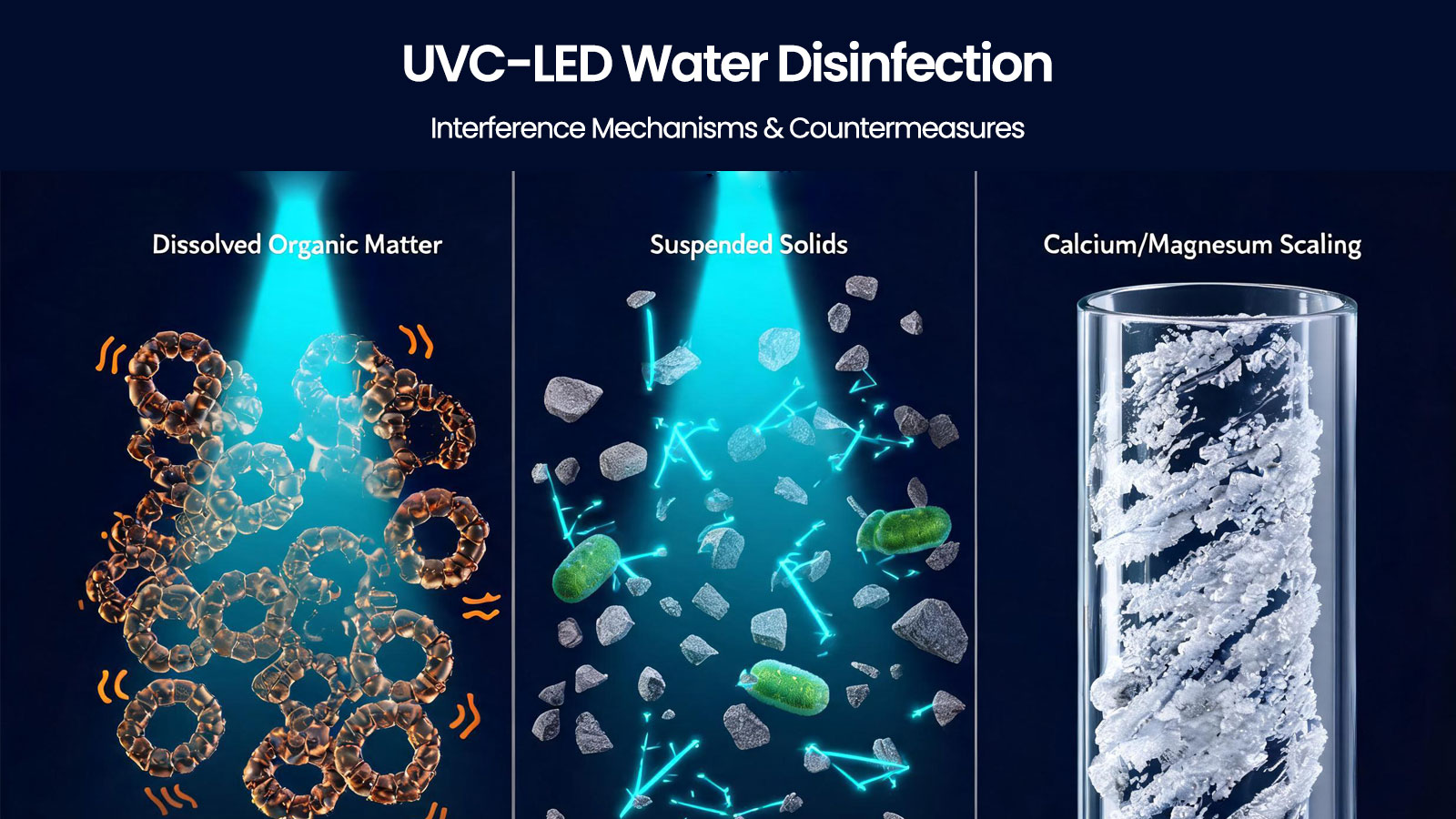 The content covers:1. Application advantages of UVC-LED for water disinfection2. Main interference factors in water and typical effects (with a data table)3. Prevention and control measures against water interference factors4. ConclusionI. Application Advantages of UVC-LED Water DisinfectionUVC LED
 -
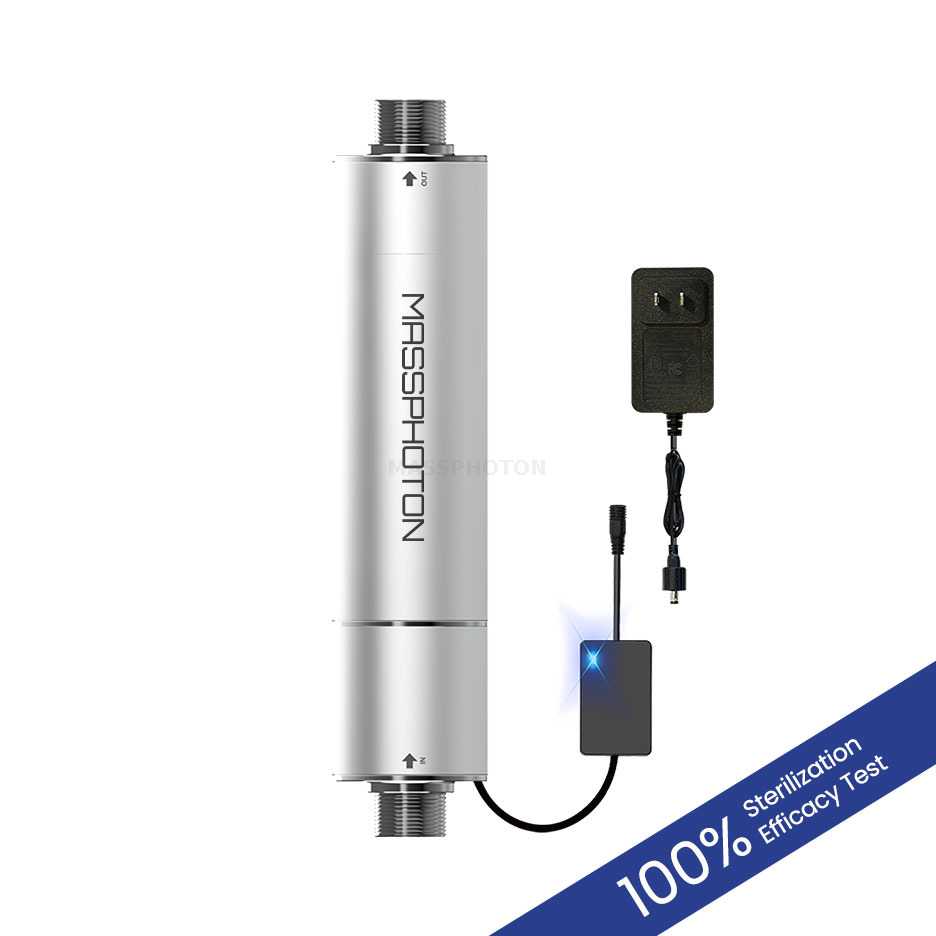 Deploying solid-state UVC LED water disinfection systems requires an accurate assessment of reactor hydrodynamics, targeted wavelengths, and source water quality variables like UV Transmittance (UVT). Unlike fragile, continuous-burn mercury lamps, deep UV LEDs offer space-saving footprints and instant on/off cycling that match real-world fluid dynamics. By coupling constant-current drivers with robust thermal management arrays, facility engineers can deliver precise germicidal doses to neutralize chlorine-resistant pathogens. This technical overview provides the sizing criteria, implementation strategies, and regulatory compliance paths needed to secure sustainable, chemical-free biosecurity.
